




2013 Ford F-Series Boosts Towing and Payload Capacities
DEARBORN – Ford has strengthened the F-Series lineup for 2013, raising the bar for Super Duty towing, hauling, and braking, according to the automaker.
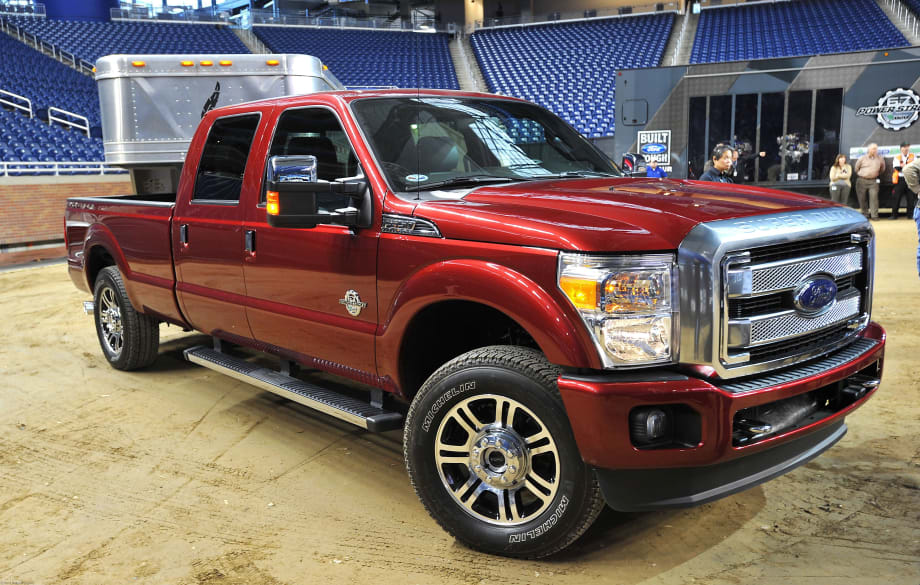
Ford engineers have raised conventional towing capacity to 18,500 lbs. and improved payload capability to 7,260 lbs.
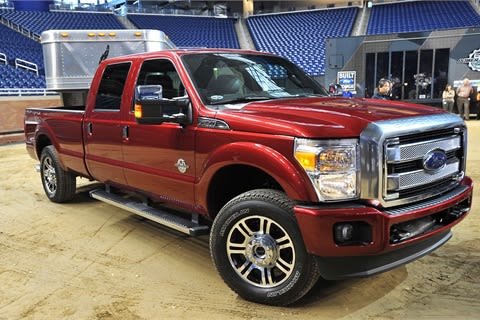
Ford engineers have raised conventional towing capacity to 18,500 lbs. and improved payload capability to 7,260 lbs.
DEARBORN – Ford continues to strengthen the F-Series lineup for 2013, raising the bar for Super Duty towing, hauling, and braking.
“Super Duty pickups and chassis cabs are the segment benchmarks, chosen by tradesmen more than any other heavy-duty truck to get the job done,” said Raj Nair, Ford group vice president, Global Product Development. “To help our customers continue to become more productive and efficient, we’ve increased our towing and payload capability yet again.”
According to the company, F-Series Super Duty trucks are engineered to meet the demands of the toughest customers. With their needs in mind, Ford engineers have raised conventional towing capacity to 18,500 lbs.
Increased towing brawn goes hand-in-hand with improved payload capability to 7,260 lbs.
F-Series Super Duty’s best-in-class payload numbers are supported by an improved brake system that delivers increased capability and usability, according to Ford.
Braking engineers increased brake rotor swept area by 16.4 percent in front and 14.5 percent in the rear for maximum braking to help dissipate heat, especially on long downhill grades.
These changes support a 700-lb. increase in the maximum GVWR to a best-in-class 14,000 lbs, according to the company. Improved brake pads and a retuned booster enable enhanced pedal brake feel to increase driver confidence.
“We’ve really improved brake feel,” said Michael Watkins, brake system engineer. “There’s refined modulation in the pedal – you really feel the stopping power. With a full load of cargo, drivers will notice strong, confidence-inspiring brakes.”
A larger parking brake for F-250 and F-350 models also allowed an increase in maximum payload rating.
Available adjustable pedals also enhance customer comfort by personalizing the interface between driver and brake system.
Other changes for 2013 include the introduction of the all-new Platinum series model and the availability of SYNC with MyFord Touch.
The Platinum series has a grille that features a satin chrome surround highlighted by perforated mesh inside, plus other special exterior upgrades. The interior has premium wood grain appliqués, a heated and leather-wrapped steering wheel, and other high-end luxury touches, according to the automaker.
The 2013 F-Series Super Duty builds on the foundation of SYNC with MyFord Touch, which is available for the first time, according to Ford. A new 8-inch, high-resolution touch screen display gives drivers easy access to phone, climate control, entertainment and navigation features, along with a dramatically expanded voice control vocabulary.
The 8-inch display screen also provides a large, clear view behind the truck when in reverse to help drivers maneuver in tight spaces or line up conventional trailers with the truck’s hitch.
Unique to Ford F-Series, the physical interface for MyFord Touch has been optimized to accommodate truck users who may be wearing work gloves by providing easy access to climate controls and audio presets on the center stack, according to the company.
Originally posted on Automotive Fleet
More Operations
Family Ties Inside the Fleet Families Building Careers Across Generations
Three fleet families share what it really takes to work together, learn across generations, and keep business from following them home.
Read More →
Shades of Fleet Call for Voices: Fleet's Hidden Heroes
Fleet’s hidden heroes are often the ones keeping everything moving behind the scenes. September’s Shades of Fleet is looking for dispatchers, coordinators, parts specialists, and other support pros to share their stories.
Read More →
Truck Centers, Inc. Celebrates National Truck Driver Appreciation Week with $1,000 Fuel Card Giveaways
During National Truck Driver Appreciation Week, Truck Centers, Inc. is offering customers a chance to fuel up for free. Customers at all Truck Centers locations can enter to win one of four $1,000 fuel cards from Sept. 14 - 18.
Read More →
Fleet Guides, AI Time-Savers, Truck Tariffs & Fuel Strategy Lead the News
This week’s Truck Chat Cheat Sheet covers new fleet vehicle guides, practical AI use cases, U.S.-Canada truck production, mixed-energy strategy, and more.
Read More →
What Fleet Employers Are Missing When Hiring Veterans
What if some of the strongest candidates for fleet are already out there, but their experience is written in a language our industry does not always recognize?
Read More →
Automotive Fleet Opens 2026 Personal Use Survey for Commercial Fleet Managers
Less than two weeks left! Commercial and corporate fleet managers are invited to share how their organizations handle company vehicle personal-use policies, charges, and driver eligibility.
Read More →
What Resilient Fleets Do Differently When Conditions Change
Fleet resilience is about more than reacting to disruption. Lauren Fletcher talks with AP Fleet’s Alex Coveney about flexibility, planning, scaling, and what helps fleets adapt when business conditions shift.
Read More →
If We Want the Next Generation in Automotive, We Have to Give Them a Reason to Care
The automotive industry talks constantly about its workforce shortage. But before we can recruit the next generation, we may need to do a better job giving kids a reason to care about automotive in the first place.
Read More →
Ram ProMaster City Under $40K, Truck Tariffs, and AI Maintenance Lead the News
A sub-$40K commercial van, tariff questions, AI-powered maintenance, and a new EV production strategy headline this week’s Truck Chat Cheat Sheet.
Read More →
Bob Adamsky Shares the Fleet Lessons You Usually Learn the Hard Way
After more than 30 years in fleet, Arrow International’s Bob Adamsky has learned that the job is about far more than vehicles. He shares the lessons he wishes every fleet manager could learn a little earlier.
Read More →