




2013 Fiat 500e Rated by EPA at 108 Highway MPGe with 87-Mile Range
The Fiat 500e recharges in less than four hours with its Level 2 (240V) onboard charging module (OBCM).
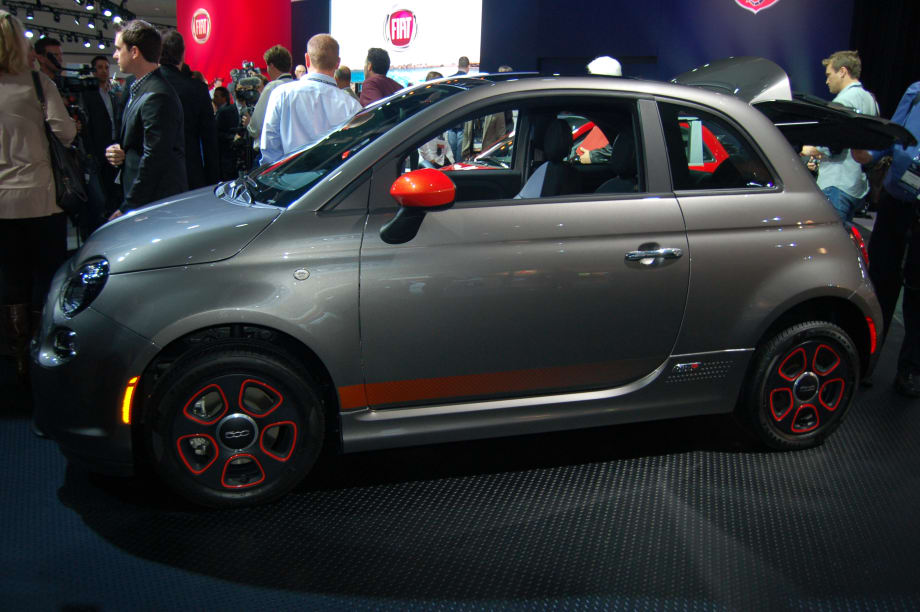
Photo by Grace Suizo.
The Fiat 500e at the 2012 Los Angeles Auto Show.
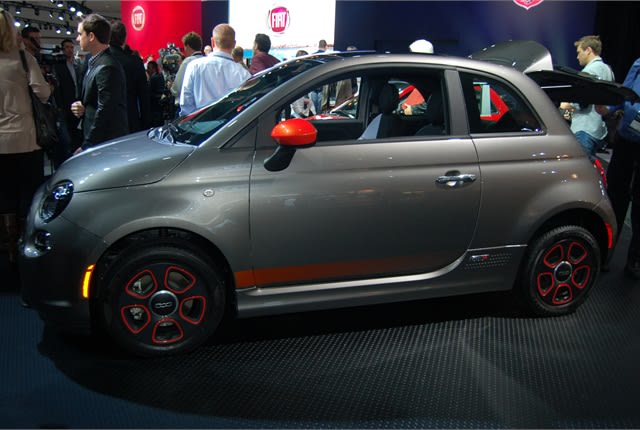
Photo by Grace Suizo.
The Fiat 500e at the 2012 Los Angeles Auto Show.
The Environmental Protection Agency (EPA) has rated the battery-electric Fiat 500e's highway-cycle performance at 108 MPGe (miles per gallon equivalent). EPA testing also has indicated that, when fully charged, the zero-emissions vehicle will travel about 87 miles.
In addition, the EPA estimates the annual cost to power the Fiat 500e is $500. The estimate is calculated by factoring electricity price projections into 15,000 miles of travel at a vehicle's combined city/highway performance rating. The Fiat 500e has a 116-MPGe city/highway rating; its city-cycle rating is 122 MPGe.
EPA testing estimates the vehicle’s energy-consumption rate at just 29 kWh per 100 miles. Further, the Fiat 500e scores a perfect "10" on two EPA scales that reward vehicles for low tailpipe emissions.
The 2013 500e builds on the Fiat brand's small-car formula, while adding an all-new, battery-electric powertrain that produces 111 hp. It recharges in less than four hours with its Level 2 (240V) onboard charging module (OBCM).
Supplementing its styling cues are eight efficiency-inspired exterior enhancements that contribute to a 13% improvement in aerodynamics, compared with the Fiat 500 Lounge, according to the automaker.
The Fiat 500e debuted in November at the 2012 Los Angeles Auto Show. It arrives at FIAT Studios in California in second-quarter 2013.
More Small Fleet


Developing Budget-Friendly Driver Safety Programs
From driver training and safety meetings to one-on-one coaching and incentive programs, several small fleets share how they have developed a safety culture with their drivers using low- to no-cost resources.
Read More →
Boosting Last-Mile Fleet Uptime, Safety, and Value with AI Vehicle Inspections
AI-powered inspections are transforming last-mile fleets by replacing manual checks with highly accurate automated scans that detect defects in seconds. By giving fleet operations visibility into the daily condition of their vehicles, you can identify trends over the vehicle’s lifecycle that enable improved procurement decisions, route management, driver training and accountability.
Read More →
Five Ways Seat Belts Help Prevent Injuries
There are five ways seat belts protect occupants from injuries, according to the Tennessee Department of Safety and Homeland Security.
Read More →
It’s here: The 2026 Fleet Technology Trends Report
What does AI mean for fleets? Get the answer — and learn other top tech trends.
Read More →
Small Fleets, Big Impact: How Independent Drivers Power Wreaths Across America
Check out how small fleets and independent drivers power Wreaths Across America each December and why their impact matters more than ever.
Read More →
VMS Survey Finds 65% of Small Fleet Managers Run Operations Alone
A new VMS survey shows small fleet managers are stretched thin, with most handling operations solo and eager to adopt digital tools for relief.
Read More →
Tips for Driving Safely on Halloween Night
This video features a reminder from the Connecticut Department of Transportation (DOT) and the Connecticut Police Chiefs Association, urging drivers to prioritize safety this Halloween.
Read More →
AI, Access, and Uptime: VMS’s Next Chapter with David Prusinski
VMS’s new Co-CEO, David Prusinski, shares how an AI-first approach will give small fleets and repair shops the tools to compete like big players.
Read More →
Fleet Managers Share Winter Prep Tips: It's Never Too Early!
Three fleets share best practices to prep vehicles for winter and prevent downtime when the cold sets in.
Read More →