




2013 Cadillac XTS to Feature Active Safety & Driver Assistance System
DETROIT – The all-new 2013 Cadillac XTS introduces an advanced active safety and driver assistance system. According to General Motors, the system represents a significant milestone toward the development of self-driving vehicles.
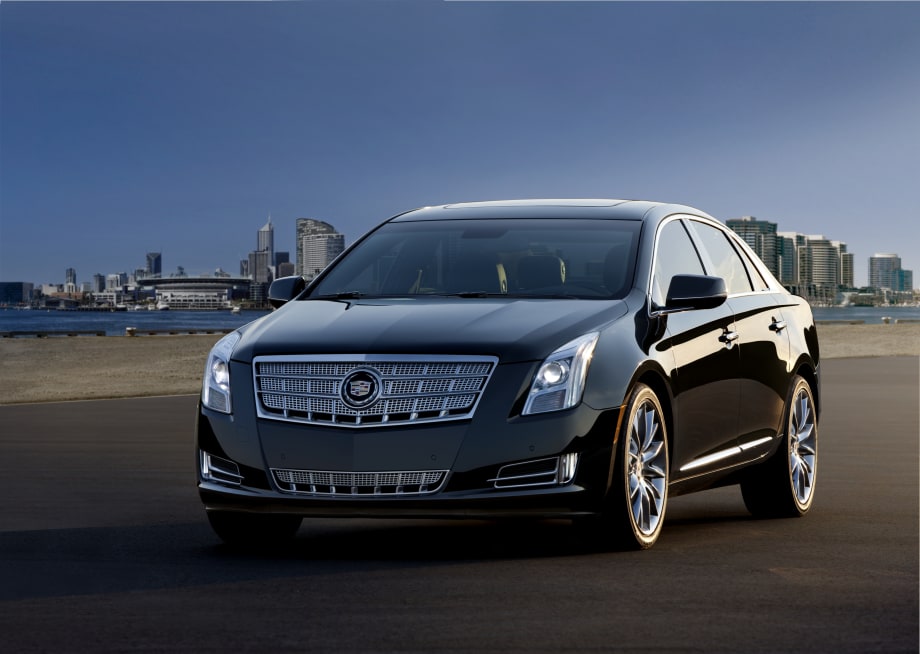
2013 Cadillac XTS
DETROIT – The all-new 2013 Cadillac XTS introduces an advanced active safety and driver assistance system. According to General Motors, the system represents a significant milestone toward the development of self-driving vehicles.
2013 Cadillac XTS
Coming this fall to XTS, the available Driver Assistance Package is the first General Motors system of its kind to use sensor fusion, which enables integration of a broad range of sensing and positioning technologies that can alert drivers of road hazards and help them avoid crashes.
The system’s use of radar, cameras and ultrasonic sensors enables advanced safety features, including:
Rear Automatic Braking
Full-Speed Range Adaptive Cruise Control
Intelligent Brake Assist
Forward Collision Alert
Safety Alert Seat
Automatic Collision Preparation
Lane Departure Warning
Side Blind Zone Alert
Rear Cross Traffic Alert
Adaptive Forward Lighting
Rear Vision Camera With Dynamic Guidelines
Head Up Display
“We believe sensor fusion will enable future active safety systems to handle a greater number of inputs to provide 360 degrees of crash risk detection and enhanced driver assist features,” said Bakhtiar Litkouhi, GM research and development lab group manager for perception and vehicle control systems.
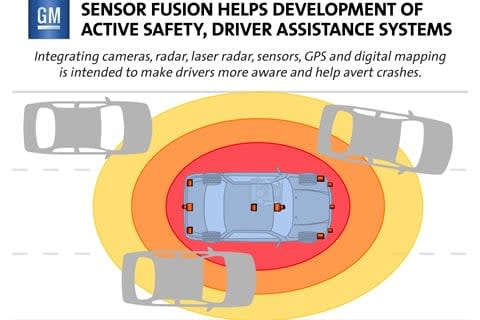
GM Sensor Fusion
“A system that combines the strengths of multiple sensing technologies and expertly manages those inputs can provide advisory, warning and control interventions to help drivers avoid collisions and save lives,” Litkouhi said.
Sensor fusion also is a building block in the development of semi-autonomous and fully autonomous vehicles, which are designed to maintain lane position and adapt to traffic environments. More sophisticated self-driving technology, which could enable semi-autonomous and fully autonomous driving, is expected by the end of the decade.
GM’s work on sensor fusion draws on its experience with The Boss, a fully autonomous Chevrolet Tahoe developed by GM, Carnegie Mellon University and other partner companies, and named for GM R&D founder Charles F. “Boss” Kettering. In 2007, The Boss navigated 60 miles of urban traffic, busy intersections and stop signs in less than six hours to win the Defense Advanced Research Projects Agency (DARPA) Urban Challenge competition.
Sensor fusion development also is bolstered by GM’s work on the EN-V, three semi-autonomous electric concept vehicles unveiled at the 2010 Shanghai World Expo. By combining GPS with vehicle-to-vehicle communications, distance-sensing and object detection technologies, EN-V can be driven both manually and autonomously -- the latter allowing it to automatically select the fastest route based on real-time traffic information.
Among the technologies that GM is considering to develop for future active safety systems is LIDAR, a light detecting and ranging technology that can measure the distance to a vehicle or object by illuminating it, often using pulses from a laser. Although LIDAR is no replacement for driver vision, it can become another set of eyes when visibility has deteriorated due to inclement weather or darkness. When combined with radar, cameras and ultrasonic sensors, LIDAR has potential crash avoidance capability.
A more advanced positioning system, using more accurate GPS and digital mapping, also is expected to play an important role on future active safety systems because it helps locate vehicles in relation to one another. While GPS effectiveness can be limited in urban canyon environments where high-rise buildings can interfere with satellite signals, the technology is still considered an asset when “fused” with other sensing and positioning technologies.
“No sensor working alone provides all the needed information. That’s why multiple sensors and positioning technologies need to work together synergistically and seamlessly,” Litkouhi said. “Sensor fusion will help facilitate that.”
Originally posted on Automotive Fleet
More Small Fleet


Developing Budget-Friendly Driver Safety Programs
From driver training and safety meetings to one-on-one coaching and incentive programs, several small fleets share how they have developed a safety culture with their drivers using low- to no-cost resources.
Read More →
Boosting Last-Mile Fleet Uptime, Safety, and Value with AI Vehicle Inspections
AI-powered inspections are transforming last-mile fleets by replacing manual checks with highly accurate automated scans that detect defects in seconds. By giving fleet operations visibility into the daily condition of their vehicles, you can identify trends over the vehicle’s lifecycle that enable improved procurement decisions, route management, driver training and accountability.
Read More →
Five Ways Seat Belts Help Prevent Injuries
There are five ways seat belts protect occupants from injuries, according to the Tennessee Department of Safety and Homeland Security.
Read More →
It’s here: The 2026 Fleet Technology Trends Report
What does AI mean for fleets? Get the answer — and learn other top tech trends.
Read More →
Small Fleets, Big Impact: How Independent Drivers Power Wreaths Across America
Check out how small fleets and independent drivers power Wreaths Across America each December and why their impact matters more than ever.
Read More →
VMS Survey Finds 65% of Small Fleet Managers Run Operations Alone
A new VMS survey shows small fleet managers are stretched thin, with most handling operations solo and eager to adopt digital tools for relief.
Read More →
Tips for Driving Safely on Halloween Night
This video features a reminder from the Connecticut Department of Transportation (DOT) and the Connecticut Police Chiefs Association, urging drivers to prioritize safety this Halloween.
Read More →
AI, Access, and Uptime: VMS’s Next Chapter with David Prusinski
VMS’s new Co-CEO, David Prusinski, shares how an AI-first approach will give small fleets and repair shops the tools to compete like big players.
Read More →
Fleet Managers Share Winter Prep Tips: It's Never Too Early!
Three fleets share best practices to prep vehicles for winter and prevent downtime when the cold sets in.
Read More →