


About the Author
Jared Kugel is CEO and co-founder of TireAgent.com and an 11-year tire industry veteran.
He can be reached at jared@tireagent.com.
 MENU
MENU SEARCH
A tire veteran provides tips to keep in mind when shopping for a tire that would best fit your fleet's needs. It's not always about price; it's also about efficiency and mileage.
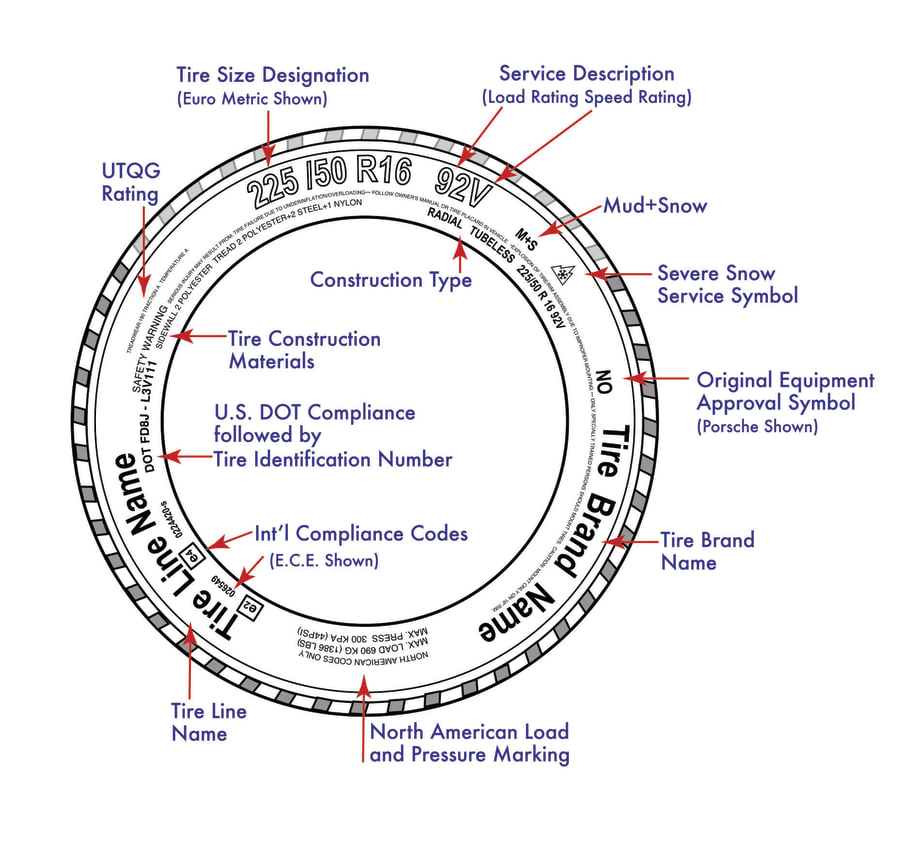
Illustration courtesy of TR Wholesale Solutions
Illustration courtesy of TR Wholesale Solutions
Being in the tire industry for 11 years, I have heard all sorts of excuses for why people wanted the cheapest tire — from “I barely drive this vehicle” to “We go through tires like crazy.”
In some situations, I would agree it makes sense to buy the cheap import brands, but in other cases, fleet companies are spending more than they realize by not purchasing a better tire.
For fleets that go through tires that quickly, if they pick the proper tire — which may cost more money than they wanted to spend — they wouldn’t go through them “like crazy.”
The three cost factors everyone should consider when buying tires are cost on the invoice, mileage, and efficiency. Don’t confuse cost on the invoice with opportunity cost. Opportunity cost is how much that vehicle is earning for you in revenue while in operation compared to sitting in a shop getting tires installed.
To me, efficiency is meant to be the purpose for which you are buying the tires. Is it for fuel efficiency, to handle all weather conditions comfortably, or to be able to handle off-road?
There are tires for practically every type of driver, but you need to do research to find out more information. Sadly, a lot of retailers are not aware of this or don’t pass on the proper information to end users.
Retailers often feel pressured to make the sale, so when they tell you a price and they feel you think it’s out of your price range, they may go directly to the cheapest low-end tire to make the sale.
Your options are not always limited to the top quality and cheapest. Similar to any product, there are options that will be 30% to 35% under the name brands and 30% to 35% above the low end.
If you barely use the vehicle and only drive a few miles per year, it may make sense to get the low-end option, but if you are a frequent user of your vehicles, don’t be cheap with your business.
Let’s do the math: If you buy a tire for $80, it’s $320 for four tires. If two of those tires wear quickly or blow out, your average cost is now $120.
If you had spent the 35% over the $80, that would be only $108. Not only would you have saved money on the tire, but also imagine the money you saved by keeping your vehicle in operation during the time you would have needed to change your tires.
Have you heard the terms fishtailing, skidding, and hydroplaning? These are realistic situations that can happen when you don’t get the proper tire or spend the money for a better tire. Not only would you worry about that vehicle not making it to a job, but what about the cost involved in getting into an accident?
Part of buying the right tire should be for preventive reasons — as in how you can prevent future costs and accidents from occurring. Nothing is 100% foolproof, but the goal should be to lower the risk as much as possible.
People may wonder if it is ever cost-efficient to buy a premium brand tire. Some people like to calculate cost per mile, but that doesn’t account for the variables (mentioned above) that can occur.
For example, fleets that buy a Firestone Transforce tire pay that premium price because they like to have the peace of mind in knowing they got what they paid for. They know with that tire they will most likely get durability, good mileage, great traction on wet roads, and a quiet and comfortable ride.
Although tires can get blowouts from road hazard conditions, you at least know when it comes to the premium brands, they are about as fixed of a cost as tires can be — as opposed to the cheaper, low-end import brands that can be wild cards.


From driver training and safety meetings to one-on-one coaching and incentive programs, several small fleets share how they have developed a safety culture with their drivers using low- to no-cost resources.
Read More →
AI-powered inspections are transforming last-mile fleets by replacing manual checks with highly accurate automated scans that detect defects in seconds. By giving fleet operations visibility into the daily condition of their vehicles, you can identify trends over the vehicle’s lifecycle that enable improved procurement decisions, route management, driver training and accountability.
Read More →
There are five ways seat belts protect occupants from injuries, according to the Tennessee Department of Safety and Homeland Security.
Read More →
What does AI mean for fleets? Get the answer — and learn other top tech trends.
Read More →
Check out how small fleets and independent drivers power Wreaths Across America each December and why their impact matters more than ever.
Read More →
A new VMS survey shows small fleet managers are stretched thin, with most handling operations solo and eager to adopt digital tools for relief.
Read More →
This video features a reminder from the Connecticut Department of Transportation (DOT) and the Connecticut Police Chiefs Association, urging drivers to prioritize safety this Halloween.
Read More →
VMS’s new Co-CEO, David Prusinski, shares how an AI-first approach will give small fleets and repair shops the tools to compete like big players.
Read More →
Three fleets share best practices to prep vehicles for winter and prevent downtime when the cold sets in.
Read More →