





View Data Driven Fleet Experience Keynote:
State of the Commercial Telematics Market
What’s Driving Growth in the Commercial Telematics Market?
While the telematics market is still growing, increasing penetration is slowing growth. What sectors are still hot, and what new trends and services are providing value for fleets? Clem Driscoll shares insights from his latest Mobile Resource Management Systems Market Study.
May 24, 2021
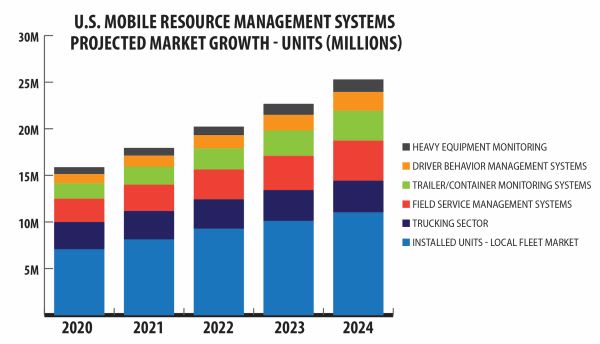
Over 16 million GPS devices are now used to monitor fleet vehicles, drivers, service workers, and assets. Compare this to 13 million in late 2018. By the end of 2022, we should see 20 million units in use.
Data courtesy of Clem Driscoll.
4 min to read
More telematics devices than ever are in use, and more growth is on the horizon — yet only in some sectors, while others are seeing slower growth. Where is this technology’s momentum and how can fleets be prepared?
Telematics expert Clem Driscoll, founder and president of C.J. Driscoll & Associates, discussed this in his keynote address at the Data-Driven Fleet Experience last month.
Expanding on Telematics Terminology
Referencing data from his 2021-22 U.S. Mobile Resource Management (MRM) Systems Market Study — a 300-page report that covers the national MRM market— Driscoll shared which sectors are seeing market penetration, how providers are positioned for growth, new service offerings and partnerships, and more.
First things first: Driscoll clarified that he finds the term “commercial telematics” too narrow. He prefers the term “mobile resource management” as it is broader and includes the management of mobile workers.
Report Highlights
Overall, the U.S. MRM market is still growing rapidly.
More than 700,000 companies are using MRM systems and services today.
Over 16 million GPS devices are now used to monitor fleet vehicles, drivers, service workers, and assets. Compare this to 13 million in late 2018. By the end of 2022, we should see 20 million units in use.
Revenues are projected to grow from $4.6 billion in 2018 to nearly $6.1 billion by 2022. Trucking revenues in particular have doubled over the last seven years due to the ELD mandate.
Telematics & Fleet Market Trends
Telematics market growth continues in most sectors, though increasing penetration is slowing growth. Several suppliers said their replacement sales now equal or exceed new buyer sales. Small and midsized TSPs continue to be acquisition targets for larger players.
Some TSPs, notably Geotab and Fleet Complete, reach customers primarily — or almost exclusively — through authorized resellers. Some resellers have as many as 50,000 to 100,000 units in service, more than many sizable TSPs.
The government fleet market, which has lagged behind other verticals, has become more active in adopting GPS management, though lowest-bid stipulations in RFP requirements are forcing vendor turnover every few years.
As this market matures, mergers and acquisitions are strong. Driscoll provided several examples of recent company acquisitions and partnerships, noting that more are coming.
He believes that as market penetration increases, the path to revenue growth will be through value-added services. Telematics solutions providers (TSPs) must add new features and functions to their systems on an ongoing basis to stay competitive. Some TSPs are developing their own value-added services. Others like Geotab have marketplaces where third-party developers connect their services as add-ons to Geotab’s platform. One company, Roadz, offers a suite of value-added solutions that connects to fleets and TSPs that don’t have their own marketplaces.
Automakers are now getting in on the action. Ford and GM have developed their own commercial telematics solutions, while working with TSP partners for customers who want more features.
Current Issues
While COVID-19 disrupted most everything, its impact was felt less than anticipated in the telematics market. Most TSPs reported that they retained the majority of subscribers. A few segments like public transit and rental cars seem to have been hit the hardest.
Another issue is cellular sunsets. Most GPS installations today operate on 4G LTE, though a few in the field remain on 3G and must be replaced soon. AT&T’s 3G units need to be replaced by February 2022, while Verizon just pushed back their shut down of 3G to January 1, 2023.
The computer chip shortage is also impacting telematics device availability. Driscoll says suppliers do not expect shortages to catch up until Q1 or Q2 in 2022. This was likely driven by COVID, as consumers purchased more electronics, driving up demand.
New Opportunities & Technologies
New features such as video and field service management represent opportunities for incremental revenues. “That’s something that this market has needed,” Driscoll said, “because most of the solution providers have a certain size, or they’re focused on the horizontal market, and there is a lot of overlap. What’s really needed is differentiation.”
The Power of Video & Data
Video has become one of the new ways to provide this difference, and Driscoll said it’s the biggest thing to come along in the local fleet telematics market in a long time.
Cameras have been already deployed in some fleets to determine accident liability where exposure is high: think school buses, police cars, and waste disposal trucks, and now it’s catching on across the board.
Today’s camera technology uses telematics, AI, and computer vision to identify risky behaviors and then collate them into leading indicators such as distracted driving habits that can be acted upon through coaching and real-time in-cab alerts. The goal is to mitigate crashes before they happen.
“Enhanced technology and video systems increases the need for data,” Driscoll commented, pivoting to notes on the use of AI, machine learning and edge computing — technologies that can quickly identify issues impacting driver performance. “These technologies give a richer, fuller picture of what a vehicle is doing,” he said. That’s their main advantage, and that’s why they’re being used.
Originally posted on Automotive Fleet
Subscribe to Our Newsletter
More Technology
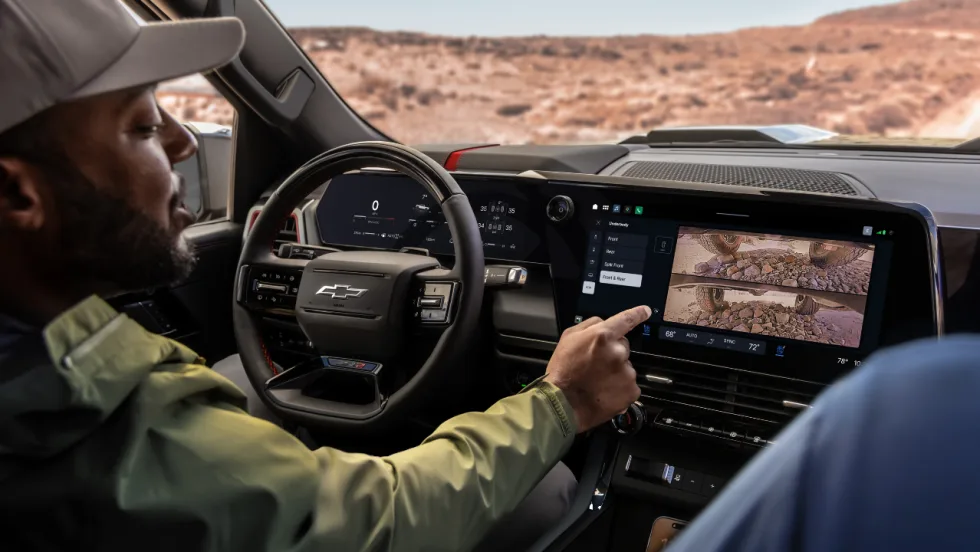
GM Brings New Truck Focused Interface to 2027 Silverado and Sierra
GM's new pickup interface puts trailering data, camera views, vehicle controls, and smartphone integration closer to the driver in the 2027 Silverado and Sierra.
Read More →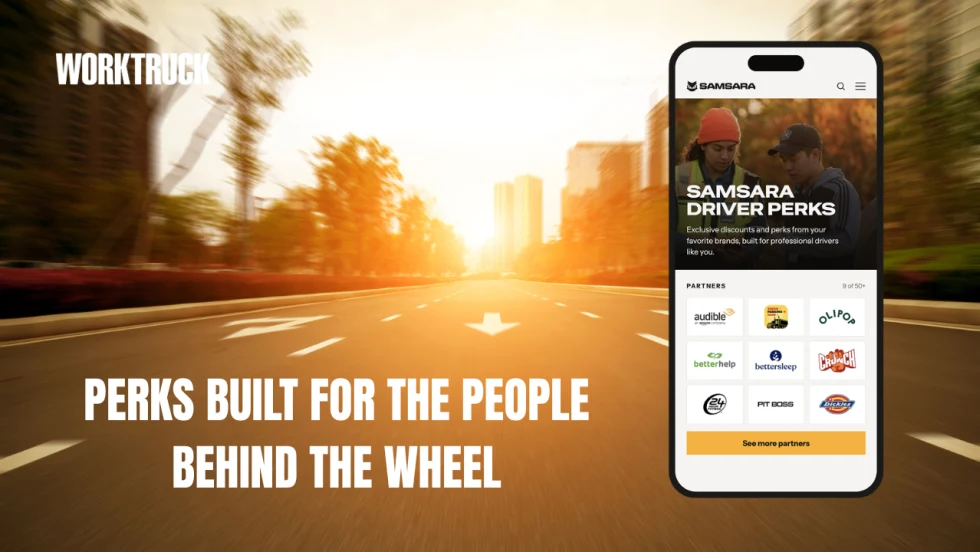
Samsara Driver Perks Expands Rewards Beyond the Long Haul Driver
Samsara’s new driver rewards program was built with a broader professional driver in mind, including employees who split their day between driving, job sites, service calls, and other work.
Read More →
AI Service Advisor Aims to Cut Fleet Repair Downtime
Fleetio said its AI Service Advisor can help fleets cut repair downtime by an average of 2.5 hours per repair while reducing manual maintenance work.
Read More →
Verra Mobility Launches AI-Driven Title & Registration Solution
Verra Mobility has launched a new AI-driven Title & Registration platform to help fleets move vehicles from acquisition to the road the same day while reducing compliance risk.
Read More →
Wialon Unlocks OEM Data to Give Fleet Owners Data Ownership & Operational Clarity
Wialon has introduced hardware-free OEM integration as the EU Data Act accelerates the shift in vehicle data access across the fleet industry in many countries.
Read More →
Teletrac Navman Promotes New CEO from Within
Teletrac Navman’s next CEO, Ricardo Buranello, has served as the company’s chief financial and operating officer. He brings deep financial and operational expertise, a strong strategic orientation, and an intimate knowledge of the business to his new role.
Read More →
Smith System Wants Work Truck Fleets to Look Beyond the Driver Alert
Smith System’s new Driver Risk Management program is built to help mixed work truck fleets turn telematics alerts and observations into specific behaviors, coaching actions, and measurable follow-up.
Read More →
Ford Pro Software Updates: August 26
Check out the latest Ford Pro software updates, including Google Maps integration, Remote Vehicle Alarm integration, Motor Pool for easier management of shared pool vehicles, and more.
Read More →
Where AI Is Actually Saving Fleet Managers Time
AI is moving past the buzzword stage and into the daily fleet workflow. Fleetio’s Brianna Perry Lang breaks down where fleets are seeing real time savings, from maintenance and data entry to repair decisions, safety, and compliance
Read More →
Are Work Truck Drivers Warming Up to Dash Cams and GPS Tracking?
A new survey finds field-service drivers may be more comfortable with dash cams and GPS tracking than fleet managers think, especially when the technology helps protect them after a crash.
Read More →