




What To Do (And Not To Do) After a Highway Breakdown
Depending on the setting, there are different ways to handle the aftermath of a vehicle breakdown.
All highway breakdowns are not created equal.
The procedure for what do in the event of a vehicle breakdown has a lot to do with where the vehicle is being driven at the time it sputters to a stop. Metropolitan-area freeways and rural highways each bring different problems and require markedly different solutions to a vehicle breakdown.
Regardless of the setting, however, it’s important to remember to use the vehicle’s hazard lights and pull onto the shoulder (if it can be done safely to avoid becoming a road hazard to other drivers) to get out of the way of other passing vehicles flying by at high speeds.
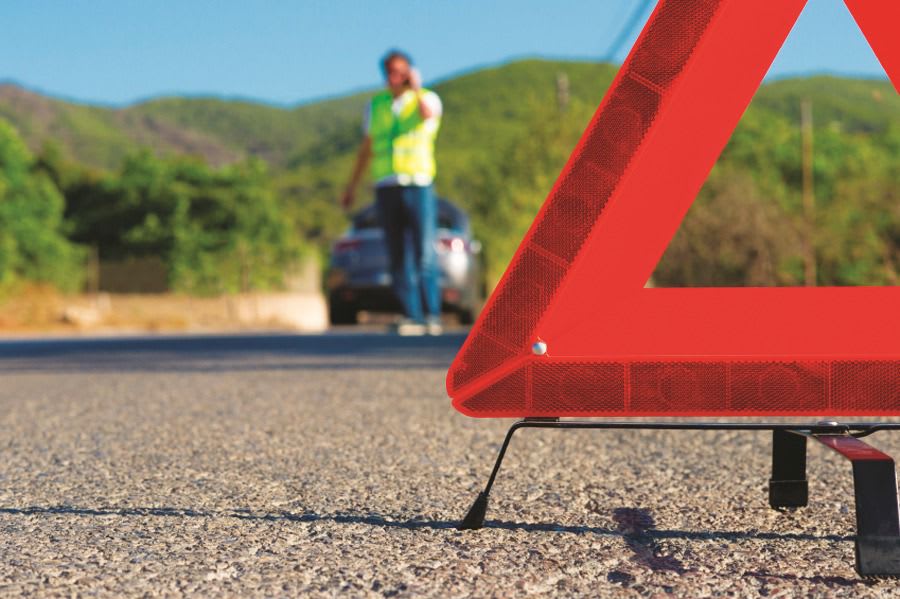
Once the driver has cleared the road and is safely on the shoulder, he or she can make the vehicle more visible by turning on the vehicle’s dome light and leaving the headlights on, in addition to the vehicle hazard lights. All vehicles should be equipped with an emergency kit. Put reflective triangles behind the vehicle if it can be done safely.
A copy of the fleet’s safety and accident policy should be stored in the glovebox and reviewed when an incident occurs.
Once the policy has been quickly studied, several questions should be asked: Is it safe to exit the vehicle? Is the neighborhood/stretch of road safe or should caution be exercised? The answers to these questions, or the obvious nature of the breakdown, will determine what to do next.
It is recommended to only exit the vehicle if it’s a residential or rural/low traffic area. In high-trafficked metropolitan areas, stay in the car until assistance can be rendered by a tow truck driver or law enforcement personnel.
Exiting or standing around a stranded vehicle greatly increases the risk of injury or death. Staying safe is much more important than staying on schedule.
If the car is beyond repair, it’s best to wait for a professional. After calling a tow truck directly or the fleet manager or fleet management company (if required by policy), the driver should wait patiently for official help to arrive.
Never accept unofficial assistance in the wake of a breakdown.
The National Safety Council recommends the following:
Do not try to flag down other vehicles, i.e., don’t solicit the help of passing motorists.
Raise the vehicle’s hood and tie something white to the radio antenna or hang it out the window so police officers or tow truck operators will know help is needed.
Don’t stand behind or next to the vehicle.
FIVE FREEWAY BREAKDOWN TIPS
1. Pull over and out of traffic if possible. Even if all of the emergency lights are activated, some highway drivers do not pay close attention and could rear-end the disabled fleet vehicle, causing further damage or injury.
2. The driver shouldn’t attempt to fix the vehicle, even if it appears it’s going to be a quick or easy fix. Wait for professional help to arrive.
3. Only exit the vehicle if it is necessary or safe to do so. If possible, raise the vehicle hood to alert passing authorities that the vehicle is disabled and help is needed.
4. Patience is a virtue in breakdown situations. Particularly in heavily trafficked metropolitan areas, highways are regularly patrolled by police and tow truck operators — help will arrive soon.
5. Lastly, make sure to keep a copy of the fleet’s roadside assistance or accident policy in the vehicle at all times.
More Small Fleet


Developing Budget-Friendly Driver Safety Programs
From driver training and safety meetings to one-on-one coaching and incentive programs, several small fleets share how they have developed a safety culture with their drivers using low- to no-cost resources.
Read More →
Boosting Last-Mile Fleet Uptime, Safety, and Value with AI Vehicle Inspections
AI-powered inspections are transforming last-mile fleets by replacing manual checks with highly accurate automated scans that detect defects in seconds. By giving fleet operations visibility into the daily condition of their vehicles, you can identify trends over the vehicle’s lifecycle that enable improved procurement decisions, route management, driver training and accountability.
Read More →

Five Ways Seat Belts Help Prevent Injuries
There are five ways seat belts protect occupants from injuries, according to the Tennessee Department of Safety and Homeland Security.
Read More →
Basic Tracking vs Next Generation Fleet Technology
Fleet software is getting more sophisticated and effective than ever, tying big data models together to transform maintenance, safety, and the value of your existing tech stack. Fleet technology upgrades are undoubtedly an investment, but updated technology can offer a much higher return. Read how upgrading your fleet technology can increase the return on your investment.
Read More →
It’s here: The 2026 Fleet Technology Trends Report
What does AI mean for fleets? Get the answer — and learn other top tech trends.
Read More →
Small Fleets, Big Impact: How Independent Drivers Power Wreaths Across America
Check out how small fleets and independent drivers power Wreaths Across America each December and why their impact matters more than ever.
Read More →
VMS Survey Finds 65% of Small Fleet Managers Run Operations Alone
A new VMS survey shows small fleet managers are stretched thin, with most handling operations solo and eager to adopt digital tools for relief.
Read More →
Tips for Driving Safely on Halloween Night
This video features a reminder from the Connecticut Department of Transportation (DOT) and the Connecticut Police Chiefs Association, urging drivers to prioritize safety this Halloween.
Read More →
AI, Access, and Uptime: VMS’s Next Chapter with David Prusinski
VMS’s new Co-CEO, David Prusinski, shares how an AI-first approach will give small fleets and repair shops the tools to compete like big players.
Read More →