




What Can Autonomy Do for the Middle Mile?
The middle mile in the supply chain is ripe for efficiency gains, while its repeatable routes make it a fit for early autonomous transportation adoption. Gatik’s Sam Saad explains when, how, and why.

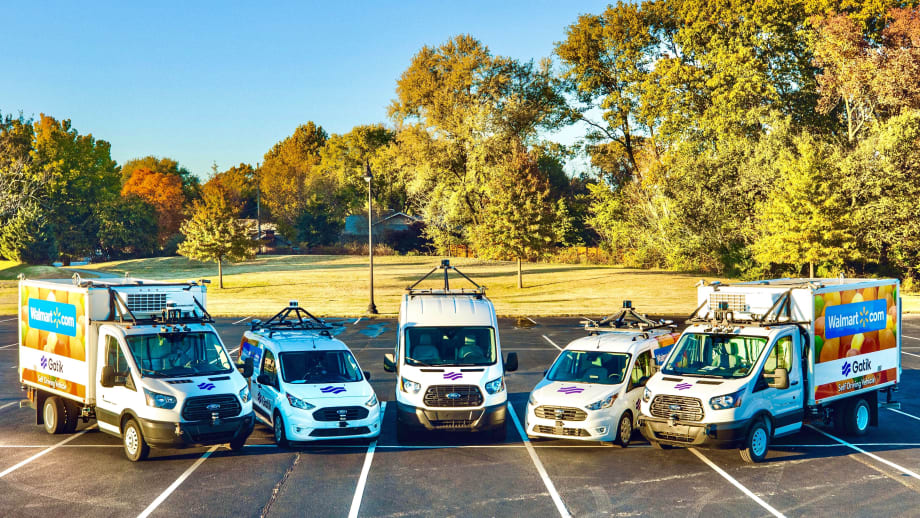
The Gatik fleet completes autonomous middle-mile deliveries by doing a “constrained Level 4” autonomous trip on fixed point-to-point-to-point routes instead of a geofenced radius.
Photo courtesy of Gatik.
The path to autonomous travel is a circuitous one. It winds through multiple transportation types — from robotaxis, drones, last-mile, and robot deliveries, to on-demand shuttles and over-the-road trucking.
For each use case, autonomy comes with significant hurdles to full deployment. Yet, when fully realized, autonomy promises to alleviate traditional transportation pain points and drastically reduce costs.
Autonomous start-up Gatik is exploiting one sweet spot that addresses the hurdles and the benefits: “To deliver on the promise of autonomy, we believe that focusing on the middle mile is a more rapid way to commercialize the technology,” says Sam Saad, Gatik’s head of operations.
Not long-haul trucking or last mile, the middle mile involves the transport of goods from a warehouse or distribution center to brick-and-mortar facilities such as retail stores, micro-fulfillment centers, offices, or other distribution points.
The middle mile is an expensive part of logistics and supply chains that is ripe for efficiency gains and cost savings, Saad says. Yet it involves known, repeatable routes that reduce the variabilities of travel. Enter a viable use case for autonomy.
Saad says Gatik removes many of the edge cases encountered in a robotaxi environment by doing a “constrained Level 4” autonomous trip on fixed point-to-point-to-point routes instead of a geofenced radius. They’re completed with 11- to 20-foot box trucks equipped with Gatik’s autonomous system.
“With robotaxis, you need to solve for the entire operational design domain and landscape,” Saad says. “If I'm a robotaxi passenger, I want to be able to go to my end address, not dropped off five minutes away or restricted from certain neighborhoods.”
Gatik will leave the long-haul and last-mile trips to other autonomous providers. “There are a lot of really good people doing great work in that (long-haul) environment,” he says. “And similarly, we don't touch the slower final-mile AVs or sidewalk robots.”
Gatik can travel on the highway, though the company’s middle-mile routes are predominantly in semi-urban environments. Those are “most urban environments you can think of, except for maybe downtown Manhattan during rush hour,” Saad says.
A Path to Adoption
Since July of last year, Gatik has been making deliveries for Walmart on a short route between two stores in Walmart’s headquarters town of Bentonville, Ark. An autonomous vehicle (AV) operator is in each truck for every trip.
Gatik is testing with other clients but hasn’t gone public with them yet. When the time is right to integrate with fleets beyond tests, Gatik is looking for customers with “a burgeoning middle mile that they're looking to automate,” Saad says. “The important part is narrowing down which route we can deliver that promise of autonomy on.”
While Saad wouldn’t give a specific timeline for removing the in-cab operator, “The routes that we deploy earlier, such as the Walmart route, will be the ones in which the operator will be removed sooner,” he says. “We are looking to do so eminently.”
After the safety operator is removed, an interim yet pivotal step to autonomous transportation will be tele operations. While teleoperators don’t directly control steering, braking, or acceleration on public roads, their role is to monitor, update path planning, and initiate recovery behaviors or other non-direct actions if needed.
For this transition, Saad believes Gatik’s defined use case provides a shorter runway to AV adoption. “With our restricted Level 4 use-case scenarios, the right vehicle form factor, and the right algorithms powering our decision making, we'll be able to start driving autonomously on routes within four to six weeks of deployment,” he says.
Service or Tech Provider?
A key question in the evolution of autonomy centers on who owns, controls, and maintains the autonomous equipment, which could change over time.
In a full-service lease scenario, the AV provider could lease the vehicles to fleets and manage a menu of services such as maintenance and tele-operations. But that could change over time, as fleets gain the competencies to manage the AVs and hardware in house.
“We’re open to being a service provider or a technology provider, or some combination of the two,” he says. “It really depends on where our customers are.”
In terms of the regulatory environment, Saad points to the 40 states that have legislation or executive orders allowing for some form of AV adoption.
“Most states are progressive in terms of how they look at AVs and balance safety for all road users,” he says. “Once we acquire the right permits and licenses for each jurisdiction, we can actually openly operate in a majority of spaces today.”
It’s incumbent on autonomous service providers to work closely with regulators to help them further legislation that makes sense for everyone. “We recognize that autonomy is a team sport,” he says. “We might be competing in the marketplace, but when it comes to regulations, everyone should be working together.”
A Pressing Need
The exponential growth of e-commerce — combined with an inelastic supply chain that isn’t meeting real-time demands — is a key driver of autonomy in the transportation of goods, Saad says. This has resulted in a dramatic push to inventory optimization across multiple locations.
He gives the example of a customer who orders an item and wants to pick it up at a certain store at a specific time, where the traditional cycle of replenishing stock within a two- to seven-day window isn’t quick enough.
AVs, with a promised cost reduction and an easier ability to travel during off hours, can facilitate this push. “Now you're able to move goods among your multiple locations to meet customer demand and ensure that you close that sale,” he says.
When it comes to whether AVs make financial sense for a first-adopter fleet, “We’ll offer competitive prices from day one,” Saad says. “We’re working closely with our clients to understand what their costs are in middle mile and then ensuring that we can offer our vehicles for the right use cases.”
What benefits can first adopters realize, when it might be easier to let others to test the waters?
Saad sees parallels to when warehouse fulfillment became automated 10 years ago. “Some organizations got ahead of the curve and managed to understand and implement automation, and they're seeing significant ROI,” he says.
“I think the organizations that see automation of on-road transportation in a similar fashion are going to reap the benefits of being more competitive.”
Originally posted on Automotive Fleet
More Vehicle Research
2026 Ram 1500 Tradesman Put to a Real-World Fleet Test
A few days behind the wheel of a 2026 Ram 1500 Tradesman turned into a test of visibility, parking, work-ready features, and even severe-weather driving.
Read More →
Isuzu N-Series Gas Fleet Guide: Specs, Capability and 2027 Model-Year Updates
Explore Isuzu Truck North America’s N-Series Gas fleet specs, engine performance, GVWR and payload capability, configurations, chassis dimensions, work-focused features, and 2027 model-year information.
Read More →
Chevrolet Silverado 1500 Fleet Guide Specs Capability and 2027 Model-Year Updates
The next-generation 2027 Chevrolet Silverado 1500 brings new V-8 engines, updated technology, expanded safety features, and a fleet-focused Work Truck. Here’s what commercial fleets need to know so far.
Read More →
Ram ProMaster City Fleet Guide Specs Cargo Capacity and 2027 Updates
Work Truck’s Ram ProMaster City Fleet Guide tracks the latest specifications, cargo capability, configurations, fleet technology, pricing, and model-year updates for Ram’s mid-size commercial van.
Read More →
Ford F-150 Fleet Guide Specs Capability and 2026 Model-Year Updates
Explore 2026 Ford F-150 fleet specs, engines, towing and payload capability, configurations, work features, technology, and model-year updates.
Read More →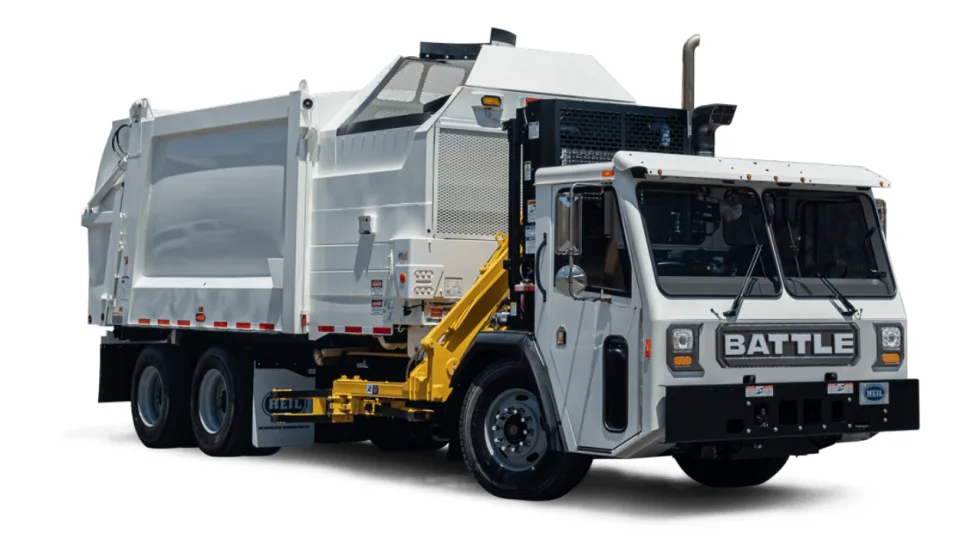
TCI Now Sells & Supports Battle Motors’ Vocational Trucks
Midwest truck dealer Truck Centers, Inc. (TCI) has expanded its transportation solutions with sales and service support for Battle Motors’ heavy-duty vocational trucks at locations in locations in Indiana, Illinois, and Missouri
Read More →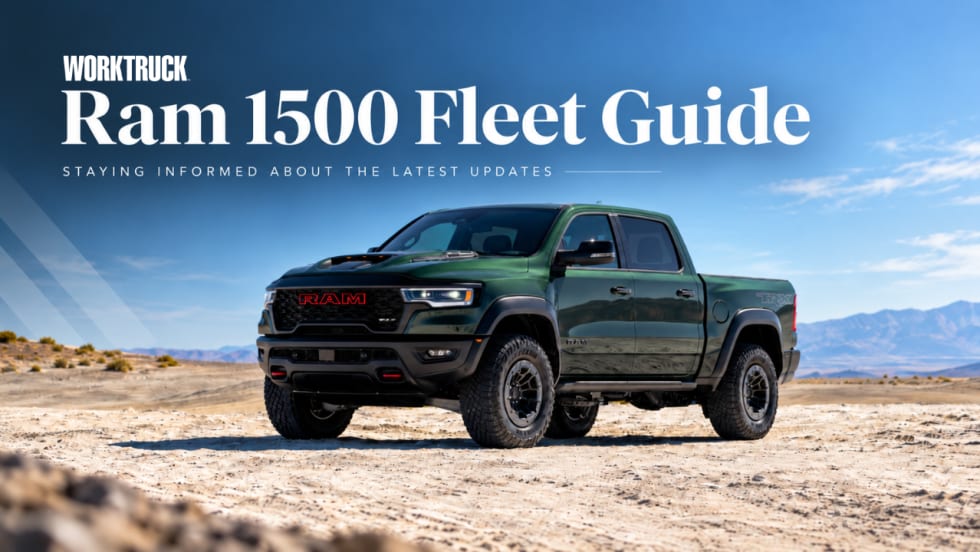
Ram 1500 Fleet Guide Specs, Capability and 2027 Model-Year Updates
Explore always up-to-date Ram 1500 fleet specs, engines, towing and payload capability, configurations, technology, pricing updates, and model-year changes.
Read More →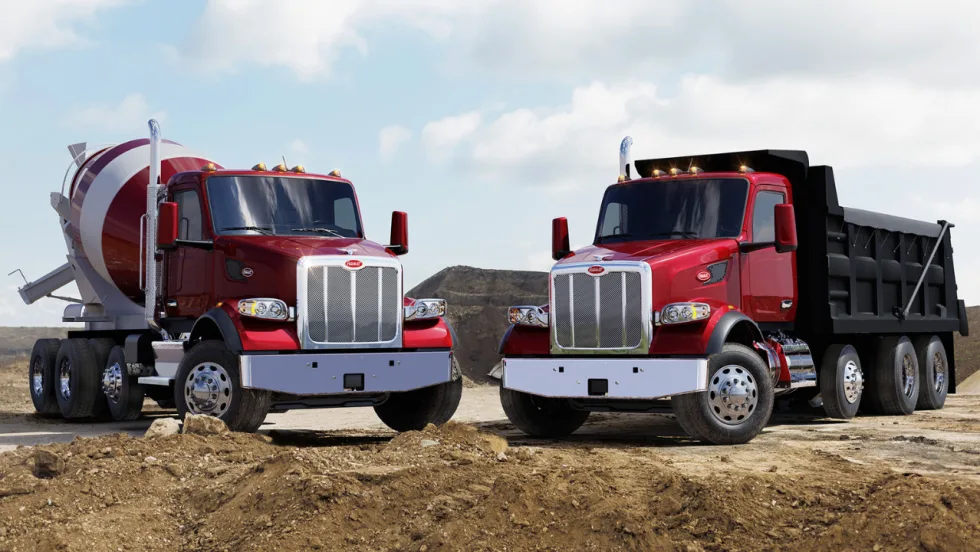
Peterbilt Trucks Equipped with Paccar TX-18 Pro Boost Efficiency for Maryland Fleet
Patuxent Companies is replacing aging trucks with the Peterbilt Model 567 and Model 589, specified with the Paccar TX-18 Pro 18-speed automated transmissions, and is reporting an 8% to 10% improvement in fuel economy.
Read More →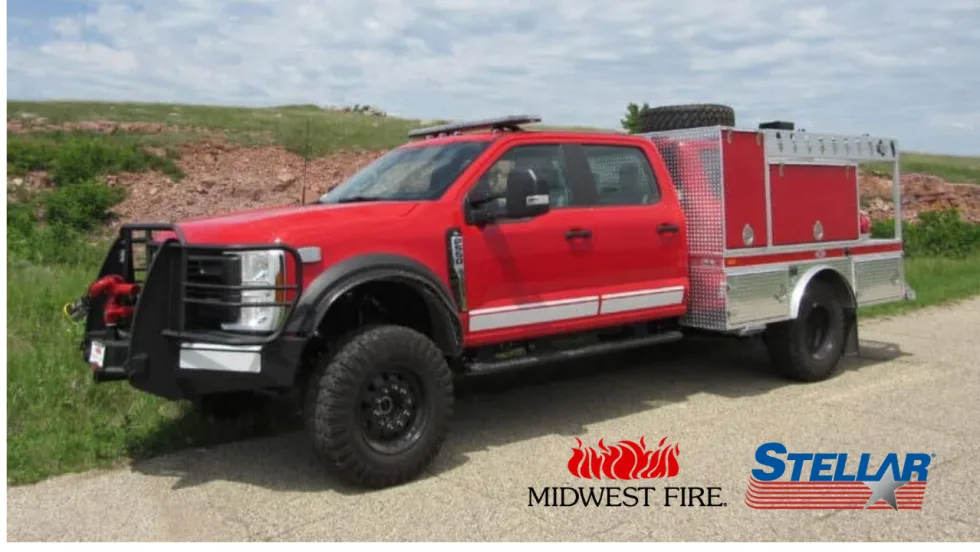
Stellar Expands into Fire Apparatus Market with Acquisition of Midwest Fire
Stellar Industries has acquired Midwest Fire, a custom fire apparatus manufacturer headquartered in Luverne, Minnesota, with nearly four decades of specialized apparatus experience.
Read More →
Recalls You Need to Know About in August 2026
If you have Altec, Chrysler, Ford, Heil, General Motors, International, Mack Trucks, Paccar, Rivian, Royal Truck, Toyota, US Truck Body, or Volvo Trucks vehicles in your fleet, you should check these important recalls issued by the National Highway Safety Administration.
Read More →