




Ways to Improve Driver Ergonomics for Fleets
The way drivers sit in their vehicles and assessing upfits for fleet utilization can help fleets determine ways to improve the physical well-being of its drivers.

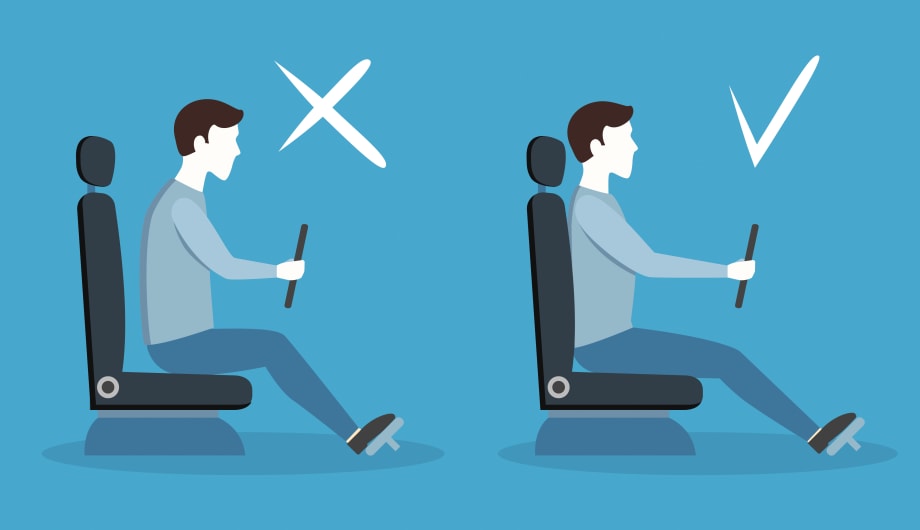
Graphic courtesy of Getty Images.
Fleets are taking driver safety more seriously than ever, and for good reason. Distracted driving is on the rise and in-vehicle safety tech has become more easily accessible for fleets to implement. However, the physical well-being of the driver is another important aspect for fleets to consider. Indeed, fleet drivers who are spending a bulk of their day on the road are at risk of health-related issues.
According to a 2010 Gallup Poll, extensive commutes can contribute to a bevy of health issues. Further still, beyond driving vehicles for an extended period of time, ergonomic issues that are related to improper physical movements to complete work duties can cause musculoskeletal disorders.
Proper Sitting
Fleet drivers are likely to exceed the average work forces commute time, which is 90 minutes according to data from the Bureau of Transportation Statistics.
This is important to consider as studies have noted health-related problems to those who drive for extended periods of time. This could include: neck, shoulder, and back pain; cramps and pressure points in the legs; low-back injury; and damage to the spinal disc, according to the Safety Services Company, which provides OSHA compliant safety training products.
To prevent these issues, the Safety Service Company suggested that drivers keep the back of their seat tilted at 110 degree angle from their legs to minimize pressure on the spinal disc. The company also suggests drivers tilt their seat slightly every 20 minutes during long trips when in vehicles that habitually vibrate, as this will change where vibration affects the body. Vibration can cause changes in tendons, muscles, bones and joints, and can affect the nervous system, according to studies from the Canadian Center of occupational health and safety.
Extensive sitting can also cause cardiovascular diseases. According to the Wall Street Journal, Robert Butler, an adjunct professor in Duke University’s Department of Orthopedic Surgery, said when people are sedentary, the heart has to work harder to circulate blood and oxygen through our systems. To prevent this, he said, if drivers are in the car for two hours or more, they should pull off at a rest stop to walk or do stretches such as kneeling lunges.
He also recommended drivers have an ergonomics expert assess the seat of their car.
Proper Upfits
Further still, musculoskeletal issues can be problematic for drivers. Musculoskeletal disorders (MSDs) are conditions that can affect your muscles, bones, and joints, according to Healthline.com. MSDs account for more than one third of all lost-workday cases, according to the U.S. Department of Labor Occupational Safety and Health Administration (OSHA).
Indeed, MSDs resulting from improperly loading or unloading vehicles are among the most common type of injuries in the construction industry alone. They also account for about half of all compensation claims, according to the Laborers’ Health and Safety Fund of North America. These injuries directly affect the bottom line, accounting for over $15 billion annually in direct costs to employers, according to a report from Liberty Mutual.
However, a number of upfitters exist that fleets may want to consider turning to improve the ergonomic practices in their fleet. Indeed, DECKED, Ranger Design, and Adrian Steel are a few upfitters that can provide improved shelving options and the like which can assist with the van and larger vehicles in your fleet.
Originally posted on Automotive Fleet
More Small Fleet


Developing Budget-Friendly Driver Safety Programs
From driver training and safety meetings to one-on-one coaching and incentive programs, several small fleets share how they have developed a safety culture with their drivers using low- to no-cost resources.
Read More →
Boosting Last-Mile Fleet Uptime, Safety, and Value with AI Vehicle Inspections
AI-powered inspections are transforming last-mile fleets by replacing manual checks with highly accurate automated scans that detect defects in seconds. By giving fleet operations visibility into the daily condition of their vehicles, you can identify trends over the vehicle’s lifecycle that enable improved procurement decisions, route management, driver training and accountability.
Read More →

Five Ways Seat Belts Help Prevent Injuries
There are five ways seat belts protect occupants from injuries, according to the Tennessee Department of Safety and Homeland Security.
Read More →
Basic Tracking vs Next Generation Fleet Technology
Fleet software is getting more sophisticated and effective than ever, tying big data models together to transform maintenance, safety, and the value of your existing tech stack. Fleet technology upgrades are undoubtedly an investment, but updated technology can offer a much higher return. Read how upgrading your fleet technology can increase the return on your investment.
Read More →
It’s here: The 2026 Fleet Technology Trends Report
What does AI mean for fleets? Get the answer — and learn other top tech trends.
Read More →
Small Fleets, Big Impact: How Independent Drivers Power Wreaths Across America
Check out how small fleets and independent drivers power Wreaths Across America each December and why their impact matters more than ever.
Read More →
VMS Survey Finds 65% of Small Fleet Managers Run Operations Alone
A new VMS survey shows small fleet managers are stretched thin, with most handling operations solo and eager to adopt digital tools for relief.
Read More →
Tips for Driving Safely on Halloween Night
This video features a reminder from the Connecticut Department of Transportation (DOT) and the Connecticut Police Chiefs Association, urging drivers to prioritize safety this Halloween.
Read More →
AI, Access, and Uptime: VMS’s Next Chapter with David Prusinski
VMS’s new Co-CEO, David Prusinski, shares how an AI-first approach will give small fleets and repair shops the tools to compete like big players.
Read More →