





Learn More: Electrical Systems, Proactive Measures for Protection
Trends in Truck Electric Power Systems
The increased electrical loads on new trucks from advanced engine, transmission, and brake systems have given rise to the need for new battery technology.
November 1, 2007

If the drain becomes too severe, the RVC system automatically boosts the engine idle speed and/or reduces specific electrical loads on the vehicle in order to protect the battery.
Photo: GM
9 min to read
As power demands from sophisticated electronics devices have grown, truck manufacturers have responded with more advanced electrical systems, more powerful generators for quicker battery charge/slower battery discharge, and improved batteries.
Improved Truck Architecture
Class II electric architecture, for example, provides greater diagnostic capability and a streamlined design, reducing wiring, and connectors for increased reliability or durability.
The Class II multiplexing technology designation refers to the operating speed, about 10.4 kilobytes per second. Since messages from onboard electrical systems use only a few bytes at a time, the electrical system can deliver hundreds of messages per second along one wire.
Such architecture uses the common wire to send information between electronic modules, used to control such functions as the powertrain, anti-lock braking (ABS), and instrument panel functions.
By replacing copper wires with integrated circuit boards at every opportunity, manufacturers have been able to significantly increase processing power and greatly reduce wires, splices, and connectors for improved quality.
Additional diagnostic capability designed into the electronic control modules also provide quicker, easier, and less costly servicing and reduced warranty costs.
OEM Uses 'Diamond Logic'
International Truck and Engine Corp. in Melrose Park, Ill., for example, uses the flexible, expandable "Diamond Logic" system, developed by its parent Navistar International Corp.
Diamond Logic reduces wiring by 40% and provides other benefits, such as low-current components and long-life LEDs for the gauge cluster warning lights, and a switch indicator to maximize uptime.
However, its chief benefit is in the way it handles both chassis and body builder installations, according to Bob Dannenberg, director of Truck Electronics.
Electrical features such as turn signals, wipers, headlights, and air conditioning are controlled by modular software packages in the body controller. Electrical features and functions can be easily added, modified, or removed to meet specific application needs at any time in the life of the truck by merely checking a box on the PC-based software tool.
When ordering specifically designed factory components or hardware for a particular body control requirement, two choices are offered to secure the software that implements the functions.
First, simple body control features, such as power take-off (PTO) control or remote engine-speed control can be obtained with factory-installed software features. Secondly, for unique body control logic that hasn’t been preprogrammed, equipment installers can use a software tool called "Diamond Logic Builder" to construct their own software body control features.
This choice enables body companies to customize the performance of every vehicle they build. It also allows for control of a broad range of body components. Some remote power modules, for example, provide six power outputs and six switch inputs.
Overall, the system’s key advantage is allowing the body company to make connection(s) to the electrical system for factory pre-wired and mounted components outside the cab.
More Power Generated
Many vehicle applications such as lamps, fans, or audible alarm systems on the body require more than typical 14-volt DC loads. Fire trucks, ambulances, utility trucks, construction work trucks, and refrigerated trucks, for example, require some form of 60Hz AC power.
With Diamond Logic, customers can order an AC and DC power generation chassis option, called PowerPack 3. It provides 100 amps at 14-volts DC to charge the vehicle batteries, and 25 amps at 120-volts AC to power electrical accessories such as drills, saws, tool chargers, portable flood lights, or medical equipment.
A special alternator coupled with an intelligent inverter module provides variable DC charging rates to extend truck battery life. The 60Hz, 120-volt AC output is available in both stationary and mobile modes of vehicle operation.
A key PowerPack 3 system benefit is the full power provided for AC and DC outputs while the engine operates at a curb idle speed of 700 rpm.
GM Expands LAN System
In its vehicles, General Motors has been expanding its use of a LAN (local area network) serial data system which uses both a high- and low-speed network.
The high-speed network (communicating at 500k baud) transmits data in real-time and is used to link critical vehicle control functions, such as the engine, transmission, and ABS. It also allows more information to be shared via serial data instead of requiring hardwires to all devices that need data.
The low-speed network transfers data for convenience, safety, and security systems, according to company engineers.
Along with more powerful generators, GM extends its use of enhanced regulated voltage control (RVC) to further increase battery charge, extend battery life and — as part of a closed loop system — provide slight fuel economy improvements.
Software in the vehicle’s body computer (body control module) continually monitors the battery’s temperature, state-of-charge, and current draw on the battery. Based on the data, the RVC pinpoints the optimal voltage at which the battery should be charged — preventing overcharging or noncharging.
The RVC system uses true loop current control. Under certain operating conditions, it is capable of providing virtually no draw on the battery at all.
For example, when the state of charge is greater than 80%, the outside air temperature greater than zero degrees, and battery current draw between eight and 15 amps, the operating voltage will drop to almost the same level as engine shut-off.
Lowering the demand on the generator when high voltage isn’t required reduces demand on the accessory drive which, in turn, reduces the demand/effort on the engine, providing the added benefit of economic gains.
The RVC system also monitors excessive current drain on the battery. If the drain becomes too severe, the RVC automatically boosts the engine idle speed and/or reduces specific electrical loads on the vehicle in order to protect the battery.
Battery Options Expand
The increased electrical loads on new trucks, including electronically controlled engines and transmissions, ABS, and drive-by-wire steering and braking systems, have also given rise to new battery technology.
Unless their medium-duty vehicles have special operating requirements, fleet operators can normally get by with the vehicle’s standard OEM battery. However, their chief concern might center on something as traditional as cold cranking amps (CCA).
"I make sure it’s got a strong CCA. That tells you the power needed to handle the extremes of hot and cold weather conditions," says Delwin Peacock, director of fleet services for the Texas Farm Bureau in Waco, Texas.
Peacock isn’t overly concerned for long-life/durability because the Texas Farm Bureau rotates its entire fleet, with the exception of an occasional vehicle, "at least once a year."
However, Robert Clandening, power equipment specifications writer for the Los Angeles County Department of Public Works in Alhambra, thinks "you’re actually better off with a deeper reserve capacity and a lower CCA."
As Clandening points out, batteries with high CCAs typically use thinner flat plates to discharge the flow of electricity more quickly. The plates are more sensitive to damage from vibration, impacts, and age deterioration.
Depending on battery size, there is always some trade-off in CCAs versus capacity, as Gale Kimbrough, technical services manager for Interstate Batteries, Dallas, pointed out. However, new battery designs and technology, geared to today’s higher power requirements, have also helped reduce traditional compromises, and offer operators more choices for their particular requirements.
Interstate, a leading aftermarket supplier with about 15 million annual battery sales, works closely with Johnson Controls in Milwaukee, Wis., Interstate’s primary battery supplier.
Johnson Controls also supplies the OEM-branded batteries in International Truck and Engine vehicles, providing similar technology for both ends of the market, according to Joe Koenig, marketing communications manager.
Like other manufacturers, International also offers other battery options from brands such as Delphi, Deka, and Exide. One of Interstate’s latest Group 31 batteries (an industry term used to designate a 13-inch battery) includes an ECL (extreme cycle life) "dual purpose" battery, which reduces some of the traditional compromise between high CCA and reserve capacity.
The battery has a 700 CCA lengthy 190-minute reserve capacity, and, equally important, a 460-plus cycle life.
Cycle life, tested according to a Society of Automotive Engineers (SAE) standard, denotes how many times a truck operator can bring the battery down to 25-30% depth of discharge without damaging it.
The Interstate battery is also SAE-tested to 15,000-16,000 starting cycles, with maintenance-free characteristics.
To create the high CCA/deeper reserve combination for handling electrical accessories, the battery uses a computer-optimized microglass stabilizer on either side of the positive flat plate, which helps hold chemical paste material on the plate so it doesn’t easily shed or deteriorate.
Other brands, such as Deka, produced by East Penn Manufacturing Co., Inc. in Lyon Station, Pa., use a similar concept with variances in the type of active material pasted onto the plates.
The ECL is still a "medium," rather than true deep-cycle, battery. It provides as much cranking capability as possible, without sacrificing vibration resistance or reserve capacity.
Interstate’s 13-inch battery also includes a 660 CCA with 160 minutes reserve; a 750 CCA with 180 minutes reserve; and a 950 CCA with 195 minutes reserve — all considered starting, rather than deep- or medium-cycling batteries.
Delwin Peacock, director of fleet services for the Texas Farm Bureau, considers strong cold cranking amps (CCA) critical to battery capability.
Designed for Heavy Loads
Deep discharge batteries are specifically designed for the heavy amp loads required by auxiliary equipment.
An improved deep-cycle maintenance-free battery can typically provide twice the life of a traditional 13-inch flooded or lead acid starting battery.
Deka’s 13-inch deep-cycle battery uses thicker plates, an "exclusive" oxide mixed and pasted onto them by computer control, and special dual insulation fiberglass matting layered against the positive plate for increased power and reliability/durability.
More costly gelled electrolyte/acid Group 31 batteries offer a step up in power capability, cycle life, and reduced maintenance. They can provide six times the deep-cycle life of a more traditional flooded battery, are spill and corrosion-resistant if tipped or damaged and, being sealed, don’t require maintenance/water.
These batteries still use lead plates reacting with electrolyte, but add silica to the electrolyte to stabilize or prevent movement of the acid. Since they normally reduce gassing to a minimal level, they can be mounted inside the compartment of a truck or van. This allows an operator to add a battery, beyond the starting battery, to recharge hand-held tools, for example, when there’s no room under the hood.
Spiral-wound AGM batteries, such as those produced by Johnson Controls, combine a higher starting voltage for cold weather and diesel engine trucks, for example, with deep-cycle capability. The battery cells are shaped like cylinders, and the overall battery shape resembles a shrink-wrapped six-pack of soda cans.
All the acid is constrained in an absorbed glass mat (AGM). The mat is spiral-wound with lead grids and placed in each cylinder in the battery to create its durability and vibration resistance. The reaction, housed in a completely sealed case, further precludes acid from spilling on or damaging electrical components.
The Optima YellowTop dual purpose starting and deep-cycle battery can also be discharged to a low voltage and charged back to the maximum voltage.
Subscribe to Our Newsletter
More Vehicle Research
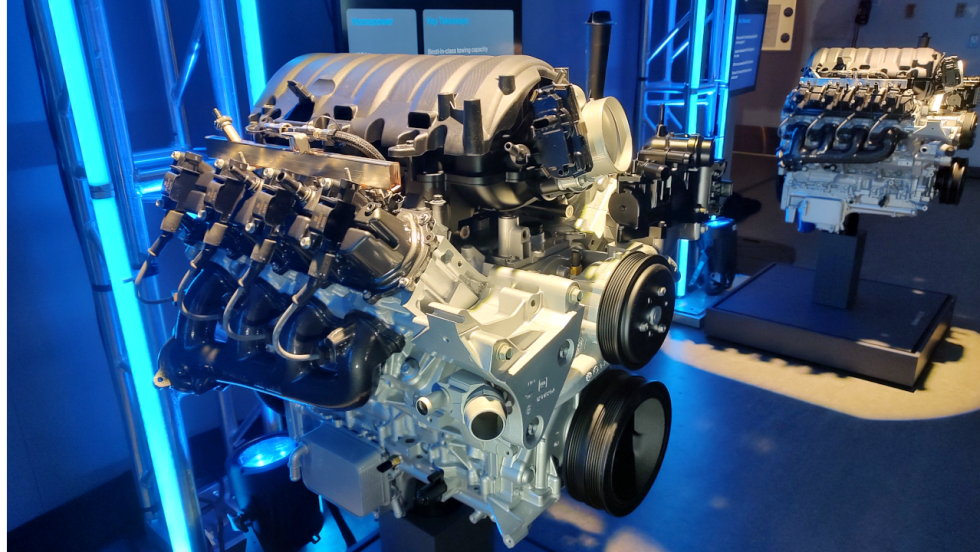
GM Unveils New Sixth-Generation Small Block Engines for 2027 Light-Duty Pickups
General Motors unveiled two new small-block engines, backed by extensive real-world validation and more than 70 years of small-block V8 manufacturing experience, as part of the engine portfolio for the 2027 Chevrolet Silverado 1500 and GMC Sierra 1500.
Read More →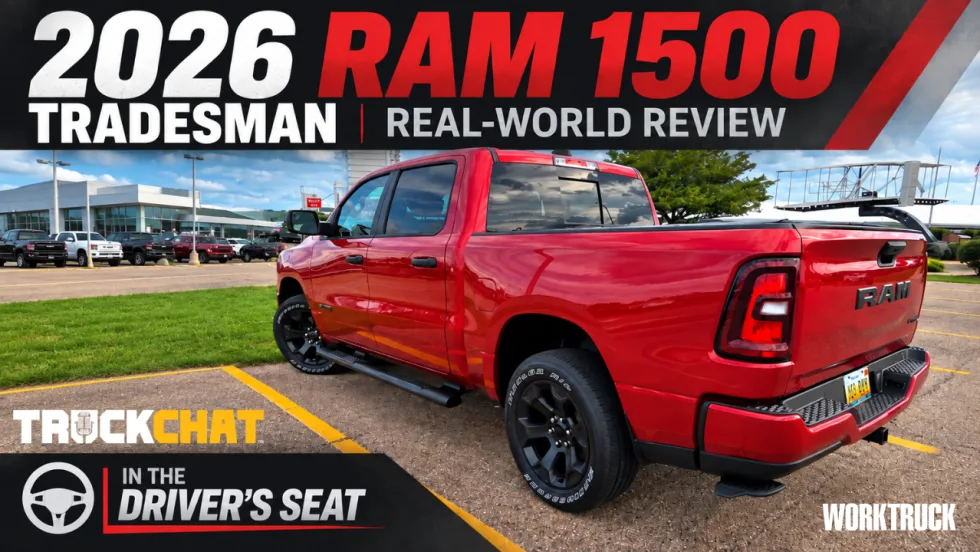
2026 Ram 1500 Tradesman Put to a Real-World Fleet Test
A few days behind the wheel of a 2026 Ram 1500 Tradesman turned into a test of visibility, parking, work-ready features, and even severe-weather driving.
Read More →
Isuzu N-Series Gas Fleet Guide: Specs, Capability and 2027 Model-Year Updates
Explore Isuzu Truck North America’s N-Series Gas fleet specs, engine performance, GVWR and payload capability, configurations, chassis dimensions, work-focused features, and 2027 model-year information.
Read More →
Chevrolet Silverado 1500 Fleet Guide Specs Capability and 2027 Model-Year Updates
The next-generation 2027 Chevrolet Silverado 1500 brings new V-8 engines, updated technology, expanded safety features, and a fleet-focused Work Truck. Here’s what commercial fleets need to know so far.
Read More →
Ram ProMaster City Fleet Guide Specs Cargo Capacity and 2027 Updates
Work Truck’s Ram ProMaster City Fleet Guide tracks the latest specifications, cargo capability, configurations, fleet technology, pricing, and model-year updates for Ram’s mid-size commercial van.
Read More →
Ford F-150 Fleet Guide Specs Capability and 2026 Model-Year Updates
Explore 2026 Ford F-150 fleet specs, engines, towing and payload capability, configurations, work features, technology, and model-year updates.
Read More →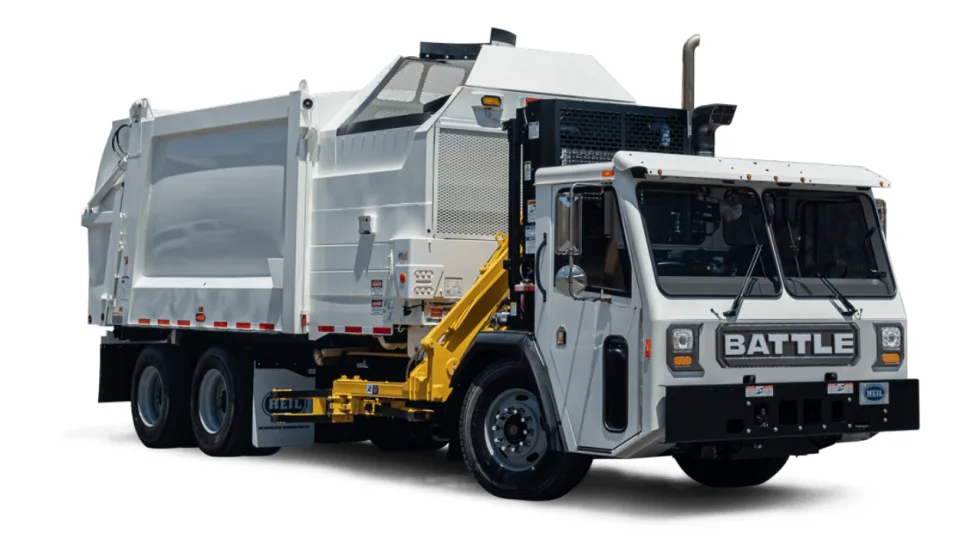
TCI Now Sells & Supports Battle Motors’ Vocational Trucks
Midwest truck dealer Truck Centers, Inc. (TCI) has expanded its transportation solutions with sales and service support for Battle Motors’ heavy-duty vocational trucks at locations in locations in Indiana, Illinois, and Missouri
Read More →
Ram 1500 Fleet Guide Specs, Capability and 2027 Model-Year Updates
Explore always up-to-date Ram 1500 fleet specs, engines, towing and payload capability, configurations, technology, pricing updates, and model-year changes.
Read More →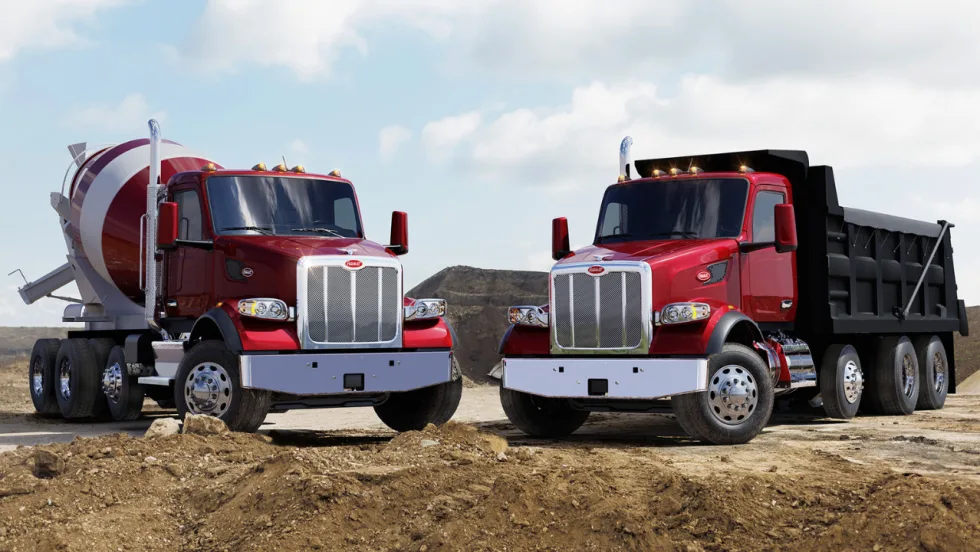
Peterbilt Trucks Equipped with Paccar TX-18 Pro Boost Efficiency for Maryland Fleet
Patuxent Companies is replacing aging trucks with the Peterbilt Model 567 and Model 589, specified with the Paccar TX-18 Pro 18-speed automated transmissions, and is reporting an 8% to 10% improvement in fuel economy.
Read More →
Stellar Expands into Fire Apparatus Market with Acquisition of Midwest Fire
Stellar Industries has acquired Midwest Fire, a custom fire apparatus manufacturer headquartered in Luverne, Minnesota, with nearly four decades of specialized apparatus experience.
Read More →