




Training Fleet Drivers to Safely Navigate Bike-Friendly Cities
Does your fleet’s driver safety program include information on how to safely share the road with bicyclists? Many fleet safety programs don’t, according to Arbella Insurance.

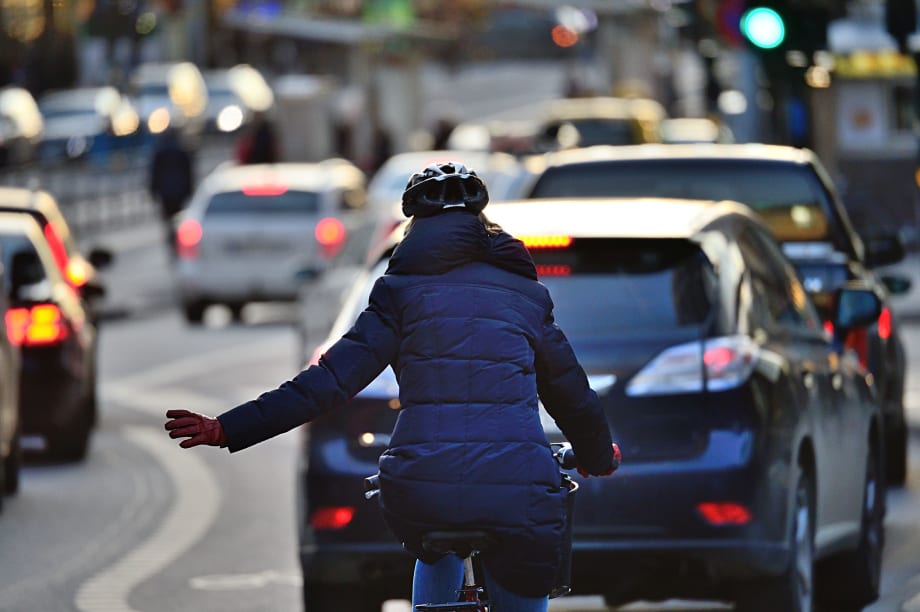
Photo courtesy of AdobeStock
Photo courtesy of AdobeStock
As more cities adopt bike-sharing programs and bicycle riding becomes more popular, fleet drivers should be trained on how to safety drive on the road with bicyclists.
“I think there is a higher volume of bicyclists,” says Bill Hughes, assistant vice president of commercial lines at Arbella Insurance, which insures commercial fleets. “I believe that bicycle safety is a component that should be provided in a fleet’s safety program.”
At Arbella Insurance, Hughes and his colleagues help fleets coordinate their driver safety programs. “We talk to fleets about the importance of continuous driving training,” he says.
When sharing the road with bicyclists, Hughes stresses the importance of driver awareness while on the road. Drivers need to check their rearview mirrors every three to five seconds. This practice can help protect bicyclists as well as pedestrians.
“Too often, drivers are only focused on forward driving,” says Hughes. “They need to check rearview mirrors and side mirrors on a continual basis to make sure the bicyclist or pedestrian isn’t in a blind spot.”
Dangers for Bicyclists
In most bike-friendly communities, the right side of the road is dedicated to a bike path. But being on the right side of the road can put a bicyclist in danger when a driver is making a right-hand turn.
“We believe a bicyclist is most vulnerable when a fleet vehicle is making a turn and the bicyclist isn’t seen,” says Hughes. “Drivers need to remember to always use their turn signals.”
Another common accident — involving bicyclists — occurs because of parked cars, according to Hughes. Trying to avoid getting hit by a parked car’s door swinging open, bicyclists tend to ride further from the parked cars — putting them closer to the center of the lane near moving vehicles.
Potholes can also pose as a danger to bicyclists. There is a tendency for a driver to swerve quickly to avoid the pothole. But when a driver swerves blindly, a bicyclist can’t necessary predict that driver’s behavior and may not be able to get out of the way of the vehicle in time, according to Hughes.
“At Arbella, we have seen more pedestrian accidents in general, and we believe that bicyclists’ injuries are on the rise with more people on bikes using bike-friendly roads,” says Hughes. “There is a vulnerability to bicyclists on congested streets.”
Fleet Safety
Since bike-friendly programs are still fairly new, Hughes believes that most fleets don’t include safe driving tips — involving bicycles — in their driver safety programs.
Arbella has added a discussion on bike safety in its fleet driver safety program. According to Hughes, it’s important that drivers be trained to pass bicyclists at a safe distance — a minimum of 3 feet.
To safely pass a bicyclist, drivers need to leave enough room for the bicyclist but also need to be aware if they are putting themselves at risk, especially if they end up crossing the median strip. Once drivers pass the bicyclist, they need to check their mirrors again to make sure it’s safe to come back into the lane, according to Hughes.
“The driver should always be ready with unpredictable behavior by bicyclists,” says Hughes. “Allow a safe driving distance and proper braking distance so you can react if something happens with the bicyclist. Children riding bikes may lead themselves to more unpredictable behaviors.”
More Small Fleet


Developing Budget-Friendly Driver Safety Programs
From driver training and safety meetings to one-on-one coaching and incentive programs, several small fleets share how they have developed a safety culture with their drivers using low- to no-cost resources.
Read More →
Boosting Last-Mile Fleet Uptime, Safety, and Value with AI Vehicle Inspections
AI-powered inspections are transforming last-mile fleets by replacing manual checks with highly accurate automated scans that detect defects in seconds. By giving fleet operations visibility into the daily condition of their vehicles, you can identify trends over the vehicle’s lifecycle that enable improved procurement decisions, route management, driver training and accountability.
Read More →
Five Ways Seat Belts Help Prevent Injuries
There are five ways seat belts protect occupants from injuries, according to the Tennessee Department of Safety and Homeland Security.
Read More →
It’s here: The 2026 Fleet Technology Trends Report
What does AI mean for fleets? Get the answer — and learn other top tech trends.
Read More →
Small Fleets, Big Impact: How Independent Drivers Power Wreaths Across America
Check out how small fleets and independent drivers power Wreaths Across America each December and why their impact matters more than ever.
Read More →
VMS Survey Finds 65% of Small Fleet Managers Run Operations Alone
A new VMS survey shows small fleet managers are stretched thin, with most handling operations solo and eager to adopt digital tools for relief.
Read More →
Tips for Driving Safely on Halloween Night
This video features a reminder from the Connecticut Department of Transportation (DOT) and the Connecticut Police Chiefs Association, urging drivers to prioritize safety this Halloween.
Read More →
AI, Access, and Uptime: VMS’s Next Chapter with David Prusinski
VMS’s new Co-CEO, David Prusinski, shares how an AI-first approach will give small fleets and repair shops the tools to compete like big players.
Read More →
Fleet Managers Share Winter Prep Tips: It's Never Too Early!
Three fleets share best practices to prep vehicles for winter and prevent downtime when the cold sets in.
Read More →