




Tow Truck Fleet Equipped for 24-Hour Emergency Service
From wreckers to flatbeds to large specialty trucks, this tow truck company’s fleet is prepared to offer towing and emergency roadside assistance 24 hours a day.

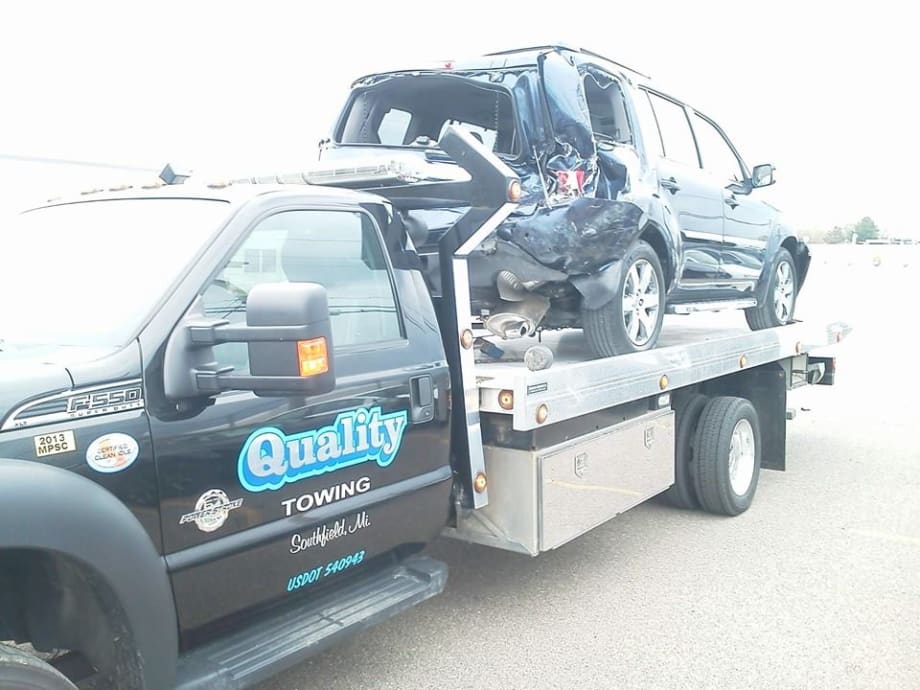
A majority of Quality Towing's business comes from police departments that need an accident vehicle towed.
A majority of Quality Towing's business comes from police departments that need an accident vehicle towed.
In the unpredictable industry of towing, it’s important to be prepared for responding to various types of emergency service calls at all times of the day.
Located in Southfield, Mich., Quality Towing has a tow truck fleet consisting of wreckers, flatbeds and a large specialty truck to handle different types of towing and hauling jobs.
“We wait for the phone to ring,” says Glenn Flynn, owner of Quality Towing. “On average, the amount of towing per day varies and it depends on the weather. On a busier day, we could have around 20 calls.”
A majority of its business comes from police departments that need an accident vehicle towed or auto repair shops needing disabled vehicles picked up, but Quality Towing also provides automobile transport, long haul trucking, abandoned car removal and private property impounds.
Starting in 1984 with one older truck, Flynn’s company has grown to eight diesel trucks — with another truck on the way. His current fleet consists of four Ford trucks (two F550s and two F650s), two T300 Kenworth trucks and two Chevrolet trucks (C5500 and C6500 series).
Responding to calls within the Detroit metro area, the trucks don’t put on a lot of miles per day. According to Flynn, his trucks average about 20,000 to 30,000 miles per year.
“I find it very rewarding helping the motoring public,” says Flynn. “They are normally glad to see me pull up whether it is as simple as changing a tire or assisting them after they have been involved in an accident.”
Unpredictable Business
One of the biggest challenges for Flynn is maintaining a 24 hour service. In case emergency calls come in overnight, he normally has two drivers work the night shift. But during the winter when there are snow or ice storms, Flynn has had most (if not all) his drivers work through the night.
“The drivers take home the flatbed trucks after hours and are dispatched from there,” says Flynn. “It can make for a long day. That is one of the hardest parts of my business: being overwhelmed with calls one day or night and then having no calls the following day.”
Customized Fleet
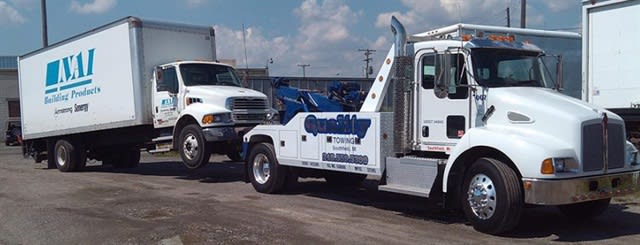
Quality Towing has a truck that can tow large box trucks.
Depending on the towing situation, Flynn has flatbed trucks and wreckers in his fleet. Flatbeds are often used in the industry because all-wheel-drive vehicles need to be towed with all four wheels off the ground, says Flynn.
Additionally, flatbeds have the ability to tow two cars at the same time. Wreckers can be useful for recovering a car from a ditch and require less space than a flatbed to load a vehicle — an advantage when working in a tight urban area or parking lot, according to Flynn.
With five drivers, not all of Flynn’s trucks are used on a daily basis. One truck is designated as a spare and another is specifically used for towing large box trucks. All the other trucks can tow any type of car, says Flynn.
After purchasing the trucks from his local dealership, each truck is drop shipped to American Enterprises, a body manufacturer based in Ohio. According to Flynn, American Enterprises provides the new chassis for his truck.
“American Enterprises will get the chassis for me and it only takes a few weeks to get the body mounted,” says Flynn. “Then they create customized large toolboxes on the sides of each truck.”
These large toolboxes carry equipment needed for towing, such as tie-down chains and straps, as well as brooms and shovels for accident clean-up.
After running the trucks for five to six years, Flynn usually sells them to avoid high mileage. “I have had some luck selling them on eBay,” he says.
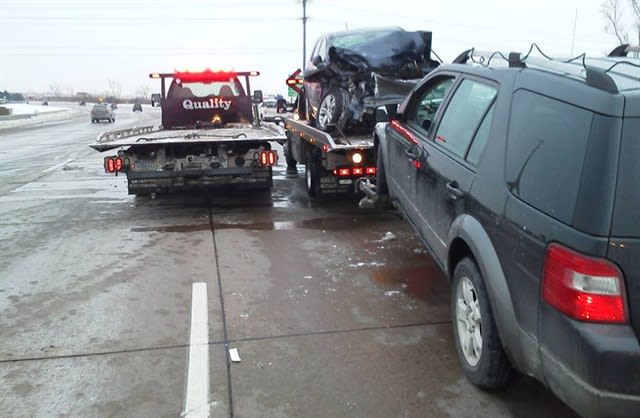
Another example of a motor accident needing tow trucks.
More Small Fleet


Developing Budget-Friendly Driver Safety Programs
From driver training and safety meetings to one-on-one coaching and incentive programs, several small fleets share how they have developed a safety culture with their drivers using low- to no-cost resources.
Read More →
Boosting Last-Mile Fleet Uptime, Safety, and Value with AI Vehicle Inspections
AI-powered inspections are transforming last-mile fleets by replacing manual checks with highly accurate automated scans that detect defects in seconds. By giving fleet operations visibility into the daily condition of their vehicles, you can identify trends over the vehicle’s lifecycle that enable improved procurement decisions, route management, driver training and accountability.
Read More →
Five Ways Seat Belts Help Prevent Injuries
There are five ways seat belts protect occupants from injuries, according to the Tennessee Department of Safety and Homeland Security.
Read More →
It’s here: The 2026 Fleet Technology Trends Report
What does AI mean for fleets? Get the answer — and learn other top tech trends.
Read More →
Small Fleets, Big Impact: How Independent Drivers Power Wreaths Across America
Check out how small fleets and independent drivers power Wreaths Across America each December and why their impact matters more than ever.
Read More →
VMS Survey Finds 65% of Small Fleet Managers Run Operations Alone
A new VMS survey shows small fleet managers are stretched thin, with most handling operations solo and eager to adopt digital tools for relief.
Read More →
Tips for Driving Safely on Halloween Night
This video features a reminder from the Connecticut Department of Transportation (DOT) and the Connecticut Police Chiefs Association, urging drivers to prioritize safety this Halloween.
Read More →
AI, Access, and Uptime: VMS’s Next Chapter with David Prusinski
VMS’s new Co-CEO, David Prusinski, shares how an AI-first approach will give small fleets and repair shops the tools to compete like big players.
Read More →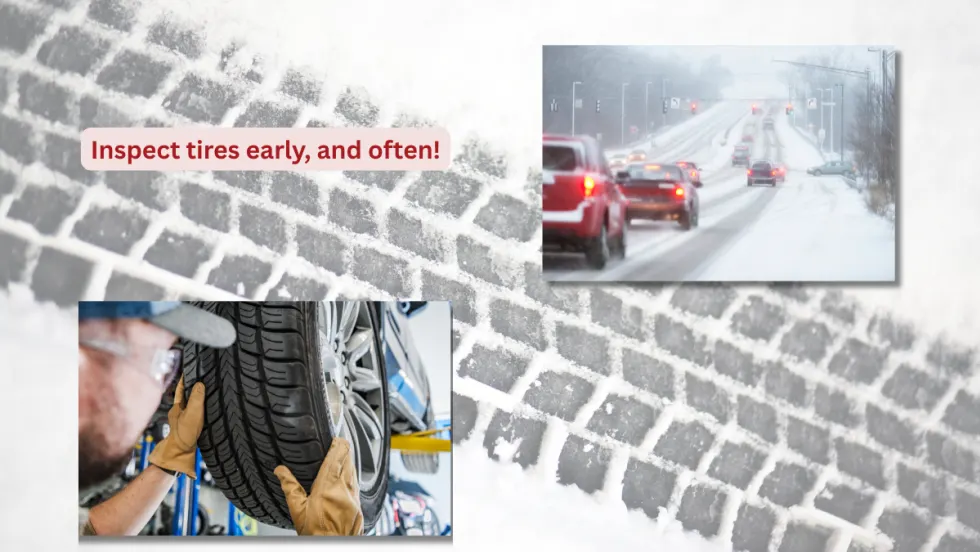
Fleet Managers Share Winter Prep Tips: It's Never Too Early!
Three fleets share best practices to prep vehicles for winter and prevent downtime when the cold sets in.
Read More →