




Toolbox - When Do EVs Make Sense for Fleets?
A new program using actual drive-cycle data will help fleets answer this question from an economic standpoint.

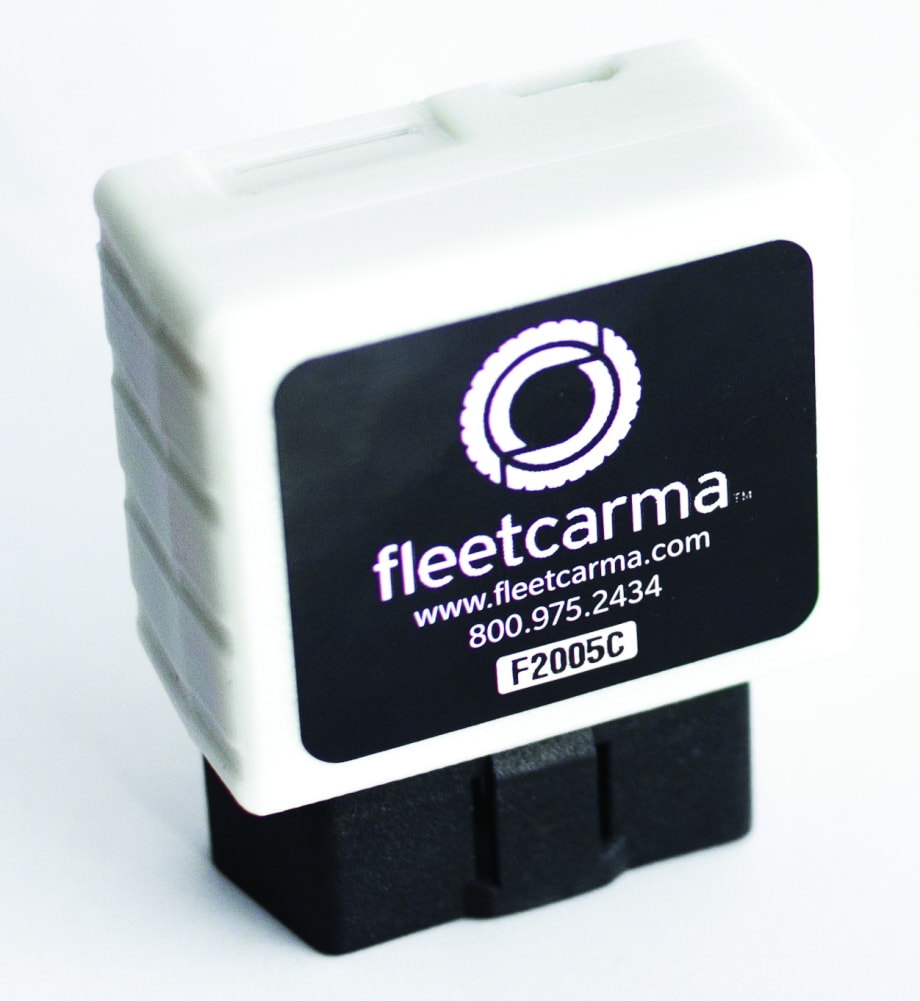
FleetCarma’s data logger.
FleetCarma’s data logger.
If you’re looking to “electrify” your fleet, the hard part comes when choosing from the myriad of plug-in hybrid (PHEVs) and battery-electric models (BEVs) on the market today. The decision becomes even harder knowing that lifecycle costs vary greatly on the range of the electric vehicle (EV), your fleet’s duty cycle and even driver behavior.
A new tool makes the job easier for fleets. FleetCarma uses real-world data from your vehicles to see which electric models would work for your fleet application.
“We’re trying to answer, reliably and quickly for fleet managers, is can the electric vehicle do the job, does it give them environmental benefits and does it fit in their budget,” says Eric Mallia, business development manager for FleetCarma.
The five vehicles in FleetCarma’s model are the 2012 Toyota Prius Plug-In Hybrid, 2011 Chevrolet Volt, 2011 Nissan Leaf, 2011 Mitsubishi i-MiEV and 2011 Ford Transit Connect Electric. The vehicle model library has already been expanded to include 27 additional vehicles, and that number will double by the end of 2012, according to Mallia.
The FleetCarma solution starts with a “data logger,” a matchbox-size device that plugs into a vehicle’s OBDII port. After a three-week test period, the data logger is removed and the data set is uploaded to the FleetCarma servers. Reports show the vehicle’s average fuel economy, miles traveled, when the vehicle was in operation and the duration of trips.
That data is then compared to the EVs’ capabilities to give a total cost of ownership (TCO) for each, as well as show whether the PHEV or BEV model would be range- and charge-capable based on the fleet vehicle’s duty cycle. Each EV is given a FleetCarma score, a ranking calculated on lowest TCOs, energy reductions and emissions reductions.
The system doesn’t depend on published fuel figures to determine the TCO and is customizable to individual fleets, Mallia says. More than 4 million data points are analyzed for each vehicle decision.
Our Test
We ran tests for three vehicles at Business Fleet. The tested vehicles were a 2005 Mazda3, 2006 Toyota 4Runner and 2012 Toyota RAV4. While the tests analyzed commuting and personal miles rather than fleet duty cycles, overall driving patterns varied, as did results.
The RAV4 traveled 1,295 miles, the longest distance in the three-week test. The 4Runner and Mazda3 traveled 873 total miles and 820 total miles, respectively. Daily utilization varied, with the owner of the RAV4 not commuting on Mondays.
The RAV4 averaged 29 mpg and idled only 9.7% of the travel time; the 4Runner averaged 19 mpg and idled 17.4%; while the Mazda3 averaged 27 mpg and idled 14.5%.
The Results
For the RAV4, the EV with the highest FleetCarma score was the Prius Plug-In (58), followed by the Volt (54), i-MiEV (10), Leaf (0) and Transit Connect Electric (0).
For the 4Runner, the Prius Plug-In (67) bested the Volt (65), Leaf (48), i-MiEV (42) and Transit Connect Electric (0).
The Mazda3 data ranked the Leaf (73) first, followed by the i-MiEV (61), Volt (60), Prius Plug-In (59) and Transit Connect Electric (30).
A Quick Analysis
After crunching the numbers, the vehicles most appropriate for each drive cycle became clear. The RAV4 cycle offered enough charge time for all vehicles; but none of the BEVs had enough charge to last the day without an “opportunity charge.”
All vehicles were charge-capable for the 4Runner cycle, yet none of the BEVs were in range all the time.
The Mazda3 cycle was within range for the Leaf, Volt and Prius Plug-In, but only charge capable for the Prius Plug-In and i-MiEV all the time. In this cycle, the more expensive PHEVs were penalized because the BEVs are cheaper, range-capable and almost charge capable.
The program also analyzed energy and emissions reductions. Generally, the BEVs offered the most savings, yet were not always practical for the RAV4 and 4Runner because of range. The PHEVs offered a compromise of range and “green” benefits that fit those vehicles’ duty cycles.
Fleets that would like to test drive the program can sign up for a free trial at www.FleetCarma.com/offer.
Read more articles from Business Fleet's September/October magazine issue here.
More Small Fleet


Developing Budget-Friendly Driver Safety Programs
From driver training and safety meetings to one-on-one coaching and incentive programs, several small fleets share how they have developed a safety culture with their drivers using low- to no-cost resources.
Read More →
Boosting Last-Mile Fleet Uptime, Safety, and Value with AI Vehicle Inspections
AI-powered inspections are transforming last-mile fleets by replacing manual checks with highly accurate automated scans that detect defects in seconds. By giving fleet operations visibility into the daily condition of their vehicles, you can identify trends over the vehicle’s lifecycle that enable improved procurement decisions, route management, driver training and accountability.
Read More →
Five Ways Seat Belts Help Prevent Injuries
There are five ways seat belts protect occupants from injuries, according to the Tennessee Department of Safety and Homeland Security.
Read More →
It’s here: The 2026 Fleet Technology Trends Report
What does AI mean for fleets? Get the answer — and learn other top tech trends.
Read More →
Small Fleets, Big Impact: How Independent Drivers Power Wreaths Across America
Check out how small fleets and independent drivers power Wreaths Across America each December and why their impact matters more than ever.
Read More →
VMS Survey Finds 65% of Small Fleet Managers Run Operations Alone
A new VMS survey shows small fleet managers are stretched thin, with most handling operations solo and eager to adopt digital tools for relief.
Read More →
Tips for Driving Safely on Halloween Night
This video features a reminder from the Connecticut Department of Transportation (DOT) and the Connecticut Police Chiefs Association, urging drivers to prioritize safety this Halloween.
Read More →
AI, Access, and Uptime: VMS’s Next Chapter with David Prusinski
VMS’s new Co-CEO, David Prusinski, shares how an AI-first approach will give small fleets and repair shops the tools to compete like big players.
Read More →
Fleet Managers Share Winter Prep Tips: It's Never Too Early!
Three fleets share best practices to prep vehicles for winter and prevent downtime when the cold sets in.
Read More →