




Tire Selection & Maintenance Tips for Construction Fleets
Construction fleets face a special set of challenges related to proper tire selection and maintenance. Tips for tire selection and maintenance are shared.
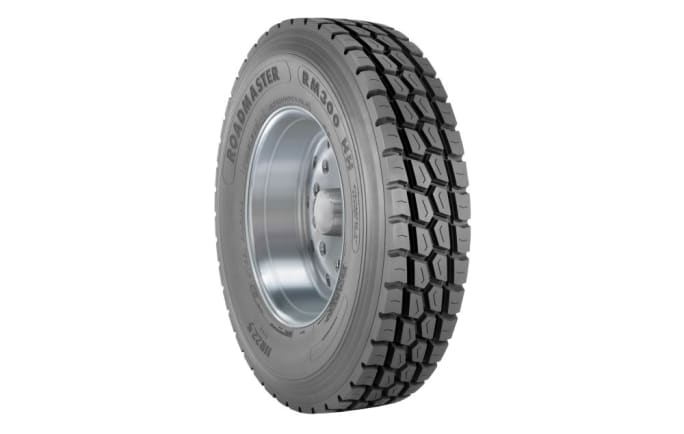
In construction applications, it is best to use mixed-service tires with deep treads and cut/chip resistant tread compounds.
Photo courtesy of Cooper Tire
Long tire life starts with selecting the correct tires for your vehicle and maintaining them throughout their life. The type of tires contractors and construction fleets need depends on the type of fleet they operate and the service application. Having the proper tires and an effective tire maintenance program can help keep drivers safe, avoid costly downtime and reduce operational costs.
Importance of Tire Selection
The tires you select for your application are extremely important. In construction applications, it is best to use mixed-service tires with deep treads and cut/chip resistant tread compounds. These tires will resist cutting and tearing from gravel or debris and they have heavy sidewalls that resist damage from larger objects. The Roadmaster RM300HH features a deep lug pattern to provide excellent driving traction and durability.
In some operations, dump trucks can spend a surprisingly high proportion of their time and mileage on the road rather than on job sites. In these cases, open-shoulder drive tires designed for pick-up and delivery service may be the better choice, such as the Roadmaster RM254. These types of tires deliver longer tread wear since they are designed for highway use and are resistant to scrubbing.
A tire designed for long haul trucks will not necessarily perform well in a mixed service application. Many tires that are used in both paved highway and some gravel roads, or even off road use, require a different tread design and more cut/chip resistant tread to offer the best performance.
Tread designs that resist stone retention are also an advantage in avoiding stone drilling and casing damage. Make sure that the tire load capacity matches the axle weight on your trucks. Mud traction or snow traction may be needed, which will influence the tread design.
Value of Proper Tire Maintenance
Since tires are often the biggest operating expense after fuel, a lot of money is riding on a vehicle’s wheels. After all, a typical tractor/trailer runs 18 wheel positions. The owner’s investment in tires is worth protecting, and it’s worth knowing how to maximize performance based on operational and maintenance factors. There are a number of factors that should be monitored regularly, including proper tire inflation, routine tire rotation, irregular wear, and tire casing integrity.
Ensure Correct Tire Inflation
Maintaining proper inflation pressure in tires is the single most important factor in extending tire life. Both over and under inflation have negative effects on the tire by changing its footprint, which is the area contacting the road. Under inflation can cause excessive heat buildup and can potentially cause internal structural damage. Over inflation can make tires more vulnerable to cutting, punctures or damage from sudden impacts. When the tire is not contacting the road as the tire design intended, the tread area will also wear irregularly and therefore more rapidly. Correct inflation pressure is determined by the load carried for each tire.
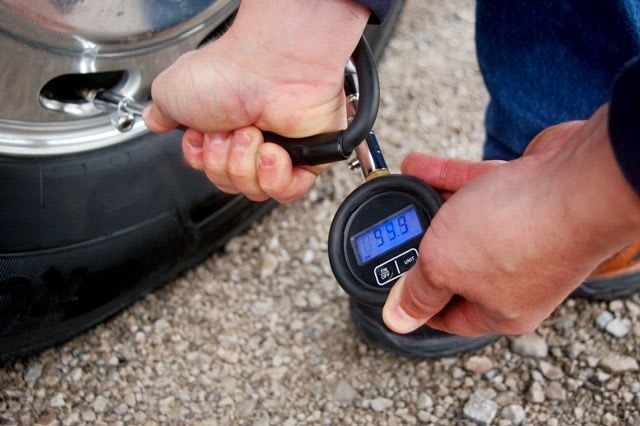
Both over and under inflation have negative effects on the tire by changing its footprint, which is the area contacting the road.
Photo courtesy of Cooper Tire
Perform Routine Tire Rotations
Routinely rotating the tires directly contributes to longer tire life, especially in areas of irregular tread wear. Tire rotation can often improve tire wear, because when there is a change in the direction of the rotation or when cross-rotating the tires, some irregular wear can be improved.
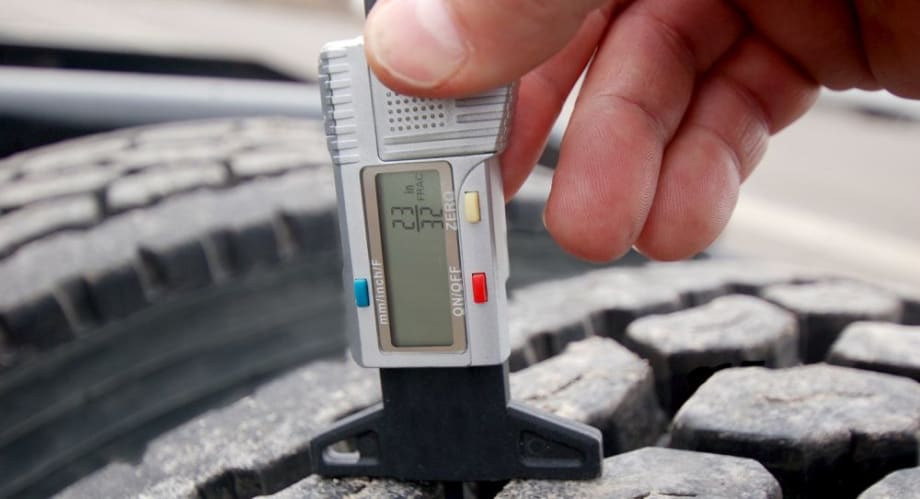
Roadmaster recommends rotating tires when they are 50% worn, or even earlier if they show signs of irregular wear. Changing the direction of rotation also can even out heel/toe wear on the shoulders of drive tires and erratic wear on the shoulders of trailer tires. Steer tires are normally rotated side-to-side, which changes the direction of rotation and helps even out wear.At a 3/32-inch to 4/32-inch difference in tread depth between the drive axle tires, a cross-rotation would be recommended to even out the wear and increase tire life before removal.
Directional tires are the only tires that should not change the direction of rotation. Drivers of trucks with dual drive axles perform a tire rotation if the wear gets to 3/32nds of an inch to 4/32nds of an inch difference from axle to axle. If irregular wear is noticed, a cause must be determined and the situation resolved.
Check for Irregular Wear
While rotating tires can help even out irregular wear, you still need to investigate what is causing the issue. Irregular wear conditions will lead to premature tire removals. When tires are not wearing evenly, fuel economy will drop. Eventually, irregular wear reduces mileage and increases costs, as the need to replace tires becomes more frequent. Irregular wear also causes vibration and ride disturbances.
Tire Casing Integrity
Choosing the correct tire for your needs, maintaining air pressure, tire rotation, and checking wear are integral to preserving tire casing integrity. Other factors include tire performance characteristics such as fuel economy, durability, traction, miles to removal, safety, and price as well as casing retreadability.
At Roadmaster, we believe that to get the most out of your tires, it’s important to find a tire that will provide long miles to removal, as well as one that takes into account the casing quality and belt package. The casing quality will tell you a great deal about the tire – how it will hold up and the value the tire has for its second and third life in retreading. All Roadmaster tires are engineered for retreadability and are backed with a strong warranty of two retreads within six years.
There are a number of factors that should be monitored regularly, including proper tire inflation, routine tire rotation, irregular wear, and tire casing integrity.
Photo courtesy of Cooper Tire
Roadmaster Tire Maintenance and Evaluation Tips
Implement a comprehensive maintenance program that includes regular inspections to check for proper tire pressure, tread depth, and irregular wear. Properly maintained, serviced and inflated tires last longer, so fleets get the most from their tires.
Inspect tires prior to each trip to ensure the tractor and trailer tires comply.
Consider using fleet management software to track tire wear. This can help identify any abnormal wear situations and facilitate timely removal of worn tires.
Consider using tire pressure monitoring systems (TPMS) on trucks and continuous tire inflation systems (CTIS) on trailers in order to simplify and improve tire pressure maintenance. Improved tire pressure maintenance will help improve fuel economy and tire wear.
About the Author
Gary Schroeder is the director of Cooper's truck and bus tire business.
RELATED: What's Wrecking Your Tires?
More Maintenance
Les Schwab Expands Commercial Tire Footprint Into Arizona
Les Schwab Tires has expanded into Arizona with two commercial tire locations in Phoenix and Tucson, strengthening its fleet service footprint in the Southwest.
Read More →
Volvo Trucks’ 'Lock and Leave' Software Updates Go Live Across North America
Unattended over-the-air software updates are now available in Volvo trucks across the U.S. and Canada. The new capability lets trucks stay current with the latest software without interrupting operations or requiring a dealership visit.
Read More →
Why Technician Appreciation Can’t Be a Once-a-Year Thought
For fleets trying to keep skilled technicians, recognition cannot begin and end with Technician Appreciation Week. Learn what year-round appreciation really looks like and why the everyday technician experience matters just as much as pay when fleets are trying to keep good people.
Read More →
How Faster Driver Reporting Can Keep Small Truck Problems Small
When minor damage, warning lights, or equipment issues are reported late, small problems can quickly become bigger maintenance headaches. Conversational AI can help shorten the path from what a driver notices in the field to the person who can act on it.
Read More →
BendPak’s Ranger Wheel Service Equipment Achieves North American Safety Certification
BendPak’s full line of Ranger tire changers and wheel balancers has been ETL certified to UL and CSA standards to improve operator safety.
Read More →
Isuzu & U.S. Department of Labor Celebrate Milestone for Veterans Apprenticeship Program
The Isuzu Veterans Apprenticeship Program (IVAP) signing ceremony highlighted Isuzu’s long-term commitment to veterans, Isuzu dealers, and the skilled workforce supporting its customers and the commercial transportation industry.
Read More →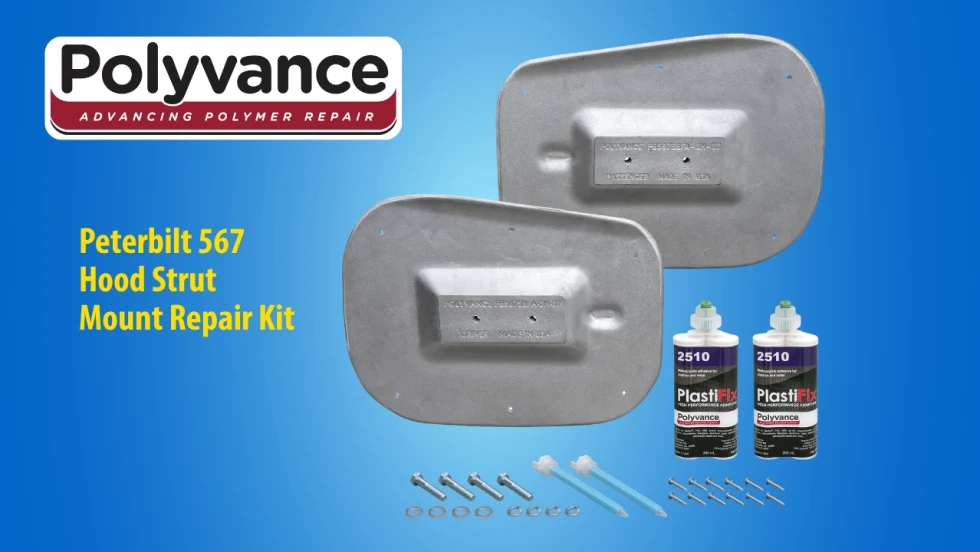
Polyvance Introduces New Peterbilt 567 Hood Strut Mount Repair Kit
Polyvance has launched a repair solution for Peterbilt 567 hood struts, helping truck owners and repair facilities avoid costly hood replacements.
Read More →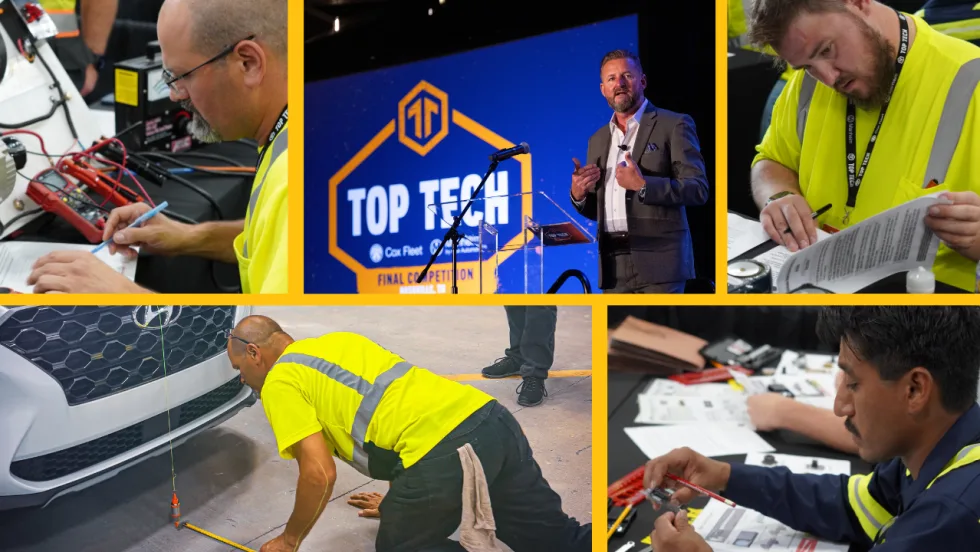
Cox Automotive Celebrates Technical Excellence at 2026 Top Tech Finals
The top technicians from Cox Fleet and Manheim tested their skills in Nashville, Tennessee, at Cox Automotive’s 2026 Top Tech Finals. The overall winners will advance to compete at the American Trucking Association’s TMC SuperTech competition.
Read More →
Grote Industries Appoints Vice President of North American Operations
Grote Industries has appointed Patrick Smith as vice president of North American operations as it celebrates 125 years of innovation and manufacturing excellence. He has more than 20 years of manufacturing leadership experience.
Read More →
Winter Fleet Prep: Expert Tips to Keep Vehicles Running Smoothly
Cold weather can expose weak batteries, tires, fuel systems, and maintenance gaps fast. Use this winter fleet checklist to prepare trucks and drivers before temperatures drop.
Read More →