




The Science of Rightsizing
Steve Fisher uses a proactive approach to fleet cycling and procurement to rein in fleet costs for Communications International.

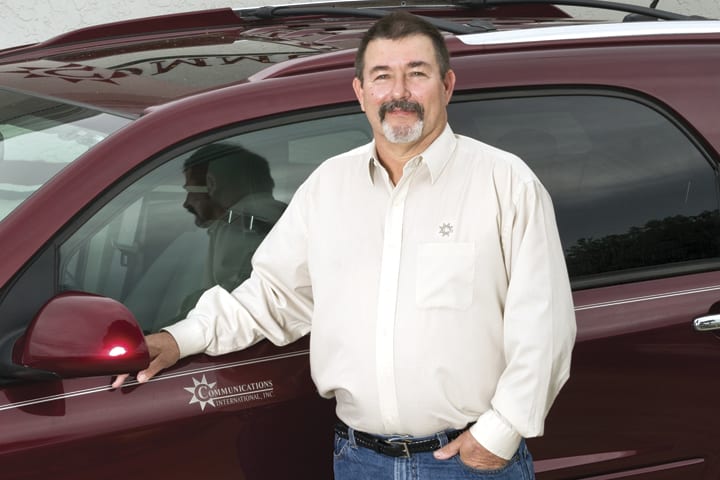
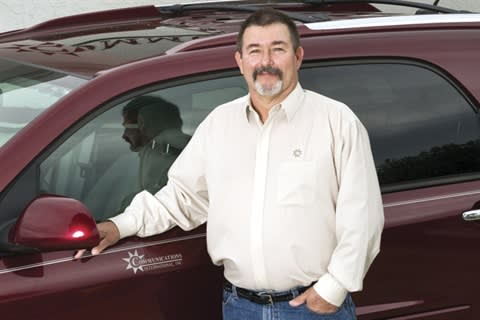
Like many fleet managers, Steve Fisher has more than vehicle acquisition, maintenance and remarketing on his mind when he walks into the office each morning. In fact, after 25 years at Communications International Inc., a Vero Beach, Fla.-based public safety communications systems provider, Fisher’s primary duties remain those of a corporate sales engineer.
So why take on the administration of CII’s fleet of cars, trucks and vans when his predecessor retired four years ago?
“The answer is, I’m a car guy,” Fisher says. “At home, I work on hot rods. I ride Harley-Davidsons. I have a passion for it.”
That passion has paid off for CII. The company’s fleet, now 88 vehicles strong, is significantly leaner and greener than it was four years ago. The secret to Fisher’s success is a scientific approach befitting his engineering background, plus buy-in from management and a new partner on the leasing side.
Rightsizing to Save Money
CII specializes in building public-sector communications systems, including 911 centers and phone systems, in-vehicle hardware and custom software. The company’s fleet is thus tasked with supporting sales, service, engineering and integration operations. It’s not a “one-box-fits-all” operation, as Fisher describes it, but “one-box-per-job.”
“I look at it from an engineering perspective,” he says. “Get the vehicle that fits the job the tech is doing. For a larger territory, that might mean a larger vehicle.”
Larger, that is, than a Chevrolet Astro van, which had come to dominate the service side of the fleet by the time Fisher took over. The company operates service facilities in several municipalities where clients can take police cars, fire trucks and ambulances fitted with CII radios. There, the Astro vans were cycled out in favor of smaller vehicles such as Chevrolet HHR panel vans and Ford Transit Connects. Those moves reduced Fisher’s fuel spend by more than half for some facilities.
For municipalities where CII techs have to cover greater distances and carry more equipment, Fisher went in the opposite direction, to full-size Chevy and Ford vans. “It’s a larger vehicle, but more efficient because they take fewer trips,” he says.
Fisher orders his work trucks and vans the same way he orders his sales reps’ sedans: factory paint job, no outsize logos or phone numbers and no vinyl-wrap advertisements. The vans have only a simple vinyl decal with the company’s initials. “We’re not a Yellow-Pages company,” Fisher says. “When a government agency needs communications, they send out an RFP.”[PAGEBREAK]
More Options, Higher Resale
Most account managers drive a Ford SUV or Chevrolet sedan, and the Malibu has emerged as the vehicle of choice. The look and feel of the fleet helps to create the right impression of the company and retain key employees, according to CII’s president, Mark Feurer.
Feurer is leading CII through its transition to an employee-owned company following the recent retirement of its founder. Pointing to the fact that the company’s decisions are directed by “no shareholders but ourselves,” Feurer has no objection to spending more at the outset on vehicle trim levels that serve as an employee retention tool and bring more resale value at end-of-cycle.
“A little higher quality than we’ll need, we’ll get,” he says. “Steve’s good at getting feature sets that you wouldn’t normally see.”
One example is the Malibu, which Fisher usually orders at the 2LT trim level. For about $3,000 more than 1LT, the package includes luxury items such as a remote starter, Blue-tooth connectivity, and powered and heated seats. True to the company’s mantra, CII’s account managers ride in style without breaking the bank.
“We don’t need a status symbol,” Feurer says. “That would send the wrong signal to our customers.”
Maximizing Value
Fisher remarkets most of the company’s units through local wholesale brokers. “Now, I get three calls a week,” he says. “One said, ‘Whatever you want, I’ll pay!’”
The demand for Fisher’s end-of-cycle and off-lease units is not by accident but design. He spent several long nights researching the basics of fleet management and joined the Automotive Fleet & Leasing Association (AFLA). He met with other automotive professionals — including a one-on-one with former GM exec Bob Lutz — at the organization’s annual conference.
Fisher returned to Vero Beach armed with new strategies. He reconsidered the company’s remarketing strategy and, with a mix of purchased and leased units, decided to put the fleet out for bid before moving forward. That’s how he met Bill Lott, his principal contact at Northbrook, Ill.-based Donlen Corp., a national provider of fleet leasing and management services.
“Steve is a guy who appreciates technology and what it can do for you,” Lott says. “He said, ‘Show me the tools and tell me what I can learn.’”
Lott points to two factors that separate CII’s wholesale units from the rest of the pack: first, the aforementioned trim levels, which offer “more content” in the lanes and better resale value. Second, Lott credits Fisher with exceptional timing, cycling his vehicles out before they hit certain plateaus that tend to put serious dents in the sticker price.
“There are some behaviors I associate with owning vs. leasing, and one is a tendency to drive them until the wheels fall off,” Lott says. “I think Steve recognizes that it’s a pay-me-now or pay-me-later situation. He wants to sell while there’s still some value in them.”
One example is a 2007 Chevrolet Trailblazer that reached the end of its three-year, open-end lease last year. Fisher paid $20,000 for the unit, de-fleeted it at 75,000 miles and sold it for $10,000 at auction. “If we sold it a year later, with 100,000 miles, then it’s worth $3,500 to a buy-here, pay-here lot,” Fisher says.
Advanced Education
With four years of fleet management under his belt, Fisher has already made several of the big decisions. He switched to Donlen and Wright Express fuel cards and decided against the use of GPS or routing software. He also has studied alternative fuels and hybrid powertrains, but neither has emerged as a viable option for CII.
“Hybrids, for us, won’t make sense until gas reaches $4.50 or $5.00 per gallon,” Fisher says. “As for alternative fuels or electric vehicles, you need an infrastructure. If Chevy or Ford built a Colorado or Transit Connect that ran on diesel, I’d convert the entire fleet.”
Whatever the future holds, Fisher’s engineering skills will continue to define his approach to the rebuilding project he started four years ago.
“Fleet is just a small part of Steve’s job,” Lott says. “When you wear multiple hats, it’s easy to say, ‘If it ain’t broke, don’t fix it.’ With Steve, it’s always, ‘Are there ways to reduce cost we haven’t considered?’”
To read more small fleet profiles, click here to see a full list.
More Small Fleet

Developing Budget-Friendly Driver Safety Programs
From driver training and safety meetings to one-on-one coaching and incentive programs, several small fleets share how they have developed a safety culture with their drivers using low- to no-cost resources.
Read More →
Boosting Last-Mile Fleet Uptime, Safety, and Value with AI Vehicle Inspections
AI-powered inspections are transforming last-mile fleets by replacing manual checks with highly accurate automated scans that detect defects in seconds. By giving fleet operations visibility into the daily condition of their vehicles, you can identify trends over the vehicle’s lifecycle that enable improved procurement decisions, route management, driver training and accountability.
Read More →

Five Ways Seat Belts Help Prevent Injuries
There are five ways seat belts protect occupants from injuries, according to the Tennessee Department of Safety and Homeland Security.
Read More →
Basic Tracking vs Next Generation Fleet Technology
Fleet software is getting more sophisticated and effective than ever, tying big data models together to transform maintenance, safety, and the value of your existing tech stack. Fleet technology upgrades are undoubtedly an investment, but updated technology can offer a much higher return. Read how upgrading your fleet technology can increase the return on your investment.
Read More →
It’s here: The 2026 Fleet Technology Trends Report
What does AI mean for fleets? Get the answer — and learn other top tech trends.
Read More →
Small Fleets, Big Impact: How Independent Drivers Power Wreaths Across America
Check out how small fleets and independent drivers power Wreaths Across America each December and why their impact matters more than ever.
Read More →
VMS Survey Finds 65% of Small Fleet Managers Run Operations Alone
A new VMS survey shows small fleet managers are stretched thin, with most handling operations solo and eager to adopt digital tools for relief.
Read More →
Tips for Driving Safely on Halloween Night
This video features a reminder from the Connecticut Department of Transportation (DOT) and the Connecticut Police Chiefs Association, urging drivers to prioritize safety this Halloween.
Read More →
AI, Access, and Uptime: VMS’s Next Chapter with David Prusinski
VMS’s new Co-CEO, David Prusinski, shares how an AI-first approach will give small fleets and repair shops the tools to compete like big players.
Read More →