





The Competitive Edge: In-House Fleet Maintenance
The Importance of Proper Truck Diagnostics
Broken down trucks aren’t making the fleet money. Using truck diagnostics is a sure way to help avoid downtime due to breakdowns.
June 16, 2021

Proper equipment, information, education, and experience are the main elements required
to avoid an improper diagnosis.
Photo: Getty Images
6 min to read
Unplanned downtime can have significant implications for fleet operators and their customers who depend on timely deliveries.
“Operators can be out thousands of dollars a day when they experience unplanned downtime. The impact on smaller operations can be even greater. They are less likely than larger fleets to have replacement vehicles on hand to make scheduled deliveries or work on a jobsite,” explained David Pardue, Mack Trucks vice president of connected vehicle and contract services.
Why Does Truck Diagnostics Matter?
Diagnostics are extremely valuable to the truck fleet operator to ensure that vehicles keep running.
“It is not uncommon for a fleet to have support vehicles for carrying out daily operations. These vehicles may include cars and light trucks for general travel and light deliveries and medium-duty trucks used for maintenance and local haul purposes. These vehicles also need to be maintained and repaired. Without the capabilities to work on these vehicles in-house, the fleet will need to outsource this work,” said Kristy LaPage, business manager, Commercial Vehicle Group for Mitchell 1.
The average light- and/or medium-duty truck fleet is likely using their equipment to support the main aspects of their business.
“Unlike some of the major large-scale heavy-duty trucking fleets which can have dedicated service, maintenance, and fleet managers, light- and/or medium-duty owners may not have the capacity to address every fault code, dash lamp, or driver statement about their vehicles,” said Aparna Venkatraman, director of digital product management for Cummins Inc.
Remote, telematics-based diagnostics solutions notifies fleets and equipment owners of prioritized fault codes and can recommend solutions to resolve the issue.
“This communication helps customers filter out some of the noise and provides guided solutions to optimize equipment use and health,” Venkatraman added.
Vehicles are the backbone of the fleet. Without the ability to properly diagnose them, fleets are losing uptime.
“This loss of uptime means a loss of productivity and profitability. When fleet vehicles aren’t operating at peak efficiency, the fleet has added costs in fuel and time (assuming that the vehicle is even running enough to function at all). With a proper and efficient diagnosis of an issue, the trucks can be back functioning and producing as expected,” said Tom Kraemer, account manager for Snap-on Business Solutions/Nexiq Technologies.
How to Avoid Improper Diagnostics
Once you understand the value of truck diagnostics, the next step is ensuring that you don’t make basic mistakes.
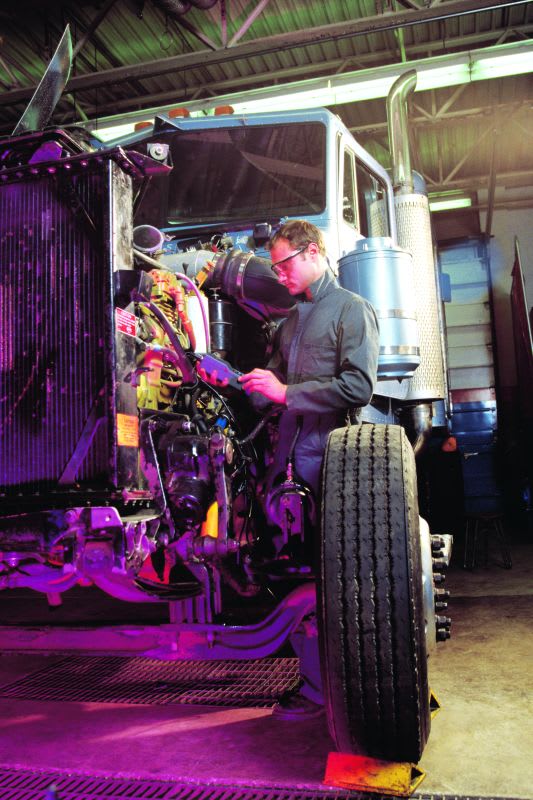
Having the right tools for the job AND knowing how to use them is essential efficient truck fleet maintenance.
Photo: Getty Images
“Access to information is critical. Often a failure code is initiated on a component, and while that component may have suffered a failure, the root cause may have come from another area. Having access to the diagrams and accurate procedures allows the tech to have a full view of the truck, thus giving the tech the ability to diagnose and repair the actual failure as opposed to what may be simply the symptom,” said LaPage of Mitchell 1.
Proper equipment, information, education, and experience are the main elements required to avoid an improper diagnosis.
“Without the proper diagnostic equipment, the technician can only guess as to what the real issues with the truck might be. The technician is then left to troubleshoot an unknown issue, which requires more time than if they had a path to start with. Suppose they don’t have the information necessary to troubleshoot a concern. In that case, they are left guessing where to go next or what systems interact with one another,” said Kraemer of Snap-on Business Solutions/Nexiq Technologies.
Within truck diagnostics, there are many times a technician will have a fault for a system and, for example, needs to diagnose the exhaust gas recirculation (EGR) system first as that could be causing the Variable Geometry Turbocharger (VGT) to operate incorrectly.
“The education relates to all of the points; if the technician does not have the experience, or education, on a system, it is going to take a lot longer to figure it out each time. If they do not know how to operate the diagnostic equipment, it will take them longer to learn it. If they do not know where or how to find the required information, that will also take extra time,” Kraemer added.
Common Diagnostic Problem Areas
Multiple mistakes can lead to improper diagnosis.
“Some of the primary reasons for an improper diagnosis include not having service information, not having adequate diagnostic equipment, taking shortcuts based on assumptions, and lack of diagnostic knowledge,” said LaPage of Mitchell 1.
Another common issue when dealing with vehicle diagnostics is general vehicle performance awareness.
“With the increase in dash-lights associated with aftertreatment systems and on-board diagnostic capabilities, more information is presented to an operator, owner, or service manager than previous generations of products. Cummins offers dash lamp indicator reference cards available for download, and the owner’s manual outlines the respective dash lamps and what they mean,” said Venkatraman of Cummins Inc.
The use of connected diagnostics can provide equipment owners and fleet managers with real-time equipment updates so they can effectively manage operations and minimize impact to the business.
“When a fault code, or lamp is not illuminated, but a troublesome symptom is present, Expert Diagnostics System (EDS) allows technicians to troubleshoot symptom related issues. With guided step-by-step troubleshooting EDS can help resolve hard to diagnose complaints accurately, the first time,” Venkatraman added.
Anytime a truck or vehicle is back in the shop for a comeback or misdiagnosis it is costing the owner/operator money.
“The cost is accrued from the vehicle not being in service plus the requirements to deliver it back to the shop. It may require two or more drivers to deliver the vehicle to the shop or a tow (both of which can be expensive). Then, the vehicle is tied up for however long it takes to figure out the true issue/concern. In addition, there may be -additional costs for subsequent repairs, as well as the costs associated with the previous session that did not fix the problem in the first place,” said Kraemer of Snap-on Business Solutions/NEXIQ Technologies.
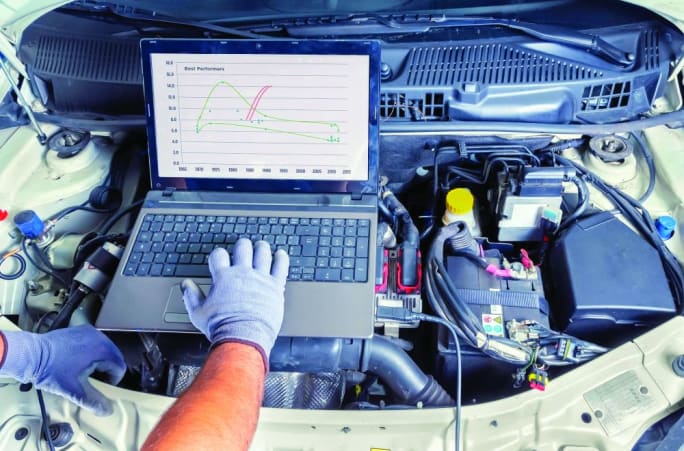
Diagnostics are extremely valuable to the
truck fleet operator to ensure that vehicles
keep running.
Photo: Getty Images
The Bottom Line
The value of ensuring proper truck diagnostics is undeniable.
“It’s important to remember that the diagnostic tools today not only help techs ‘hear’ from a truck when it has a breakdown, but also help techs perform regular diagnostic checks to detect minor issues that when caught early, can help to prevent or reduce costly repairs later,” said LaPage of Mitchell 1.
Having the proper tools for the job, and being able to use them quickly and easily, is extremely important.
“Having trusted and reliable OEM-approved data is also extremely important (since you know that the data is good and you don’t have to be concerned about the validity of the information that you are using to evaluate the concerns with the vehicle),” said Kraemer of Snap-on Business Solutions/NEXIQ Technologies.
And remember: Trucks never breakdown where it is convenient.
“Having a tool that you can take anywhere, and immediately read the vehicle, saves the most amount of time and money. This is especially true if you encounter issues when reading the vehicle, which only adds frustration to the technician and delays. The technician does not want, nor need, to hunt for a power source or make sure that his software is active to use it. He just wants to read the vehicle, fix it, and move on to the next task,” Kraemer concluded.
Subscribe to Our Newsletter
More Maintenance
Les Schwab Expands Commercial Tire Footprint Into Arizona
Les Schwab Tires has expanded into Arizona with two commercial tire locations in Phoenix and Tucson, strengthening its fleet service footprint in the Southwest.
Read More →
Volvo Trucks’ 'Lock and Leave' Software Updates Go Live Across North America
Unattended over-the-air software updates are now available in Volvo trucks across the U.S. and Canada. The new capability lets trucks stay current with the latest software without interrupting operations or requiring a dealership visit.
Read More →
Why Technician Appreciation Can’t Be a Once-a-Year Thought
For fleets trying to keep skilled technicians, recognition cannot begin and end with Technician Appreciation Week. Learn what year-round appreciation really looks like and why the everyday technician experience matters just as much as pay when fleets are trying to keep good people.
Read More →
How Faster Driver Reporting Can Keep Small Truck Problems Small
When minor damage, warning lights, or equipment issues are reported late, small problems can quickly become bigger maintenance headaches. Conversational AI can help shorten the path from what a driver notices in the field to the person who can act on it.
Read More →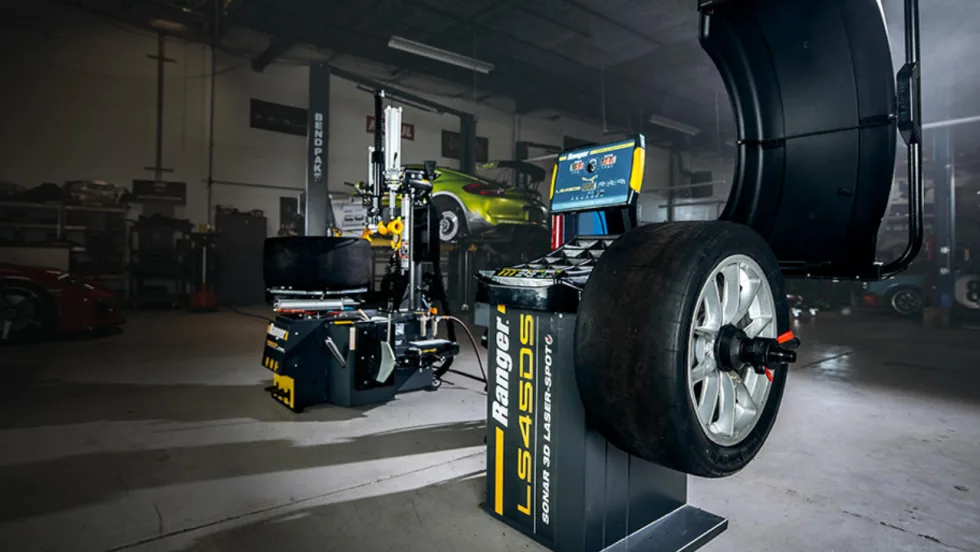
BendPak’s Ranger Wheel Service Equipment Achieves North American Safety Certification
BendPak’s full line of Ranger tire changers and wheel balancers has been ETL certified to UL and CSA standards to improve operator safety.
Read More →
Isuzu & U.S. Department of Labor Celebrate Milestone for Veterans Apprenticeship Program
The Isuzu Veterans Apprenticeship Program (IVAP) signing ceremony highlighted Isuzu’s long-term commitment to veterans, Isuzu dealers, and the skilled workforce supporting its customers and the commercial transportation industry.
Read More →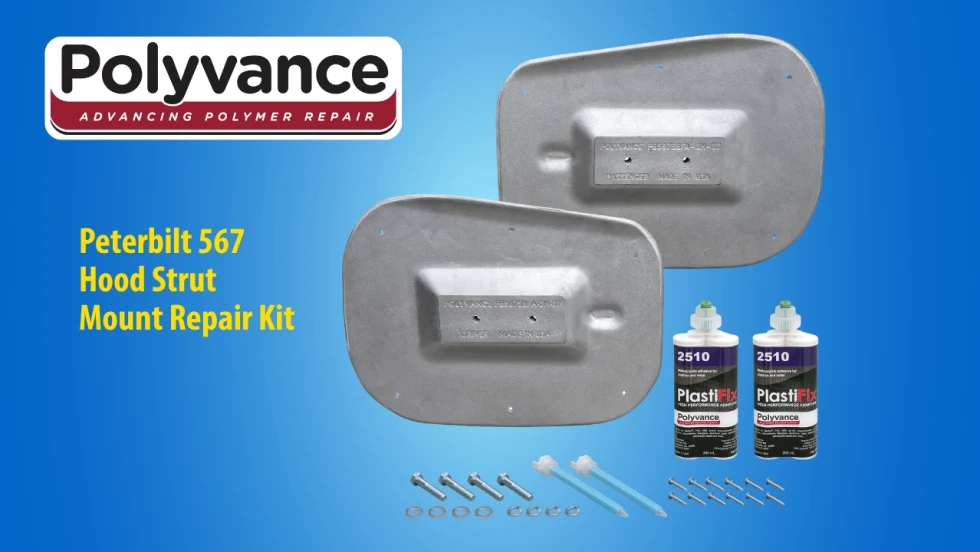
Polyvance Introduces New Peterbilt 567 Hood Strut Mount Repair Kit
Polyvance has launched a repair solution for Peterbilt 567 hood struts, helping truck owners and repair facilities avoid costly hood replacements.
Read More →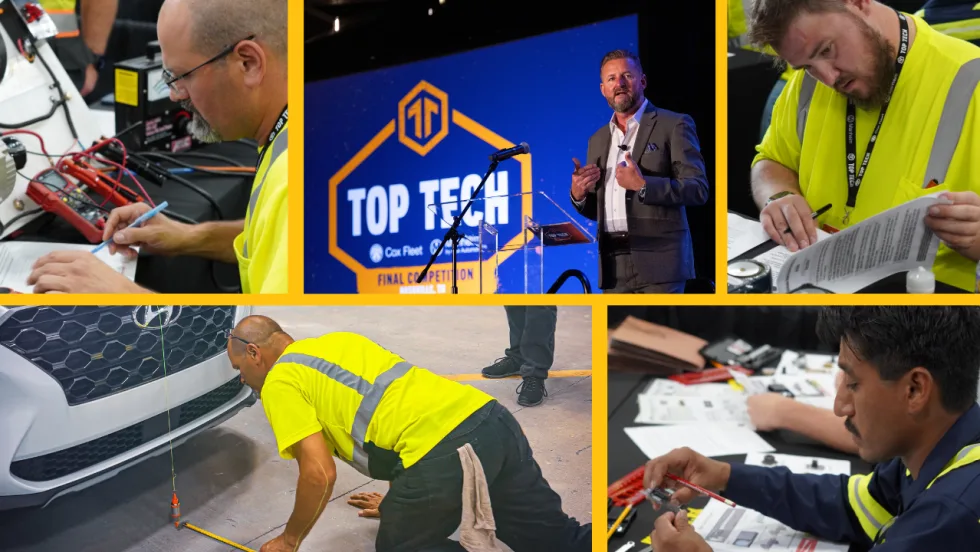
Cox Automotive Celebrates Technical Excellence at 2026 Top Tech Finals
The top technicians from Cox Fleet and Manheim tested their skills in Nashville, Tennessee, at Cox Automotive’s 2026 Top Tech Finals. The overall winners will advance to compete at the American Trucking Association’s TMC SuperTech competition.
Read More →
Grote Industries Appoints Vice President of North American Operations
Grote Industries has appointed Patrick Smith as vice president of North American operations as it celebrates 125 years of innovation and manufacturing excellence. He has more than 20 years of manufacturing leadership experience.
Read More →
Winter Fleet Prep: Expert Tips to Keep Vehicles Running Smoothly
Cold weather can expose weak batteries, tires, fuel systems, and maintenance gaps fast. Use this winter fleet checklist to prepare trucks and drivers before temperatures drop.
Read More →