




Super Size Me: Dodge Sprinter Van
The 2007 Dodge Sprinter is longer, wider, taller and more spacious than its predecessor, and offers more choices and features than ever before.

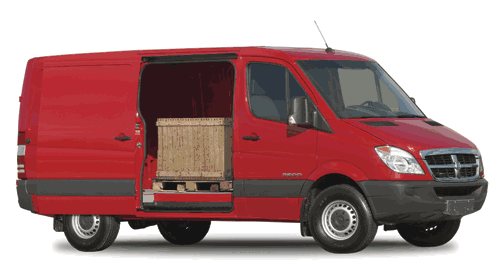
The 2007 Dodge Sprinter is powered by a new 3.0L V-6 turbodiesel engine that gives 154 hp and maximum torque of 280 lb.-ft. at 1,200-2,400 rpm.
Photo: Dodge
"Super size me." Think twice when you tell this to the drive-through attendant unless you're looking for a super-sized waistline.
The all-new 2007 Dodge Sprinter, however, wears that phrase well. The 2007 Dodge Sprinter is longer, wider, taller, and more spacious than its predecessor, and offers more choices and features than ever before. There are three basic Sprinter variations-as a cargo or passenger van or an upfit-ready chassis cab.
Sprinter is available in three vehicle lengths (233, 273, and 289 inches) on two new wheelbases of 144 inches or 170 inches (or 170 inches extended with a 15-inch longer rear overhang). It also boasts three interior roof height options: standard (65 inches), high (76 inches), and new super (84 inches).
Add to that 23 color choices and you've got a myriad of possibilities to fit your work application. New standard features include a pallet-friendly cargo-sliding side door, power windows and locks, integrated wide-angle mirrors, clear-lens halogen H-7 headlamps, 16-inch wheels, tilt-and height-adjustable steering wheel, seats with quick-release latches, CD radio, one-touch triple flash function turn signals and all-new adaptive electronic stability program (ESP).
All-new sliding cargo doors and rear doors have been developed for numerous versions, which also boast a wide rear door that swings out 270 degrees.
The 2007 Dodge Sprinter is powered by a new 3.0L V-6 turbodiesel engine that gives 154 hp and maximum torque of 280 lb.-ft. at 1,200-2,400 rpm. (The optional 3.5L V-6 gas engine churns out 254 hp.) How's that for more of everything?
Functionality, Refinement and Power
For a van that seats up to 10 or packs up to 600 cubic feet of cargo, we found the Sprinter to be surprisingly nimble. The turning radius is tight and backing into parking spaces, aided by the panoramic view and big side mirrors, is easy enough for a soccer mom to handle.
The interior has a refined finish that belies its work van status. The cabin is quiet, which became especially noticeable after a comparison drive of a competitor's van. The Ralph Kramden-style bus steering wheel has been replaced by a comfortable tilt wheel. The Mercedes-inspired instrument panel displays your trip's average miles per gallon.
In our day-long jaunt, a survey of six Sprinter drivers revealed an average fuel economy of about 20 mpg. On an extended drive up the Southern California coast, the Sprinter averaged 18 mpg loaded with gear and people.
Even loaded, this van has plenty of power and torque, taking hills and passing other commercial vehicles with ease. Though the Sprinter has sold more than 1.2 million units worldwide since its debut in 1995, the tall, thin hauler is still a novelty in a suburban parking lot.
Business and small fleets take note: wrap a Sprinter with your company's branding and watch heads turn. Some 400 Dodge BusinessLink dealers sell the Sprinter. The Sprinter is also sold through Freightliner dealers.
How to Build a Sprinter
We were invited in March to the official grand opening of the new Dodge Sprinter plant in Ladson, South Carolina. Governor Mark Sanford and Wilfried Porth, head of the Mercedes-Benz Vans Business Unit of DaimlerChrysler AG, presided over the ceremonies.
The Ladson plant is best termed a reassembly and final assembly point. The Sprinter cargo model is built and assembled in Dusseldorf, Germany. It is then disassembled and shipped to the Ladson plant, where the engine, transmission, axle, drive shaft and front end are reassembled.
The Chassis Cab and passenger Sprinter models are completely built in Germany and only undergo final preparation in South Carolina. Why the fuss? Foreign vehicles entering the U.S. get hit with about a 25 percent tariff. That tax is much less if the vehicle is assembled here.
Sprinter Plant by the Numbers
DaimlerChrysler invested $35 million in the plant, which previously produced American La France fire trucks.
DaimlerChrysler transitioned from a plant in Gaffney, S.C. to meet growing demand.
DaimlerChrysler expects to roll out 22,000 Sprinters from this plant for the U.S. market in calendar year 2007.
The Ladson plant has a capacity for 32,000 units.
About 180 workers produce 70 vans daily in two nine-hour shifts, five days a week. DaimlerChrysler says the goal is to produce 85 to 90 vans daily.
It takes two hours to produce one van. The vans travel through 24 work stations and spend about 8.5 minutes at each station.
Each station has one to five workers. Workers are trained on four stations and rotate among them for ergonomic and safety reasons.
More Small Fleet


Developing Budget-Friendly Driver Safety Programs
From driver training and safety meetings to one-on-one coaching and incentive programs, several small fleets share how they have developed a safety culture with their drivers using low- to no-cost resources.
Read More →
Boosting Last-Mile Fleet Uptime, Safety, and Value with AI Vehicle Inspections
AI-powered inspections are transforming last-mile fleets by replacing manual checks with highly accurate automated scans that detect defects in seconds. By giving fleet operations visibility into the daily condition of their vehicles, you can identify trends over the vehicle’s lifecycle that enable improved procurement decisions, route management, driver training and accountability.
Read More →
Five Ways Seat Belts Help Prevent Injuries
There are five ways seat belts protect occupants from injuries, according to the Tennessee Department of Safety and Homeland Security.
Read More →
It’s here: The 2026 Fleet Technology Trends Report
What does AI mean for fleets? Get the answer — and learn other top tech trends.
Read More →
Small Fleets, Big Impact: How Independent Drivers Power Wreaths Across America
Check out how small fleets and independent drivers power Wreaths Across America each December and why their impact matters more than ever.
Read More →
VMS Survey Finds 65% of Small Fleet Managers Run Operations Alone
A new VMS survey shows small fleet managers are stretched thin, with most handling operations solo and eager to adopt digital tools for relief.
Read More →
Tips for Driving Safely on Halloween Night
This video features a reminder from the Connecticut Department of Transportation (DOT) and the Connecticut Police Chiefs Association, urging drivers to prioritize safety this Halloween.
Read More →
AI, Access, and Uptime: VMS’s Next Chapter with David Prusinski
VMS’s new Co-CEO, David Prusinski, shares how an AI-first approach will give small fleets and repair shops the tools to compete like big players.
Read More →
Fleet Managers Share Winter Prep Tips: It's Never Too Early!
Three fleets share best practices to prep vehicles for winter and prevent downtime when the cold sets in.
Read More →