





Women in Fleet: Meet Sue Miller. Motivated by people and change, Miller has been involved in fleet for almost four decades in a variety of roles.
Sue Miller on Listening First, Leading with Trust, and Building Fleet Through People
Sue Miller didn’t just manage fleets. She moved the industry forward. Legend of Fleet, earned.
February 5, 2026
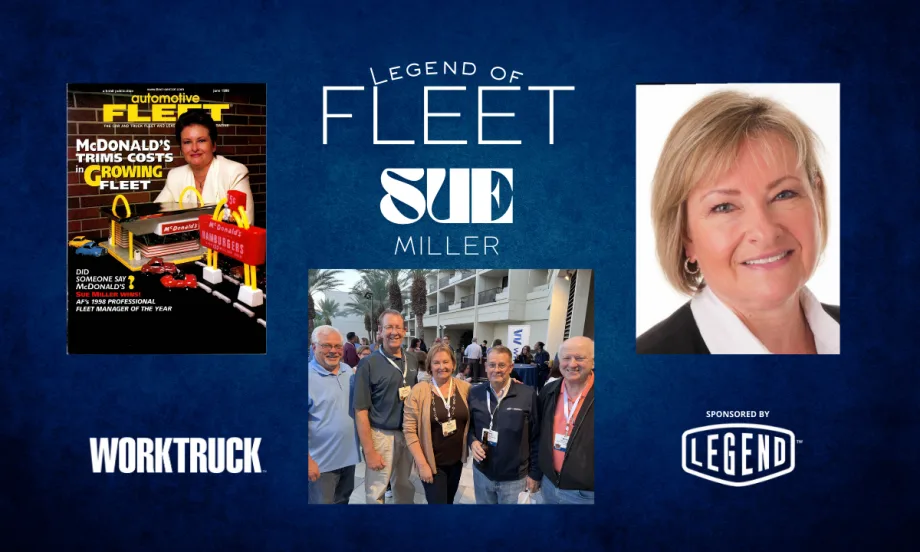
Sue Miller, a pioneering fleet leader and former McDonald’s fleet executive, is honored as a Legend of Fleet for her leadership, mentorship, and lasting industry influence.
Credit: Work Truck | Automotive Fleet | Sue Miller
6 min to read
Fleet may be powered by vehicles and technology, but Sue Miller’s career is a reminder that the industry has always been built on relationships.
With more than four decades in fleet, Miller didn’t just witness the evolution of the profession. She helped shape it. From becoming one of the first fleet coordinators at her company to navigating leadership roles during a time when few women held them, Miller’s journey reflects the growth of fleet itself, from file drawers and paper titles to telematics, data, and driver-focused technology.
And through it all, one principle never changed.
“Fleet has always been about people,” she said.
A Role That Didn’t Exist Yet
Miller’s fleet career didn’t begin with a job posting. It started with curiosity and a drawer full of paperwork.
In the late 1970s, she was working as an administrative assistant to the treasurer at ServiceMaster Industries in Downers Grove, Illinois. Fleet wasn’t a formal department yet, but the signs were there. Titles, repair bills, and receipts for hundreds of vehicles were stuffed into a single drawer.
“It just went against my nature to have everything in a pile,” Miller said.
She started organizing the records and quickly realized the scope of the operation. ServiceMaster had more than 500 vehicles, and no one was officially managing them.
Rather than waiting for direction, Miller started building the role herself. With guidance from industry contacts and exposure to NAFA, she drafted a job description tailored to the company's needs and presented it to leadership.
“They created a position for me,” she said. “I became the first ever fleet coordinator.”
It was a pattern that would repeat throughout her career. See a need. Learn everything you can. Step forward.
The Power of Networking, Before It Was a Buzzword
As Miller moved through roles at AB Dick, Keebler, and eventually McDonald’s, networking became a defining force in her growth.
Introductions through the Chicagoland Dealers Association opened doors to relationships with early fleet and leasing leaders at companies like Wheels and ARI. Many of those mentors, she noted, are now retired or gone, but their influence remains foundational.
“It was through those relationships that I really learned how to grow, not just my knowledge, but my confidence,” Miller said.
Her involvement in both NAFA and what was then the Automotive Fleet & Leasing Association helped her expand her perspective and sharpen her leadership skills.
“I really learned how to network and build and leverage those relationships,” she said. “That’s where I blossomed.”
Navigating Leadership as a Young Woman
Miller entered fleet management at a time when women were only beginning to step into visible leadership roles.
“At that time, most women were just breaking into management,” she said.
At McDonald’s, she worked under Bonnie Kass, the company’s first female vice president, an experience Miller credits as both inspiring and grounding.
“I was blessed to have really respectful and dedicated people who wanted to help me develop and grow,” she said.
That support helped her push forward in an industry that was still finding its footing in diversity in leadership.
Technology Changed Everything, and Nothing
When asked about the biggest changes she’s seen in fleet, Miller doesn’t hesitate to name technology.
From front-wheel drive becoming standard to ABS, telematics, cameras, and data-driven decision-making, the transformation has been dramatic. But she’s quick to point out that technology is only part of the story.
“Technology is what catapulted and changed so much,” she said. “Not just in how vehicles are designed, but in how we manage fleets.”
Still, she cautions against losing sight of fundamentals.
“All of that technology is gold,” she said. “But you still need to know how to use it, and you still need to understand the people behind the wheel.”
Lessons for New Fleet Managers
For those just entering the industry, Miller believes listening is the most underrated skill.
“Be an extremely good listener and a good interviewer,” she said.
Early in her career, she was encouraged to treat conferences not as events, but as opportunities. Make a list of people you don’t know. Seek them out. Learn who they are beyond their job titles.
“Take an interest in people,” Miller said. “They’ll open up to you about what matters to them.”
That advice applies just as much to vendors as it does to fellow fleet managers.
“Everybody has a goal,” she said.
Confidence Without Arrogance
If Miller could go back and offer her younger self one piece of advice, it would be this.
“You have the right to be there,” she said.
She acknowledges how intimidating industry events and meetings can feel, especially early on. But self-doubt, she said, only gets in the way of learning.
“Don’t go in feeling like you shouldn’t be there,” Miller said. “You’re there for a reason.”
She also encourages newcomers to enjoy the experience.
“It’s okay to laugh,” she said. “Have some fun.”
Avoiding the Rookie Traps
One mistake Miller sees too often is isolation, especially in vendor relationships.
“Don’t let yourself become so beholden to one vendor that you stop seeing things objectively,” she said.
Fleet managers, she believes, should always be open to different perspectives and solutions.
The other pitfall is trying too hard to prove expertise too quickly: “You don’t need to impress everyone right away,” Miller explained. “That will come.”
Listening, once again, is the throughline.
Fleet Is a Team Sport
Despite spending much of her career on the customer side, Miller emphasizes transparency and trust in every relationship.
“You have to be consistent. You have to be honest,” she said. “About what you need, what you can afford, and what success looks like.”
She also stresses that fleet managers cannot operate in silos.
“You’re working with legal, HR, finance, IT, safety,” she said. “They all influence what you can accomplish.”
Understanding those relationships and supporting other departments in return is what allows fleet to move forward.
Leading Through Change
When it comes to leadership, Miller returns to communication and trust. “If your team doesn’t trust you, you won’t get honest answers,” she said.
She believes leaders must create space for open dialogue, especially during periods of stress, change, or uncertainty. “You need to help people feel safe,” Miller added.
Keeping teams motivated isn’t always easy, and she’s candid about that. “It doesn’t always work,” she said. “Even leaders need mentors.”
Training, exposure, and learning opportunities, she believes, are some of the most valuable investments leaders can make in their teams.
Looking Ahead
For the next generation of fleet managers, Miller sees both opportunity and challenge. “You’re very well equipped for the technology,” she said. “You’ve grown up with it.”
The more challenging part will be balancing that technology with the human factor.
“Drivers are still the most important part of a safe and efficient fleet,” she said. “Helping them navigate all of this is going to be the biggest challenge.”
After more than 40 years in fleet, Miller says she never imagined doing anything else. “It’s been an amazing ride,” she said.
Fleet, she believes, takes a village. And she’s grateful for every mentor, peer, and colleague who helped shape her journey. “I encourage you just to embrace it,” Miller said.
Want to watch more legendary stories from the experts? Check out the full series, sponsored by LEGEND.
Subscribe to Our Newsletter
More Operations
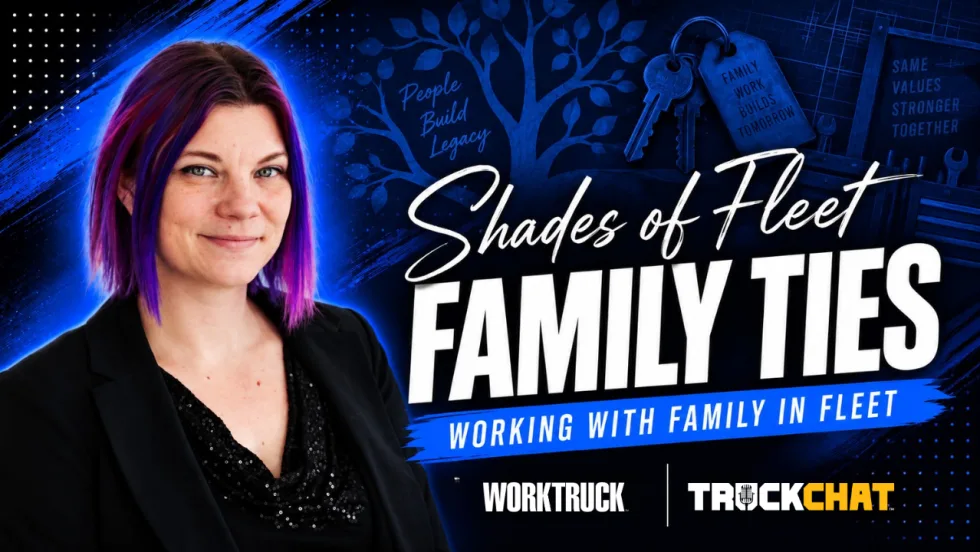
Family Ties Inside the Fleet Families Building Careers Across Generations
Three fleet families share what it really takes to work together, learn across generations, and keep business from following them home.
Read More →
Shades of Fleet Call for Voices: Fleet's Hidden Heroes
Fleet’s hidden heroes are often the ones keeping everything moving behind the scenes. September’s Shades of Fleet is looking for dispatchers, coordinators, parts specialists, and other support pros to share their stories.
Read More →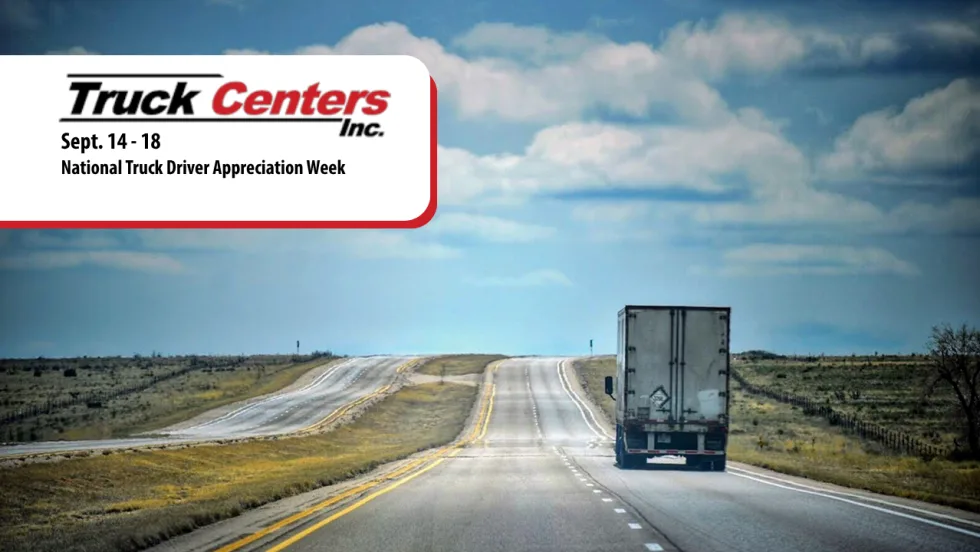
Truck Centers, Inc. Celebrates National Truck Driver Appreciation Week with $1,000 Fuel Card Giveaways
During National Truck Driver Appreciation Week, Truck Centers, Inc. is offering customers a chance to fuel up for free. Customers at all Truck Centers locations can enter to win one of four $1,000 fuel cards from Sept. 14 - 18.
Read More →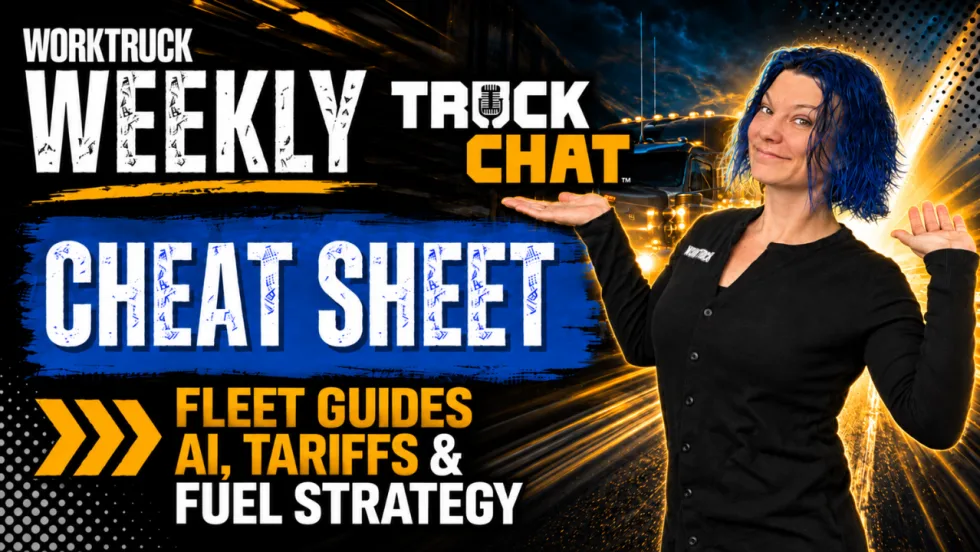
Fleet Guides, AI Time-Savers, Truck Tariffs & Fuel Strategy Lead the News
This week’s Truck Chat Cheat Sheet covers new fleet vehicle guides, practical AI use cases, U.S.-Canada truck production, mixed-energy strategy, and more.
Read More →
What Fleet Employers Are Missing When Hiring Veterans
What if some of the strongest candidates for fleet are already out there, but their experience is written in a language our industry does not always recognize?
Read More →
Automotive Fleet Opens 2026 Personal Use Survey for Commercial Fleet Managers
Less than two weeks left! Commercial and corporate fleet managers are invited to share how their organizations handle company vehicle personal-use policies, charges, and driver eligibility.
Read More →
What Resilient Fleets Do Differently When Conditions Change
Fleet resilience is about more than reacting to disruption. Lauren Fletcher talks with AP Fleet’s Alex Coveney about flexibility, planning, scaling, and what helps fleets adapt when business conditions shift.
Read More →
If We Want the Next Generation in Automotive, We Have to Give Them a Reason to Care
The automotive industry talks constantly about its workforce shortage. But before we can recruit the next generation, we may need to do a better job giving kids a reason to care about automotive in the first place.
Read More →
Ram ProMaster City Under $40K, Truck Tariffs, and AI Maintenance Lead the News
A sub-$40K commercial van, tariff questions, AI-powered maintenance, and a new EV production strategy headline this week’s Truck Chat Cheat Sheet.
Read More →
Bob Adamsky Shares the Fleet Lessons You Usually Learn the Hard Way
After more than 30 years in fleet, Arrow International’s Bob Adamsky has learned that the job is about far more than vehicles. He shares the lessons he wishes every fleet manager could learn a little earlier.
Read More →