




Related: Improve Worksite Efficiency with Truck & Van Storage Solutions
Spec'ing Trucks for Enhanced Productivity
As vehicle technology continues to advance, experts suggest you build the truck that specifically benefits your organization, and revise those specs to keep up with the industry.

Roselynne Reyes・Senior Editor
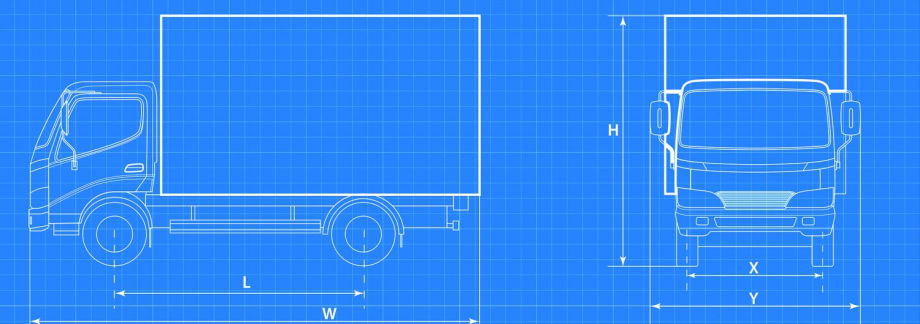
Understanding how a truck will be used will help you determine what equipment is needed and what equipment can be removed.
Photo: Getty Images
7 min to read
Spec’ing a vehicle can be a misleading task. It’s something fleet managers are probably already aware of, and may already believe they can do well. But, under-spec’ed and over-spec’ed trucks often come with their disadvantages, including unnecessary costs and loss of productivity.
“The wrong vehicle will not meet our customer’s needs. Productivity will suffer, drivers will be unhappy, and our customer and their customers will not be served. Proper vehicle specifications are the key to greater productivity,” explained Art Trahan, sr. manager national account technical support for Ryder Fleet Management Solutions.
Changing Times
It’s news to no one that fleet management is evolving. The job of fleet manager has grown and evolved to include more and more responsibility, and the auto industry has evolved and grown in similar ways. This is why even fleets should remember to revisit their specs on a regular basis.
“Today, trucks are becoming very application-specific due to programming demands. Yesterday’s truck is not equal to today’s truck, and the application’s productivity may not be the same as the tool has changed. Productivity is affected by safety, fuel economy, longevity, uptime, and reliability. Evaluation and inclusion of these points allow for the optimization of productivity. Including anti-collision systems and stability control can affect productivity through the avoidance of an incident,” noted John Felder, product marketing manager, Volvo Trucks North America.
Felder pointed to trucks that may require power take-off (PTO), a technology that continues to evolve to become more efficient.
“The spec’ing of the truck with the PTO in mind can allow for improved fuel economy, longevity, uptime, and reliability. And this is accomplished through the selection and optimization of the hardware and software components targeted for the application,” he explained.
Jake Hebenstrait, senior account manager – truck product specialist for Merchants Fleet Management, pointed to the healthcare industry, where fleets change as equipment needs change.
“Because of the constant advancements in technology, companies who provide bedside imaging services have been able to scale down the equipment used to provide their mobile clinical care service. Due to this, larger vans that were historically used to transport the imaging equipment are no longer needed, and the same job function can often be accomplished with smaller vehicles that are easier to use, creating an opportunity to increase overall production and output,” explained Hebenstrait.
Look Past Up-front Costs
Fleet managers may often feel pressure to choose the most affordable option, either to meet budget constraints or to avoid the requirements of a larger truck, like a CDL driver.
“It’s a short-sighted strategy as, in the long run, vehicles that are not optimally configured face increased maintenance costs, longer downtimes, shorter lifespans, and increased liability,” explained Wayne Reynolds, manager, upfit design and consultation, LeasePlan USA. “On the flip side is over-spec’ing. Although this is, of course, inadvisable due to increased capital cost, over-spec’ing doesn’t come back to haunt you the same way that under-spec’ing might.”
Hebenstrait from Merchants explained that under-spec’ing might also be a symptom of the growing role of fleet management.
“As fleet managers begin to wear multiple hats and have various responsibilities outside of managing just the vehicle fleet, their focus and attention’s pulled away from the needs of their stakeholder — the vehicle’s end-user,” he explained. “Combined with a company’s push for increased profit margins, an inevitable situation can develop where fleets begin to get by with bare-minimum vehicle requirements, leading to assets that are less able to accomplish multiple tasks. The result is a less productive employee.”
Needs May Vary
The best way to spec a vehicle that meets fleet needs is to learn the operator’s day-to-day needs.
“If a client believes that their vehicles will be spending a significant amount of time off-road — a truck on a remote building site for example — then productivity would be improved by spec’ing the vehicles properly to be able to handle that kind of work. Likewise for a tradesman that needs to carry sheets of ply — if his van or truck isn’t wide enough between the wheel wells, he likely won’t be able to carry as much or be as cost-effective as he could have been,” explained Reynolds from LeasePlan.
It would also be beneficial to know the types of routes that this vehicle will run during its working life.
“In rural areas, a larger truck allows for larger loads with fewer trips back to the terminal and a more effective delivery route. In an urban setting, a cabover truck rather than a full-chassis cab will help you access tighter delivery areas with greater ease. Similarly, in some scenarios, curtain side boxes may allow for faster, more effective loading/unloading rather than rear-entry options that may require other product to be offloaded (and then reloaded) to access what is being delivered, adding additional time to routes,” said Ted Davis, vice president of North American supply chain for ARI.
And don’t forget what sets your company apart from competitors — it may also mean a more specialized vehicle.
“Even companies in the same industry will have some type of unique differentiator in their business model. The vehicles that serve a company’s business requirement should not be thought of any differently, as these assets are an extension of their image, culture, and ability to provide a service,” said Hebenstrait from Merchants.
Fleet managers should get all stakeholders involved to ensure all fleet needs and business needs are met. When speaking to operators, the goal is to understand their job and the equipment needed to accomplish that job.
“Some of the questions asked during the needs assessment center around the need for special equipment such as a liftgate, refrigeration unit, side doors, and body configuration,” said Trahan from Ryder Fleet Management.
With this understanding, you can distinguish between needs and wants.
“It is important for each fleet to take a good look at what they really need for specs,” said Brandon Grenier, manager of truck consultation for Donlen. “We recently worked with a customer that was using Class 6 trucks for deliveries. While it was what they have always done, it was a lot more truck than they needed. By making one spec change, the customer was able to move to a Class 4 truck to accomplish their daily requirements, and save some money in the process.”
Don’t Forget the Big Picture
Getting to know how the truck will be used in detail and planning accordingly is key, but fleet managers should remember the big picture, too, especially when fleet assets aren’t all kept in one place, noted Davis from ARI.
“When you allow your various divisions to dictate individual spec configurations, you inherently reduce standardization and efficiency. Varying specifications and erratic replacement cycles lead to inconsistencies that drive costs higher and result in operational struggles that ripple throughout your entire organization,” Davis explained. “By having a comprehensive, holistic understanding of your business and the role fleet plays in supporting your key objectives, you can begin to tailor your specification strategy to focus on how fleet enables your employees to see more clients, conduct more efficient service repairs, or add one more stop to their route each day.”
Plan, Plan, Plan
However, none of this guidance matters if vehicles are not cycled out regularly.
“No client wants to be left in the lurch without a vehicle, but when it does happen, there is an immediate need for a vehicle to fill the void or risk extensive downtime. This results in buying what is available rather than what you want or need. The outcome often ends up being an expensive, improperly spec’ed vehicle from existing dealer stock. If you plan ahead of time and understand the lifecycle of your vehicles, you’ll be better positioned to transition to a new unit when the time comes,” explained Reynolds of LeasePlan.
A truck ordered last-minute may be less effective than a carefully spec’ed one, and may come along with a higher price tag.
“The absence of an effective, proactive cycling strategy often results in a significant number of units being purchased from dealer stock (rather than factory ordered), driving acquisition costs higher and delaying the acquisition process which hampers efficiency,” Davis from ARI explained.
Subscribe to Our Newsletter
More Operations
Family Ties Inside the Fleet Families Building Careers Across Generations
Three fleet families share what it really takes to work together, learn across generations, and keep business from following them home.
Read More →
Shades of Fleet Call for Voices: Fleet's Hidden Heroes
Fleet’s hidden heroes are often the ones keeping everything moving behind the scenes. September’s Shades of Fleet is looking for dispatchers, coordinators, parts specialists, and other support pros to share their stories.
Read More →
Truck Centers, Inc. Celebrates National Truck Driver Appreciation Week with $1,000 Fuel Card Giveaways
During National Truck Driver Appreciation Week, Truck Centers, Inc. is offering customers a chance to fuel up for free. Customers at all Truck Centers locations can enter to win one of four $1,000 fuel cards from Sept. 14 - 18.
Read More →From Our Partners



Fleet Guides, AI Time-Savers, Truck Tariffs & Fuel Strategy Lead the News
This week’s Truck Chat Cheat Sheet covers new fleet vehicle guides, practical AI use cases, U.S.-Canada truck production, mixed-energy strategy, and more.
Read More →
What Fleet Employers Are Missing When Hiring Veterans
What if some of the strongest candidates for fleet are already out there, but their experience is written in a language our industry does not always recognize?
Read More →
Automotive Fleet Opens 2026 Personal Use Survey for Commercial Fleet Managers
Less than two weeks left! Commercial and corporate fleet managers are invited to share how their organizations handle company vehicle personal-use policies, charges, and driver eligibility.
Read More →
What Resilient Fleets Do Differently When Conditions Change
Fleet resilience is about more than reacting to disruption. Lauren Fletcher talks with AP Fleet’s Alex Coveney about flexibility, planning, scaling, and what helps fleets adapt when business conditions shift.
Read More →
If We Want the Next Generation in Automotive, We Have to Give Them a Reason to Care
The automotive industry talks constantly about its workforce shortage. But before we can recruit the next generation, we may need to do a better job giving kids a reason to care about automotive in the first place.
Read More →
Ram ProMaster City Under $40K, Truck Tariffs, and AI Maintenance Lead the News
A sub-$40K commercial van, tariff questions, AI-powered maintenance, and a new EV production strategy headline this week’s Truck Chat Cheat Sheet.
Read More →
Bob Adamsky Shares the Fleet Lessons You Usually Learn the Hard Way
After more than 30 years in fleet, Arrow International’s Bob Adamsky has learned that the job is about far more than vehicles. He shares the lessons he wishes every fleet manager could learn a little earlier.
Read More →