




Should You Check Mobile Phone Records After a Fleet Vehicle Crash?
Obtaining phone records hinges on whether the phones are company-owned and your state’s subpoena and consent laws. However, there are workarounds and best practices to help.
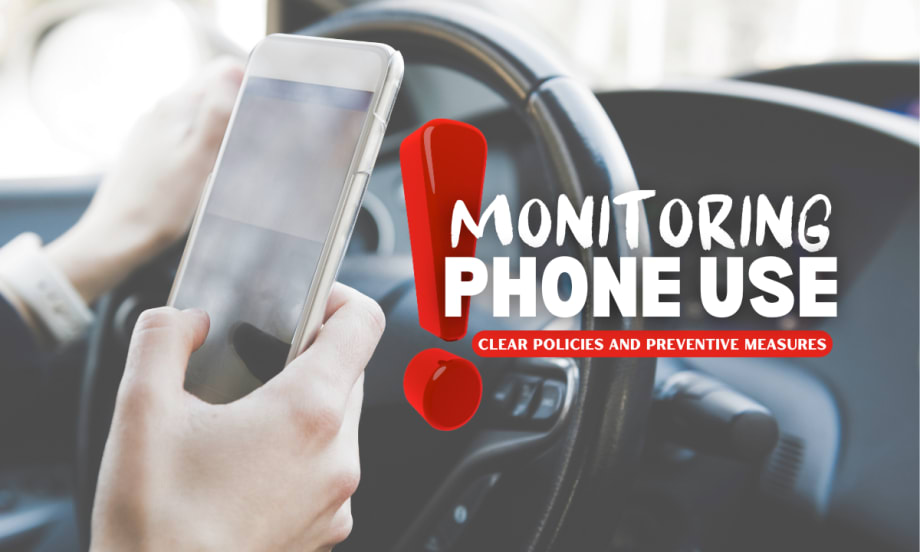
It can be cumbersome in some states to obtain a subpoena to check employee phone records. One easy solution is the use of event video recording devices.
Photo: Automotive Fleet
You need safe, defensive drivers in your fleet of non-CDL vehicles. When your employees focus on preventing accidents, you’ll enjoy lower cost of loss, more efficiency, and reduced insurance premiums. Of course, you can’t always count on your employees to prevent accidents. Sometimes they take huge risks like texting or talking on the phone while driving.
Cell phone use of any kind while driving is one of the most dangerous things a person can do. In fact, texting while driving is six times more likely to cause an accident than drunk driving. If your employees are using their cell phones while behind the wheel, they’re putting themselves and your company at major risk.
The best thing to do is prevent this unsafe behavior in the first place. Invest in safety training to educate your drivers on how to be attentive behind the wheel. Preventing an accident is always better than reacting to one.
That being said, you should be prepared for the worst. Let’s tackle some pressing questions about handling accidents caused by cell phone use.
Are You Allowed to Check Cell Phone Records After an Accident? And Should You?
You need to get to the root cause of any accident. When you understand what causes your accidents, you can prevent them. That’s why it’s crucial for you to know if an employee was using his or her cell phone before a collision occurred.
Unfortunately, obtaining phone records isn’t always simple.
If you issue company-owned phones to your employees, you can absolutely check cell phone records during your post-accident investigation. However, you may not have the same rights regarding your employees’ personal phones.
Depending on your state’s laws, you will likely need a subpoena to check an employee’s personal phone records. Alternatively, you may be able to access their phone records with their written consent. It can be a cumbersome process either way,
and you shouldn’t count on being able to access them.
An easy solution to this problem is to use event video recording devices. These systems:
Record what’s happening in and out of the vehicle
Save this footage only when there is a sudden stop or collision
Allow you to see the root cause of near-misses and collisions
Most of the time, event video recording devices
prove you and your driver’s innocence after an accident. However, they also come in handy for you to see unsafe behaviors like cell phone use that cause accidents.
Don’t bury your head in the sand when there’s an accident. Regardless of how you do it, you should try to determine if cell phone use played a role in any collision.
Can I Terminate an Employee Based on Cell Phone Use?
This is a resounding yes. Not only that, but you likely should.
When people behave in an unsafe way, it’s for one of two reasons:
Ignorance (they just didn’t know any better)
They made a bad decision (they recognized the risk and did it anyway)
Most accidents happen because of the first reason: ignorance. People make honest mistakes because they don't realize they are doing anything wrong. When an employee has an accident due to ignorance, it’s easy to fix this. You can use defensive driver training to educate your employees on safe behaviors so they know better.
However, if someone is willing to accept the risk of texting or talking on the phone while driving, there’s little you can do to change that. They have a high-risk tolerance and it is unwise to put them behind the wheel for your company.
It’s only a matter of time before it costs you big time.
Cell phone use while driving should be grounds for immediate termination at your company.
Am I Covered Under Insurance if My Employee Was on His or Her Phone Before a Collision?
Yes, but it will cost you.
When your employees cause accidents, your premiums will likely rise. Your insurance company sees you as a bigger risk so they charge you more for coverage.
That’s why educating your employees on safe practices is important. Preventing the accident in the first place can reduce your insurance premiums and save you tons of money from cost of loss.
Should I Have a Cell Phone Policy That My Employees Must Sign?
Absolutely.
If you are going
to take action against your employees for cell phone use behind the wheel (and you should), you need to make that clear from the onset.
Upon hire, you should clearly express the safety rules your employees must follow. Write these down. Give them to your employees to read, review, discuss with you, and commit to.
Have them sign the document and keep it in their employee file. Better yet, give them a copy to keep on hand. Ask them to review it periodically so they remember the commitment they made.
Having a cell phone policy can help your company in a lawsuit if the worst were to happen. More importantly, though, it can help prevent these accidents in the first place. When you put an employee behind the wheel for you, lives are in their hands. You need them to commit to this responsibility.
Prevention is Better Than Reaction
If an employee is involved in a collision, it’s important to determine why the accident happened. Obtaining cell phone records can be an important part of this process, but it shouldn’t be your focus.
You want to prevent accidents, not just react to them.
Accidents are caused by people’s unsafe behaviors. When your employees behave unsafely, they are more likely to cause an accident. When they behave safely, they are likely to prevent an accident.
Fewer accidents mean reduced cost of loss, a more efficient company, and happier and healthier employees.
Train your employees on essential safe driving behaviors and your company will prosper.
Editor's Note: This article was originally published in July 2021 and was updated on October 2, 2024, for continued relevancy on distracted driving and obtaining phone records of fleet drivers.
More Small Fleet


Developing Budget-Friendly Driver Safety Programs
From driver training and safety meetings to one-on-one coaching and incentive programs, several small fleets share how they have developed a safety culture with their drivers using low- to no-cost resources.
Read More →
Boosting Last-Mile Fleet Uptime, Safety, and Value with AI Vehicle Inspections
AI-powered inspections are transforming last-mile fleets by replacing manual checks with highly accurate automated scans that detect defects in seconds. By giving fleet operations visibility into the daily condition of their vehicles, you can identify trends over the vehicle’s lifecycle that enable improved procurement decisions, route management, driver training and accountability.
Read More →
Five Ways Seat Belts Help Prevent Injuries
There are five ways seat belts protect occupants from injuries, according to the Tennessee Department of Safety and Homeland Security.
Read More →
It’s here: The 2026 Fleet Technology Trends Report
What does AI mean for fleets? Get the answer — and learn other top tech trends.
Read More →
Small Fleets, Big Impact: How Independent Drivers Power Wreaths Across America
Check out how small fleets and independent drivers power Wreaths Across America each December and why their impact matters more than ever.
Read More →
VMS Survey Finds 65% of Small Fleet Managers Run Operations Alone
A new VMS survey shows small fleet managers are stretched thin, with most handling operations solo and eager to adopt digital tools for relief.
Read More →
Tips for Driving Safely on Halloween Night
This video features a reminder from the Connecticut Department of Transportation (DOT) and the Connecticut Police Chiefs Association, urging drivers to prioritize safety this Halloween.
Read More →
AI, Access, and Uptime: VMS’s Next Chapter with David Prusinski
VMS’s new Co-CEO, David Prusinski, shares how an AI-first approach will give small fleets and repair shops the tools to compete like big players.
Read More →
Fleet Managers Share Winter Prep Tips: It's Never Too Early!
Three fleets share best practices to prep vehicles for winter and prevent downtime when the cold sets in.
Read More →