




Revving Up: Start Calling Yourself a Fleet
Small businesses that run work vehicles often don’t even know they are a fleet — and they’re leaving money on the table.

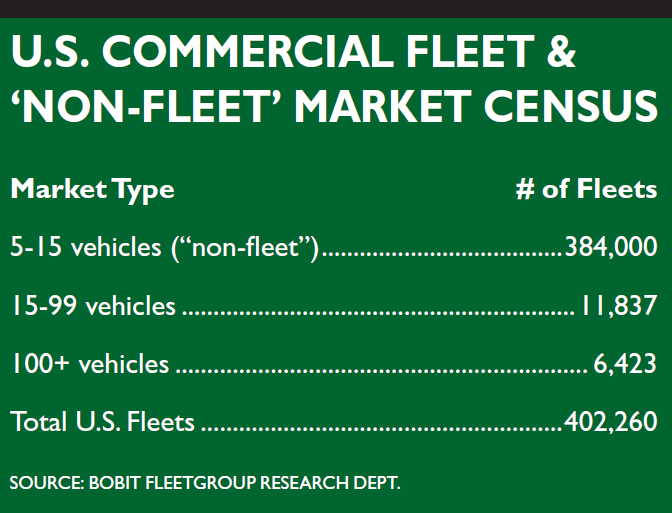
Fleets with less than 100 vehicles make up a majority of the U.S. commercial fleet and “non-fleet” market. Ask your dealer to find out if you qualify as a fleet in order to get incentives and other services not available in retail vehicle sales.
The ironic thing about you, the readers of a magazine and website called Business Fleet, is that many of you don’t even know you’re a fleet. In fact, you don’t even know what the word “fleet” means. But that’s understandable. While most trade publications focus on a specific industry, Business Fleet readers come from disparate ones. You’re more worried about producing baked goods, laundering garments, building houses, installing heating ducts or removing pests than you are about managing your work vehicles better.
You don’t have the title of fleet manager; rather, you are company owners, C-suite executives, controllers, office supervisors, maintenance managers, and on down to chief cook and bottle washer. You have your primary job functions, and every once in a while you remember, “Oh yeah, I have these moving objects to keep track of.”
I’m being a bit facetious. After all, if you’re reading this, you do care about your fleet, at least a little. However, I’m guessing that many of you aren’t taking full advantage of being a fleet.
(For a full article on the benefits of fleet, click here.)
I’m really talking about qualifying for fleet status with the auto manufacturers. You probably buy or lease your vehicles from your local dealership, and that relationship has served you well over the years. You get a fair price without any need to haggle, and you probably keep your dealer honest by shopping him every now and again, as is your right and duty. But has your dealer even told you that you might be eligible for fleet status?
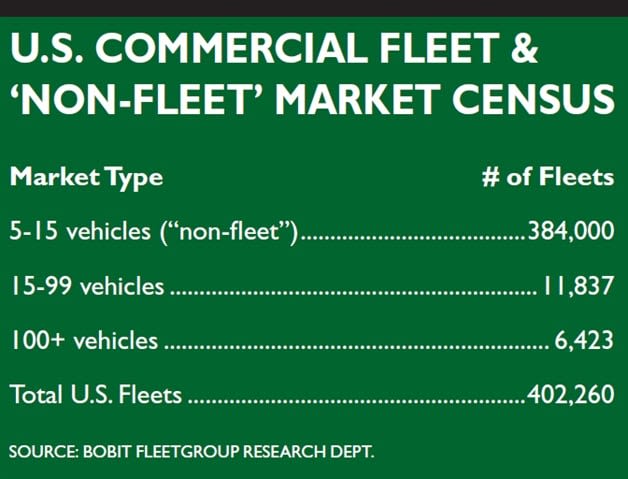
Fleets with less than 100 vehicles make up a majority of the U.S. commercial fleet and “non-fleet” market. Ask your dealer to find out if you qualify as a fleet in order to get incentives and other services not available in retail vehicle sales.
Qualification is not as demanding as you might think. It’s generally based on a minimum number of work vehicles registered to your company, the threshold often being 15 units, or if you’ve bought and registered five vehicles in your company’s name in the past 12 months or model year.
After qualification, you get a fleet number, and that’s where “being a fleet” actually matters. First, you are eligible for fleet incentives, which are valid for the entire model year and are often greater than retail incentives, which can fluctuate monthly.
You’re also now able to order a vehicle. And that means you can get the vehicle spec’d exactly to fit your work needs, with specific accessories that aren’t packaged together with the bells and whistles found on a retail unit. You probably remember paying for those extras when you bought off the lot, right?
Another benefit to ordering through fleet is the ability to have dealer’s advertising fees waived off your invoice, which could save you hundreds of dollars per unit.
Ordering, of course, takes some pre-planning. Order-to-delivery times average seven to 12 months and sometimes more. It is not easy for small companies to shake the “need-it-yesterday” mentality. But now that you’re officially a fleet, it’s time to start acting like one.
Ask your dealer to find out if you qualify as a fleet. If he hems and haws and tells you he’s already giving you the best deal out there, it’s a tip off that he’s more focused on retail sales. Go out and find yourself a new dealer that concentrates on fleet. There are plenty of them out there who are looking for your business.
Forgive me if you already have a fleet account and this is old news to you. But there are just too many companies out there that are officially fleets and don’t know it — and they’re leaving money on the table.
More Small Fleet


Developing Budget-Friendly Driver Safety Programs
From driver training and safety meetings to one-on-one coaching and incentive programs, several small fleets share how they have developed a safety culture with their drivers using low- to no-cost resources.
Read More →
Boosting Last-Mile Fleet Uptime, Safety, and Value with AI Vehicle Inspections
AI-powered inspections are transforming last-mile fleets by replacing manual checks with highly accurate automated scans that detect defects in seconds. By giving fleet operations visibility into the daily condition of their vehicles, you can identify trends over the vehicle’s lifecycle that enable improved procurement decisions, route management, driver training and accountability.
Read More →
Five Ways Seat Belts Help Prevent Injuries
There are five ways seat belts protect occupants from injuries, according to the Tennessee Department of Safety and Homeland Security.
Read More →
It’s here: The 2026 Fleet Technology Trends Report
What does AI mean for fleets? Get the answer — and learn other top tech trends.
Read More →
Small Fleets, Big Impact: How Independent Drivers Power Wreaths Across America
Check out how small fleets and independent drivers power Wreaths Across America each December and why their impact matters more than ever.
Read More →
VMS Survey Finds 65% of Small Fleet Managers Run Operations Alone
A new VMS survey shows small fleet managers are stretched thin, with most handling operations solo and eager to adopt digital tools for relief.
Read More →
Tips for Driving Safely on Halloween Night
This video features a reminder from the Connecticut Department of Transportation (DOT) and the Connecticut Police Chiefs Association, urging drivers to prioritize safety this Halloween.
Read More →
AI, Access, and Uptime: VMS’s Next Chapter with David Prusinski
VMS’s new Co-CEO, David Prusinski, shares how an AI-first approach will give small fleets and repair shops the tools to compete like big players.
Read More →
Fleet Managers Share Winter Prep Tips: It's Never Too Early!
Three fleets share best practices to prep vehicles for winter and prevent downtime when the cold sets in.
Read More →