




Promoting Safer, Greener Fleets
These new technology tools on display at the 2015 Fleet Technology Expo are designed to increase fleet safety, reduce emissions and save money on fuel.


Photo by Amy Winter-Hercher.
These new technology tools on display at the 2015 Fleet Technology Expo are designed to increase fleet safety, reduce emissions and save money on fuel.
Oil Additive Decreases Emissions
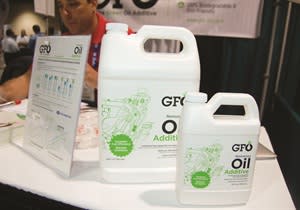
Photo by Amy Winter-Hercher.
GFO-Oil is a green oil additive that not only increases miles per gallon but also decreases emissions, the company says.
The GFO additive — which is 100% biodegradable and plant-derived — removes carbon buildup from the engine. Once the carbon is suspended in the oil and/or deposited in the oil filter, it can be removed from the engine via the oil filter and dirty oil during a regularly scheduled maintenance check, according to the company.
Over time, regular use of GFO can prevent future carbon deposit buildup. The company recommends adding GFO 200 miles before a vehicle’s next oil change.
GFO also experiences a heat and pressure induced phase change on the down stroke of the piston in the cylinder, according to the company. By increasing compression, it can create a more complete fuel burn, eliminate or reduce leak by and blow by, enhancing average miles per gallon and reducing emissions.
GFO’s oil additive can be used on gasoline, diesel or propane engines.
For more information, visit www.gfo-oil.com.
Mobile App Provides Live Video

Photo by Amy Winter-Hercher.
Videomatics is a cloud-based software and hardware system that integrates telematics (GPS and routing) with live and recorded video from around and inside a vehicle. It can be played back to smartphones, tablets or PCs, according to the company.
Videomatics integrates a digital video recorder, in-cab display monitor and up to eight video cameras for placement within the cab or outside in proximity to the vehicle.
The system helps fleet managers promote commercial driver safety, security and productivity, according to the company. Videomatics’ software provides instant access to vehicle location tracking, monitoring and alerts — as well as live and historical video with analytics. If an incident occurs, a fleet manager could play back the video to see what happened and whether the driver was at fault.
Types of event information offered include speed, G-shock (impact and vibration), GPS coordinates, geofencing, route deviation, mapping and positioning of an entire fleet.
For more information, visit www.convoytechnologies.com.
GRIP System Reduces Vehicle Idling

Photo by Amy Winter-Hercher.
The GRIP (Governor to Reduce Idle and Pollution) Idle Management System helps manage the time that a vehicle spends idling.
Distributed by Eberspacher, a German-based manufacturer of automotive electronics, the GRIP system works with the vehicle’s controller area network (CAN) and receives real-time engine data to know when to shut the engine off and turn it on, according to the company.
Key features include: interior monitoring and maintaining of vehicle temperature and battery voltage during engine shutdown; engine shut off only when the vehicle is in park or neutral; and vehicle safety options and auxiliary equipment (such as the airbag) remaining active when GRIP shuts down the vehicle.
By connecting through the vehicle’s ignition, the system is non-invasive — and components can be mounted, according to the company.
For more information, visit www.eberspaecher-na.com.
Mobileye Provides Collision Avoidance System
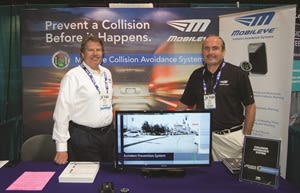
Photo by Amy Winter-Hercher.
Mobileye, a technology company that develops driver assistance systems, offers the ME560 aftermarket system that can be retrofitted to any vehicle — large or small, heavy-duty or light-duty.
In the event of a possibly dangerous situation, the Mobileye system warns the driver with both a visual and audible alert. The vision-based sensor monitors the road, continuously identifying objects such as other vehicles, pedestrians and cyclists.
The system also includes a Forward Collision Warning (a red vehicle icon), Lane Departure Warning (a left/right icon depending on what side) and Pedestrian or Bicycle Collision Warning (a red pedestrian icon).
For more information, visit www.mobileye/us.com.
More Small Fleet


Developing Budget-Friendly Driver Safety Programs
From driver training and safety meetings to one-on-one coaching and incentive programs, several small fleets share how they have developed a safety culture with their drivers using low- to no-cost resources.
Read More →
Boosting Last-Mile Fleet Uptime, Safety, and Value with AI Vehicle Inspections
AI-powered inspections are transforming last-mile fleets by replacing manual checks with highly accurate automated scans that detect defects in seconds. By giving fleet operations visibility into the daily condition of their vehicles, you can identify trends over the vehicle’s lifecycle that enable improved procurement decisions, route management, driver training and accountability.
Read More →
Five Ways Seat Belts Help Prevent Injuries
There are five ways seat belts protect occupants from injuries, according to the Tennessee Department of Safety and Homeland Security.
Read More →
It’s here: The 2026 Fleet Technology Trends Report
What does AI mean for fleets? Get the answer — and learn other top tech trends.
Read More →
Small Fleets, Big Impact: How Independent Drivers Power Wreaths Across America
Check out how small fleets and independent drivers power Wreaths Across America each December and why their impact matters more than ever.
Read More →
VMS Survey Finds 65% of Small Fleet Managers Run Operations Alone
A new VMS survey shows small fleet managers are stretched thin, with most handling operations solo and eager to adopt digital tools for relief.
Read More →
Tips for Driving Safely on Halloween Night
This video features a reminder from the Connecticut Department of Transportation (DOT) and the Connecticut Police Chiefs Association, urging drivers to prioritize safety this Halloween.
Read More →
AI, Access, and Uptime: VMS’s Next Chapter with David Prusinski
VMS’s new Co-CEO, David Prusinski, shares how an AI-first approach will give small fleets and repair shops the tools to compete like big players.
Read More →
Fleet Managers Share Winter Prep Tips: It's Never Too Early!
Three fleets share best practices to prep vehicles for winter and prevent downtime when the cold sets in.
Read More →