




Optimize Routes & Digitize Maps for Enhanced Driver Safety
Routing technology can make the roads safer for your drivers and help protect your budget.

A return to route GPS system at work.
Photo: Magellan
If you’ve ever watched the reality show Ax Men or Deadliest Catch, you probably won’t be surprised to learn that those two professions – logging and commercial fishing – are the two most dangerous professions in the country. Ax Men followed several logging crews harvesting second-growth forests in the Pacific Northwest, while Deadliest Catch portrayed real-life events aboard fishing vessels in the icy waters of the Bering Sea.
In both shows, accidents were as common as near-misses and watching, at times, proved unnerving. The show made most of us at home appreciate the relative safety and less exciting nature of our own career choice.
But did you know public utility truck drivers work in the fifth most dangerous profession in America, just a few steps below those loggers and fishermen? That’s an unfortunate data point from a yearly ranking by the Bureau of Labor Statistics.
SWANA Steps In
As noted, the occupation with the highest fatality rate is logging workers, with 135.9 fatal work injuries per 100,000 workers, which equates to 91 total fatalities over the course of a year.
Commercial fisherman, the second most dangerous job, face a work fatality rate of 86 deaths per 100,000 workers. Aircraft pilots and flight engineers are next, followed by roofers.
That brings us to our public utility truck drivers – refuse and recyclable material collectors – whose fatality rate is 34.1 deaths per 100,000 workers.
Although slips and falls are common hazards faced by the truck drivers, they’re not the deadliest accidents. “Transportation incidents” account for two-thirds of fatalities in the public utility truck driver sector, a good number of which would be classified as pedestrian vehicular incidents. In other words, a truck driver is struck by another car.
To help reduce such fatalities and injuries, the Solid Waste Association of North America (SWANA) embarked on a public education campaign reminding motorists to slow down, keep a safe distance and drive more carefully when near waste and recycling collection trucks.
Safer Routes Through Technology
SWANA’s efforts have paid off, with 20 states passing slow down legislation. Unfortunately, that’s only one side of the accident equation. As a fleet manager, you can’t predict or know how the public will drive. That’s up to them.
Road accidents will cost you in multiple ways, from medical expenses to damaged vehicles to higher insurance rates. That’s why with job fatalities and injuries directly impacting your municipal budget, there’s always room for more safety measures. And that’s up to you.
One such safety measure is to optimize routes with proven technology. In other words, what’s needed is a multi-stop routing and navigation solution specifically designed for municipal and short-haul fleets.
This solution would connect your fleet administrator or supervisor back at the office with each individual driver in the field through a real-time portal. Using a GPS-device mounted on the dashboard, for instance, the driver could receive all the details needed to follow an assigned route safely, with little to no distractions. Through a combination of hardware and software, your back-office personnel would be able to see how drivers are doing on their routes.
Drivers will benefit from software that displays or announces turn-by-turn directions, helping even your newest drives make their rounds without incident or delay. Unexpected street obstacles, road hazards and detours can all be communicated to the driver.
Additionally, your back-office would be more responsive to the moment and could create, edit, review and export routes, as needed. The result is a safer route with fewer surprises.
Following routes requires maps. Here, also, technology can make life easier and safer for your drivers. The old way of a driver relying on folded paper maps or hand-written notes or even memorization is no longer necessary. Your maps should be digitized and made available to ensure routes are timely and accurate. Changes to a route can be shared immediately with the appropriate drivers already on the road.
It’s not just routes and maps that can improve through technology. Driver performance can be tracked and monitored, enabling you to help identify which drivers might require more training. Clearly, the best way to avoid an accident is to not have one in the first place.
I’d like to close with the words of David Yang, executive director of the AAA Foundation for Traffic Safety: “There’s no question that truck safety technology saves lives.”
Truth be told, I can’t think of a better use of technology than saving lives. Can you?
About the Author: Ted Lee is the head of Business Development and Product Innovation at Magellan GPS. He can be reached at tlee@magellangps.com.
More Technology & AI
Fleet Downtime, Truck Theft, and Electric Growth Lead This Month
Where is your fleet losing time? This Truck Chat recap connects repair delays, theft risks, storm planning, and lessons from scaling electric trucks.
Read More →
HCSS Partners with Verizon Connect to Deliver Fleet Intelligence for Construction Fleets
HCSS has integrated with Verizon Connect to provide near real-time fleet insights so contractors can spend less time tracking assets and more time keeping projects on schedule.
Read More →
How Fleets Can Use Technology to Fight Fuel Fraud
Fuel fraud and theft remain significant challenges for commercial fleets, whether the problem involves third-party fraud or driver misuse. In this video, David Abraham of WEX explains how SecureFuel uses vehicle geolocation, telematics, transaction information, and AI to help fleet managers identify suspicious fuel purchases and make more informed decisions.
Read More →From Our Partners
Basic Tracking vs Next Generation Fleet Technology
Sponsored by AT&T Business

5 Facts Every Fleet Manager Should Know About Embedded Telematics
Sponsored by Stellantis/Mobilisights

How AI Video Telematics Boosts Driver Safety and Helps to Avoid Unnecessary Costs
Sponsored by Verizon Connect

Charting the 8 Bottom-Line Benefits of Workforce Optimization
Sponsored by Verizon Connect
Can AI Agents Help Small Work Truck Fleets Do More With Less?
Motive's new AI Agents automate fleet safety, maintenance, compliance, and dispatch tasks. Here's how they work for smaller fleets, what managers control, and what early users are seeing.
Read More →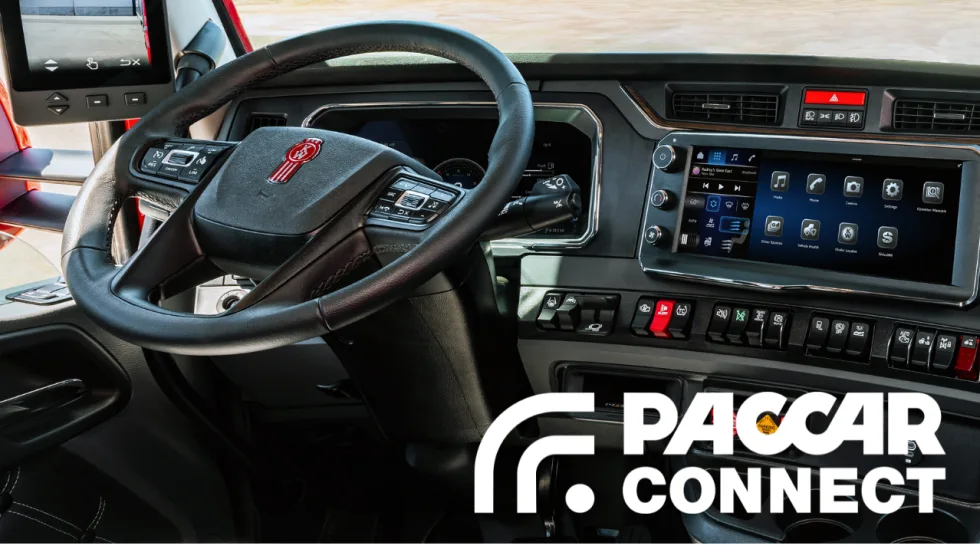
Paccar Launches Paccar Connect for Peterbilt and Kenworth Trucks
The new Paccar Connect offers touchscreen displays, telematics capabilities, and an expanding app ecosystem to boost productivity and streamline driver workflows.
Read More →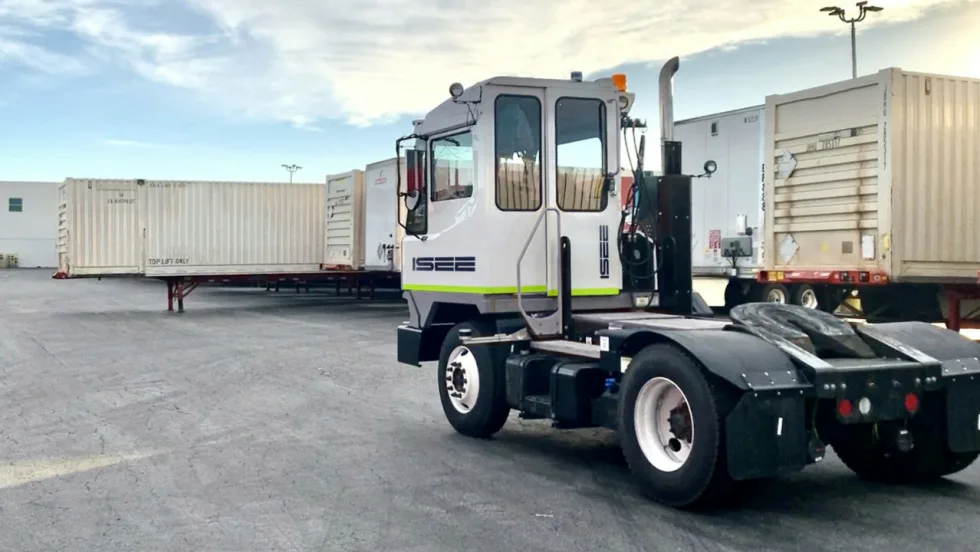
Holman and ISEE Partner to Expand Autonomous Yard Truck Operations
The partnership combines Holman's fleet management and upfitting capabilities with ISEE's autonomous driving technology to help businesses deploy and manage driverless yard trucks.
Read More →
Who You Gonna Call? Rivian Turns Electric Vehicles Into Ghostbusters Rides
Rivian teams up with Sony Pictures for a Ghostbusters-inspired Halloween software update, complete with custom sounds, lighting effects, and a special Ecto-R1.
Read More →
The Second Trip and What Missing Tools Really Cost a Service Business
For service fleets, missing tools and equipment can lead to second trips, lost technician time, higher operating costs, and delayed jobs. Equipment tracking can help HVAC, plumbing, electrical, landscaping, and other service businesses improve visibility and reduce downtime.
Read More →
GeoFencing Adds to Your Truck Security Arsenal
Geofencing is a familiar fleet tool today, but its early adoption marked a major shift in vehicle tracking, route monitoring, and the debate over employee privacy.
Read More →
Geotab Data Shows Regional Trucking Growing Faster as Last Mile Routes Get Denser
Geotab's first U.S. supply chain report finds stable long-haul activity, stronger regional freight movement, tighter hub-and-spoke utilization, and more last-mile trips on shorter routes.
Read More →