





Related: Vehicle Makers Extend Production Downtime at North American Factories
Open for Fleet Business
Kevin Sullivan’s dealerships are still processing fleet orders and he’s got plenty of inventory, though that might not last. With factory shutdowns, “Everything's been canceled.”
April 13, 2020
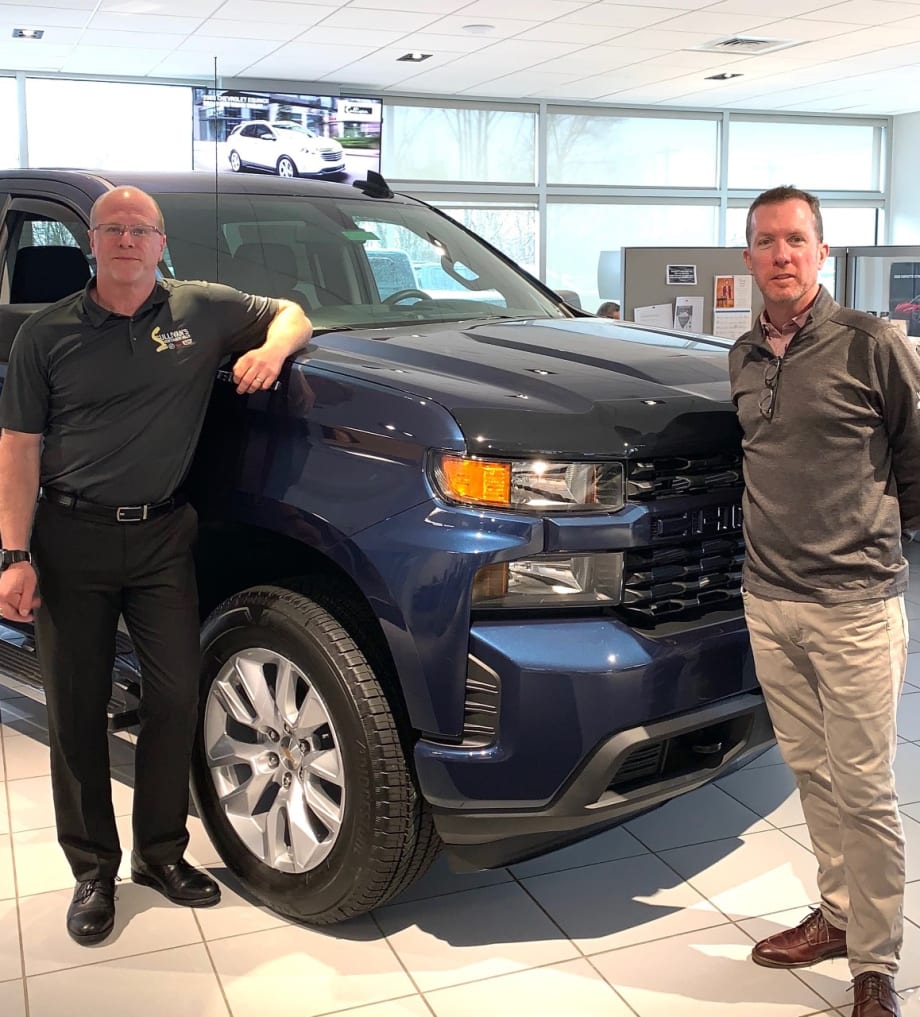
Kevin Sullivan (right) stands with Warren Ford Jr., fleet, government and municipal sales manager. Sullivan is co-owner of O’Neill’s Chevrolet Buick, Sullivan's Northwest Hills Chrysler Jeep Dodge Ram, Sullivan Honda, and Northwest Hills Chevrolet, Buick, GMC, Cadillac. The dealerships serve Central Connecticut.
Photo courtesy Kevin Sullivan.
3 min to read
Kevin Sullivan, co-owner of a family-owned, multi-franchise dealer group serving Central Connecticut, is still doing fleet business during the coronavirus pandemic — though it’s feast or famine depending on sector.
Corporate fleet business is at a standstill, though some small commercial business is moving along. While the state ordered non-essential work to shut down on March 17, construction was deemed essential. Sullivan’s dealerships are serving contractors that are able to work within the state’s shelter-in-place guidelines, he says.
As an authorized vendor for the State of Connecticut, most of Sullivan’s fleet business — before and during the pandemic — comes from the government, particularly police departments. “We're in the process of completing some large orders for police cruisers,” he says.
A Changed Process
Sullivan, who co-owns the dealerships with his brothers Sean and Tim, are still getting vehicles to fleet customers, though “The whole process has changed,” he says.
In keeping with what has in just a couple of months become industry standard protocol, the dealerships have instituted contactless vehicle exchanges with night drops or arranging to leave keys in the car. Physical vehicle inspections have been suspended. Paperwork is solely handled through the mail and email.
When vehicles need human handling, they’re cleaned each time a worker enters and exits. Touchpoints are sanitized with an antibacterial spray and disposable covers are used on the steering wheels, shifters, and seats.
The safety protocols aren’t just for theoretical occurrences: “We have run into some (police) departments that have been clearly hit by the coronavirus,” he says. “They've got many members of their staff out.”
The dealerships’ service and parts departments are open, where social distancing is less of an issue because of service staff furloughs. The dealerships haven’t yet had parts supply issues, “But we are anticipating that to be a problem,” Sullivan says.
In terms of aftermarket installations, Sullivan’s dealerships work mostly with upfitters of police cruiser packages and they “seem to be rolling as normal.”
Sullivan is okay with taking consumer trade-ins, though dealer-to-dealer trades are virtually nonexistent now. “Nobody wants an outsider on their property swapping cars,” Sullivan says.
Days’ Supply
To Sullivan’s knowledge, other dealerships in his area haven’t shut down completely but have furloughed much of their workforces.
For now, as retail sales have all but dried up, Sullivan has metal ready to move.
Some auto manufacturers were dealing with oversupply issues before the pandemic hit. Sullivan’s dealerships came into the crisis with five to six months of inventory on hand, more than the normal plan of three to four months, he says. He expects April and May retail sales to come in 50% to 60% short of a typical month.
“This could be an opportunity to reduce the inventory,” Sullivan says, noting that he could run into shortages if factories remain idle for too long. “I've got nothing in the pipeline after 60 to 90 days. Everything's been canceled.”
The large auto dealer groups have made headlines with mass employee furloughs, and Sullivan’s dealerships were forced into the same boat. Sullivan says his biggest struggle right now is balancing employee levels while managing federal stimulus money that will put the business in the best position to move forward.
“The hardest part is looking a longtime employee in the eye and saying, hey, unfortunately I don't have enough work to keep you busy,” he says. “I have to furlough you.”
“It takes time to gather good, valuable employees.”
Subscribe to Our Newsletter
More Small Fleet


Developing Budget-Friendly Driver Safety Programs
From driver training and safety meetings to one-on-one coaching and incentive programs, several small fleets share how they have developed a safety culture with their drivers using low- to no-cost resources.
Read More →
Sponsored•March 9, 2026
Boosting Last-Mile Fleet Uptime, Safety, and Value with AI Vehicle Inspections
AI-powered inspections are transforming last-mile fleets by replacing manual checks with highly accurate automated scans that detect defects in seconds. By giving fleet operations visibility into the daily condition of their vehicles, you can identify trends over the vehicle’s lifecycle that enable improved procurement decisions, route management, driver training and accountability.
Read More →
Five Ways Seat Belts Help Prevent Injuries
There are five ways seat belts protect occupants from injuries, according to the Tennessee Department of Safety and Homeland Security.
Read More →
Sponsored•January 14, 2026
It’s here: The 2026 Fleet Technology Trends Report
What does AI mean for fleets? Get the answer — and learn other top tech trends.
Read More →
Small Fleets, Big Impact: How Independent Drivers Power Wreaths Across America
Check out how small fleets and independent drivers power Wreaths Across America each December and why their impact matters more than ever.
Read More →
VMS Survey Finds 65% of Small Fleet Managers Run Operations Alone
A new VMS survey shows small fleet managers are stretched thin, with most handling operations solo and eager to adopt digital tools for relief.
Read More →
Tips for Driving Safely on Halloween Night
This video features a reminder from the Connecticut Department of Transportation (DOT) and the Connecticut Police Chiefs Association, urging drivers to prioritize safety this Halloween.
Read More →
AI, Access, and Uptime: VMS’s Next Chapter with David Prusinski
VMS’s new Co-CEO, David Prusinski, shares how an AI-first approach will give small fleets and repair shops the tools to compete like big players.
Read More →
Fleet Managers Share Winter Prep Tips: It's Never Too Early!
Three fleets share best practices to prep vehicles for winter and prevent downtime when the cold sets in.
Read More →