




Not Just an Idle Problem
A food distribution company’s trucks are burning up their engines and too much fuel from continuous idling.Here’s how the fleet manager is attacking the problem.


Idling not only wears out the trucks prematurely, but also has a terrible effect on fuel economy. In addition, truck maintenance is accelerated. Most of the trucks he runs are leased through Idealease, PacLease, Ryder, or Penske.
Photo: E.A. Sween
E.A. Sween Company distributes food products to convenience stores in 43 states. Fleet Manager Gregg Hodgdon has become increasingly aware of a problem that may also affect other fleets of his type: too much truck idling.
The trucks he runs are medium-duty units fitted with refrigerated boxes and electro-hydraulic liftgates.
“We do distribution for 7-Eleven stores in a lot of major cities,” Hodgdon said. He added that his trucks have liftgates that are powered up and down, and the trucks often make between 40 and 60 lifts per night.
“We found that the drivers were leaving the engines running all the time and never turned them off,” said Hodgdon, “and they will often run the truck engine hours before leaving on a delivery route. The cost for fuel, engine wear, and theft is huge. We have already experienced a truck stolen with the driver in the rear box working. Luckily, our driver was released unharmed after the truck was stopped.”
And that, in a nutshell, is the problem.
“I think it’s more far-reaching than just our fleet,” Hodgdon explained. He noted that people aren’t aware of how big the problem is, especially with trucks that have liftgates and are making frequent stops.
Most of the trucks Hodgdon runs are Internationals, which are equipped with hour meters, and they also have some Freightliner trucks. The first Freightliners went into the shop with the engine gone at about 100,000 miles, and Hodgdon said that Freightliner wouldn’t cover it under warranty.
“At that time, we started asking a lot of questions,” he said, “and we found out that we had 690 hours on the engine, but 490 of those hours were spent idling.”
Bigger, Additional Truck Batteries
Hodgdon said the first step he took was to ensure three big batteries were in each of the trucks. That took care of many of the cases.
“The ones such as we have in Denver,” he said, “where the trucks only go 50 miles and make all those stops every night, still weren’t making it.” Next, he made sure all the trucks had a separate battery for the Thermo-King refrigeration unit. “We were basically running with four batteries,” he said.
That seemed to take care of the problem on some trucks, but the problem still lingered on a number of others.
“Something that Thermo-King doesn’t officially endorse, but is being done in the field,” Hodgdon said, “is to take a battery cable from the Thermo-King battery and hook it up to the truck battery.”
Again, that seemed to take care of another group of trucks, because the Thermo-King has a 90 amp alternator. “However,” Hodgdon said, “we still have a few trucks out there that we think are still idling.”
Programming an Auto-Shut Down Option
Hodgdon noted that he worked with International to re-program the idle settings so that after five minutes of idling the truck’s engine would shut off. However, he encountered a problem with that solution in cold-weather operating areas. Basically, if the engine temperature is below 180 degrees, the system won’t shut off the engine.
“We’re trying to figure out how to get around that,” he said, “and we’re not sure if we’re going to. While we were developing the automatic shut-off system, International told our drivers that if they got into a bind, they could use the cruise-control button to bypass the idle shutdown.”
He said it turned out to be the wrong thing to tell the drivers because as soon as they heard it, they started doing it all the time. He added that International went back and re-wrote the program to take the cruise control reset out of the picture.
Hodgdon also noted that idling not only wears out the trucks prematurely, but also has a terrible effect on fuel economy. In addition, truck maintenance is accelerated. Most of the trucks he runs are leased through Idealease, PacLease, Ryder, or Penske.
“IdeaLease in Chicago has been working pretty hard to get us straightened out, one way or another,” he said, “and PacLease in Denver is also supportive. When the first engine went out, and they had to replace it under a full-maintenance lease; of course, it was on their dime. So they were very aggressive in trying to get this resolved.”
He also discovered that in the Chicago location, E.A. Sween was a member of a group of similar businesses. When he brought up the problem to the group, they said they let their trucks run all the time.
“I don’t think they understand the implications of the idling,” Hodgdon said. “It’s not only the cost of fuel, the higher maintenance, increased emissions, and so on, but in today’s world, it’s just not the right thing to do. We all have to run a vehicle, but we certainly don’t want to run it any more than we have to.”
Adding a Gravity-Down Liftgate
Another tactic Hodgdon is working on is the hydraulic system that controls the down movement on the liftgate. He approached Anthony Liftgates and Lehman Liftgates asking if they would be willing to install a liftgate at a location in Chicago, and let him test it to learn what would happen if they switched to a gravity-down, power-up situation instead of power-up and power-down.
“Right now, we estimate that with gravity down, we would cut power usage by about 40 percent. It would eliminate a lot of problems if we could do that,” he said.
He added the challenge is that in the cold Chicago weather, there are potential leakage problems with the liftgate’s hydraulic systems.
“We can use aviation hydraulic fluid,” he said, “but the Chicago people are afraid the change in the fluid would cause other leaks.”
An Ongoing Idling Problem
Hodgdon said that he has people at IdeaLease and International in Chicago, and at PacLease in Denver who have been working on the idle-reduction problem trying to arrive at a solution.
“We have telematics systems on several of our trucks in Chicago,” he said. “That’s how we’re able to see how much idling is really going on.” He added that even when the drivers knew they were monitored, he found they were idling three to five hours a night out of an eight-hour shift.
“At first, the manager said the shutdown system wasn’t working, even though there was still a policy of no idling. But the bottom line is that we still have a lot of idling going on, and a lot of driver training needs to be done to counteract it. We’re still working pretty diligently to cut it down. But if it goes on with those two trucks that everybody knows we’re watching, then you know how bad it is with the others.”
Hodgdon concluded by noting that if they kept going at that rate, it would not be unusual that under the B10 Life rule, at 70,000 miles, a truck has 10,800 hours, which is the life of the engine.
“We’ve got these trucks under contract for six years, and they reach that at about 2-21/2 years,” he said. “We were smart enough to put them on a full-service contract for six years, but if they have to start re-building many engines, you know the rates will go up.”
More Operations
Family Ties Inside the Fleet Families Building Careers Across Generations
Three fleet families share what it really takes to work together, learn across generations, and keep business from following them home.
Read More →
Shades of Fleet Call for Voices: Fleet's Hidden Heroes
Fleet’s hidden heroes are often the ones keeping everything moving behind the scenes. September’s Shades of Fleet is looking for dispatchers, coordinators, parts specialists, and other support pros to share their stories.
Read More →
Truck Centers, Inc. Celebrates National Truck Driver Appreciation Week with $1,000 Fuel Card Giveaways
During National Truck Driver Appreciation Week, Truck Centers, Inc. is offering customers a chance to fuel up for free. Customers at all Truck Centers locations can enter to win one of four $1,000 fuel cards from Sept. 14 - 18.
Read More →
Fleet Guides, AI Time-Savers, Truck Tariffs & Fuel Strategy Lead the News
This week’s Truck Chat Cheat Sheet covers new fleet vehicle guides, practical AI use cases, U.S.-Canada truck production, mixed-energy strategy, and more.
Read More →
What Fleet Employers Are Missing When Hiring Veterans
What if some of the strongest candidates for fleet are already out there, but their experience is written in a language our industry does not always recognize?
Read More →
Automotive Fleet Opens 2026 Personal Use Survey for Commercial Fleet Managers
Less than two weeks left! Commercial and corporate fleet managers are invited to share how their organizations handle company vehicle personal-use policies, charges, and driver eligibility.
Read More →
What Resilient Fleets Do Differently When Conditions Change
Fleet resilience is about more than reacting to disruption. Lauren Fletcher talks with AP Fleet’s Alex Coveney about flexibility, planning, scaling, and what helps fleets adapt when business conditions shift.
Read More →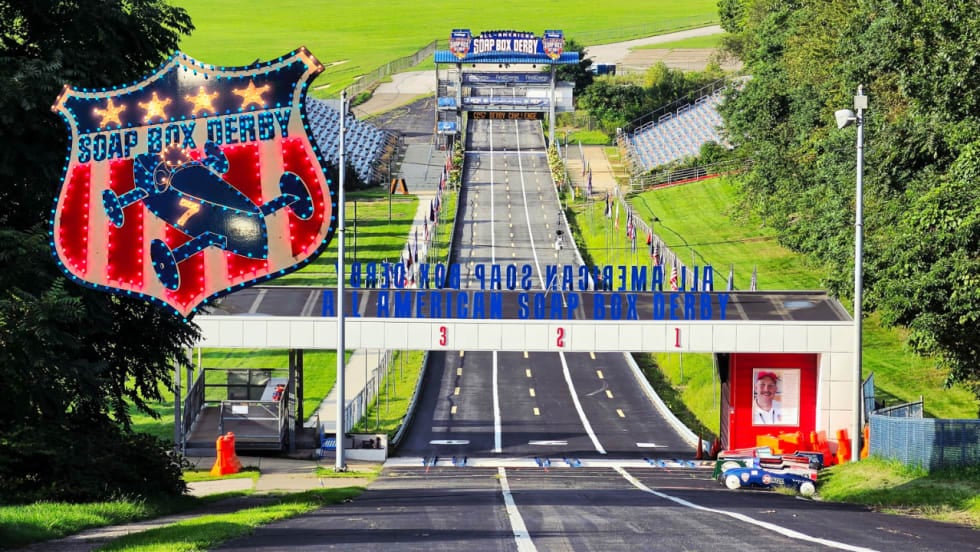
If We Want the Next Generation in Automotive, We Have to Give Them a Reason to Care
The automotive industry talks constantly about its workforce shortage. But before we can recruit the next generation, we may need to do a better job giving kids a reason to care about automotive in the first place.
Read More →
Ram ProMaster City Under $40K, Truck Tariffs, and AI Maintenance Lead the News
A sub-$40K commercial van, tariff questions, AI-powered maintenance, and a new EV production strategy headline this week’s Truck Chat Cheat Sheet.
Read More →
Bob Adamsky Shares the Fleet Lessons You Usually Learn the Hard Way
After more than 30 years in fleet, Arrow International’s Bob Adamsky has learned that the job is about far more than vehicles. He shares the lessons he wishes every fleet manager could learn a little earlier.
Read More →