




Unlock the Full Potential of Telematics: Modern Uses Beyond Tracking
Navigating the Road Ahead: Integrating AI in the Fleet Industry
Will AI take over jobs in the fleet industry? Experts say no. Integrating AI with human drivers is symbiotic, where AI complements human skills, making driving safer and more efficient.

Hillary Weiss・Senior Editor
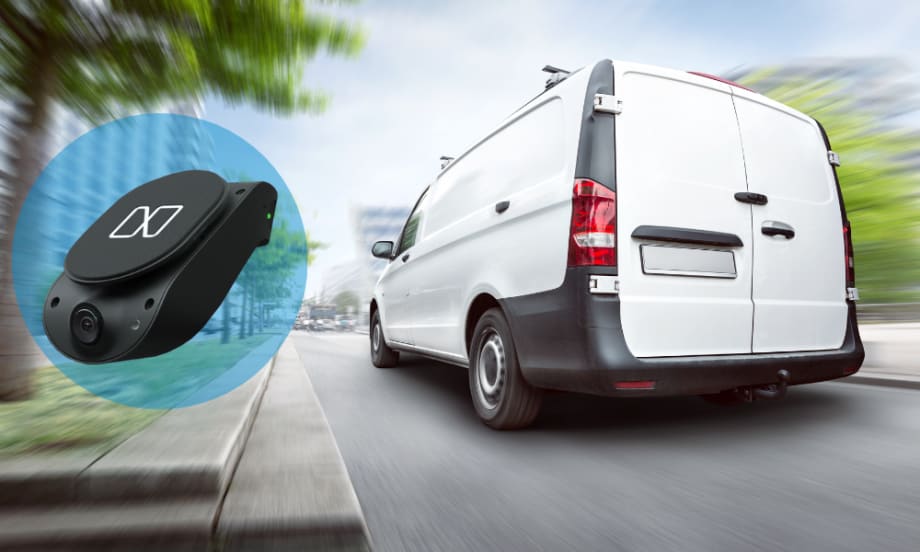
AI fleet technology can help drivers become more aware of their surroundings.
Photo: Nauto/Work Truck
4 min to read
The fleet industry is at a crossroads where innovation and artificial intelligence (AI) promise to reshape the landscape.
For fleet managers, optimizing road safety, efficiency, and driver experience are perennial challenges.
To gain insight into the current state of AI technology in enhancing road safety for commercial fleets and its future trajectory, Work Truck talked with Stefan Heck, Founder, and CEO of Nauto, an AI-driven technology company specializing in fleet safety.
The Current State of AI in Fleet Safety
If we look at the current state of AI technology within the fleet industry, we’ve come a long way in the past decade. But there is still more room to grow. We are still in the "teenage years" of AI adoption in the fleet sector — technologies are just starting to scale, and in many cases are not ready to take the place of experienced drivers.
Autonomous vehicles, which have gotten the most attention over the last few years, have faced numerous challenges.
Despite considerable investments, the vision of vehicles driving "anywhere, any conditions, anytime" remains a distant goal. While AI has made strides in sectors like food delivery and lower-speed shuttles, it still grapples with the complexities of urban driving, dealing with bikes and pedestrians, and complex intersections.
Heck explained, “City driving is substantially more intricate than long-haul trucking. Commercial fleets, especially long-haul trucking, could be an easier space for AI to provide support. These vehicles operate on predictable routes, reducing the variables AI must contend with.” AI can also naturally extend the driving range per day for overnight trips, much like autopilots do on cross country flights.
AI and Human Drivers: A Symbiotic Future
One concern people have regarding AI is that it will replace the workforce.
“The most practical uses of AI today don’t replace human drivers. Instead, it’s seen as a tool to support and enhance human driving skills,” Heck explained. Many light commercial vehicle drivers also have a second role — as installer, technician, lineman, sales person etc. so these roles won’t go away.
AI can manage the more monotonous and challenging aspects of driving, such as long stretches of highway driving during the night. This not only increases safety but also augments driver well-being and efficiency.
By contrast, human judgment has an edge over AI in cases of complex human interactions on the road, such as navigating intersections and predicting the behavior of other drivers.
“Humans excel in these areas, whereas AI still struggles. In such scenarios, AI aids or even learns from drivers rather than seeks to replace them,” Heck added.
Because of this, it’s important to use AI systems that are user-friendly, trustworthy, and helpful. The AI should alert drivers when they are unaware of a potential danger, providing accurate, timely, unobtrusive warnings. The goal is to surface the hidden risks, not the obvious ones the driver is already aware of. Striking this balance between a guardian angel and a nagging backseat driver is critical for acceptance and effectiveness.
These AI support and coaching systems stand in stark contrast to older video telematics solutions that rely on after the fact coaching. Video solutions have two major drawbacks: they look at what happened an hour ago or yesterday, rather than preventing what’s going to happen next, and they inevitably intrude on driver privacy, in a way that real time AI safety systems do not.
The Future of AI in Fleet Safety
While we are still in the early years of AI adoption, we have much to look forward to in advancements in fleet tech soon.
When looking ahead, Heck predicts that we will witness the integration of more sensors and safety technology into vehicles.
“The European Union, for example, is set to mandate certain safety technologies by 2025, driving the adoption of such features in the automotive industry. These technologies include pedestrian detection and driver attentiveness monitoring, poised to become industry standards,” Heck said.
However, Heck noted a pivotal development that is relatively new and holds immense promise: the fusion of AI systems, monitoring both road context and driver attention and actions, and the vehicle itself simultaneously.
Traditional collision warning systems often focus solely on external factors, such as pedestrians or nearby vehicles.
“In contrast, Nauto's technology considers the driver's behavior and attention. This innovation allows for more nuanced decision-making, distinguishing between, for instance, glancing at a phone at a red light, which poses minimal risk, and doing the same while driving at high speeds when the vehicle ahead is braking, which is 2000 times riskier,” Heck said.
The integration of AI with other technologies opens significant possibilities. For instance, Nauto now combines telematics and AI-driven driver and vehicle safety features.
This combined solution effectively reduces the number of devices in already crowded commercial vehicle cabins, assisting fleet operators in reducing expenses and optimizing operational efficiency.
AI's fusing into the fleet industry is poised to reshape the landscape by enhancing safety, improving driver experience, and optimizing efficiency.
As Stefan Heck's insights reveal, the future of AI and human drivers is a symbiotic one, where AI complements human skills, making driving safer and more efficient, and get every driver home safely at night.
The road ahead promises exciting developments, and fleet managers must remain adaptable and open to the opportunities that AI technology presents.
Subscribe to Our Newsletter
More Operations

Family Ties Inside the Fleet Families Building Careers Across Generations
Three fleet families share what it really takes to work together, learn across generations, and keep business from following them home.
Read More →
Shades of Fleet Call for Voices: Fleet's Hidden Heroes
Fleet’s hidden heroes are often the ones keeping everything moving behind the scenes. September’s Shades of Fleet is looking for dispatchers, coordinators, parts specialists, and other support pros to share their stories.
Read More →
Truck Centers, Inc. Celebrates National Truck Driver Appreciation Week with $1,000 Fuel Card Giveaways
During National Truck Driver Appreciation Week, Truck Centers, Inc. is offering customers a chance to fuel up for free. Customers at all Truck Centers locations can enter to win one of four $1,000 fuel cards from Sept. 14 - 18.
Read More →
Fleet Guides, AI Time-Savers, Truck Tariffs & Fuel Strategy Lead the News
This week’s Truck Chat Cheat Sheet covers new fleet vehicle guides, practical AI use cases, U.S.-Canada truck production, mixed-energy strategy, and more.
Read More →
What Fleet Employers Are Missing When Hiring Veterans
What if some of the strongest candidates for fleet are already out there, but their experience is written in a language our industry does not always recognize?
Read More →
Automotive Fleet Opens 2026 Personal Use Survey for Commercial Fleet Managers
Less than two weeks left! Commercial and corporate fleet managers are invited to share how their organizations handle company vehicle personal-use policies, charges, and driver eligibility.
Read More →
What Resilient Fleets Do Differently When Conditions Change
Fleet resilience is about more than reacting to disruption. Lauren Fletcher talks with AP Fleet’s Alex Coveney about flexibility, planning, scaling, and what helps fleets adapt when business conditions shift.
Read More →
If We Want the Next Generation in Automotive, We Have to Give Them a Reason to Care
The automotive industry talks constantly about its workforce shortage. But before we can recruit the next generation, we may need to do a better job giving kids a reason to care about automotive in the first place.
Read More →
Ram ProMaster City Under $40K, Truck Tariffs, and AI Maintenance Lead the News
A sub-$40K commercial van, tariff questions, AI-powered maintenance, and a new EV production strategy headline this week’s Truck Chat Cheat Sheet.
Read More →
Bob Adamsky Shares the Fleet Lessons You Usually Learn the Hard Way
After more than 30 years in fleet, Arrow International’s Bob Adamsky has learned that the job is about far more than vehicles. He shares the lessons he wishes every fleet manager could learn a little earlier.
Read More →