




Mazda Introduces New Engine Technology on 2012 Mazda3 SKYACTIV
Mazda introduces an all-new lineup of engines and transmissions, as well as an updated body and chassis, on its 2012 Mazda3 SKYACTIV.

SKYACTIV technology is more than just a few updates to vehicle design; it’s not just new engines and new transmissions, “it is a new generation of advanced vehicle performance and efficiency,” according to Jim O’Sullivan, president and CEO, Mazda North American Operations (MNAO).
When developing SKYACTIV technologies, the principal goal of Mazda’s engineers was to dramatically increase vehicle efficiency for all next-generation vehicles by improving fuel economy and reducing CO2 emissions while, at the same time, further enhancing safety and “driving fun.” The 2012 face-lifted Mazda3 is the first Mazda vehicle to offer the new technology.
All-New Technology
SKYACTIV technology will be launched in North America in an all-new generation of models with new engines, transmissions, bodies, and chassis. But, what exactly is it?
Two all-new engines were developed to help solve problems found in current internal combustion engines, such as engine knock. Solutions included lowering the temperature before combustion and increasing combustion speed, meaning less time for knock to develop. To make this happen, SKYACTIV uses very high compression ratios (in gasoline engines) to generate power efficiently, which required changes to the bore, stroke, and piston design. The technology also uses direct-injection under very high pressure, compared to most current engines, to precisely time combustion for optimized power and efficiency. For example, the previous 2.0L engine uses 43 lbs. of fuel pressure, while the new SKYACTIV 2.0L is at 2,900 psi.
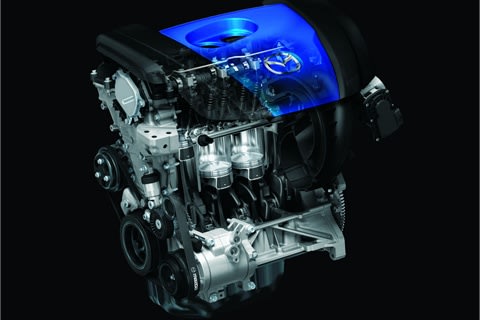
Mazda’s new engines include the SKYACTIV-G 2.0L gasoline engine, available in sedan and hatchback models, which utilizes continuously variable dual-sequential valve timing (dual S-VT) on the intake and exhaust to minimize pumping losses. Internal engine friction was reduced by 30 percent, and the engine achieves approximately 15-percent lower fuel consumption and CO2 emissions while achieving 15-percent more torque at higher rpms. Arriving later, most likely in the 2013 calendar-year, the SKYACTIV-D 2.2L diesel engine will feature two-stage turbocharging, a variable valve lift for exhaust valves, and reduced fuel consumption. Unlike the gasoline engine, the SKYACTIV-D is notable for its lower-than-typical compression ratio, which allows the engine to be lighter and more efficient.
Two new transmissions have also been developed. The SKYACTIV-Drive is an optional, 6-speed automatic transmission, which combines the features of continuously variable transmission, a dual clutch, and a conventional automatic transmission. The full-range direct drive is a torque converter with a lock-up clutch, which improves fuel economy by up to 7 percent, compared to the current 5-speed transmission.
The new, standard SKYACTIV-MT 6-speed manual transmission was re-engineered with a smaller, lighter design and improved fuel economy, and shift throw was reduced.
The SKYACTIV-Body is 8-percent lighter due to a newly developed structure, production processes, and bonding methods, and a larger proportion of high-tensile steel. Rigidity is also 30 percent improved. The SKYACTIV-Chassis features a 14-percent reduction in overall weight due to a newly developed front suspension with front struts and multi-link rear axle.
With a fuel tank capacity of 14.5 gallons, the 2012 Mazda3 sedan with SKYACTIV has the potential of a 540-mile range with a highway fuel mileage of 40 mpg. These engines run on 87 octane fuel, and don’t require premium gas. When equipped with the SKYACTIV-MT 6-speed manual transmission, the sedan has an EPA-rated fuel economy of 27 city/39 highway.
Updating the Look
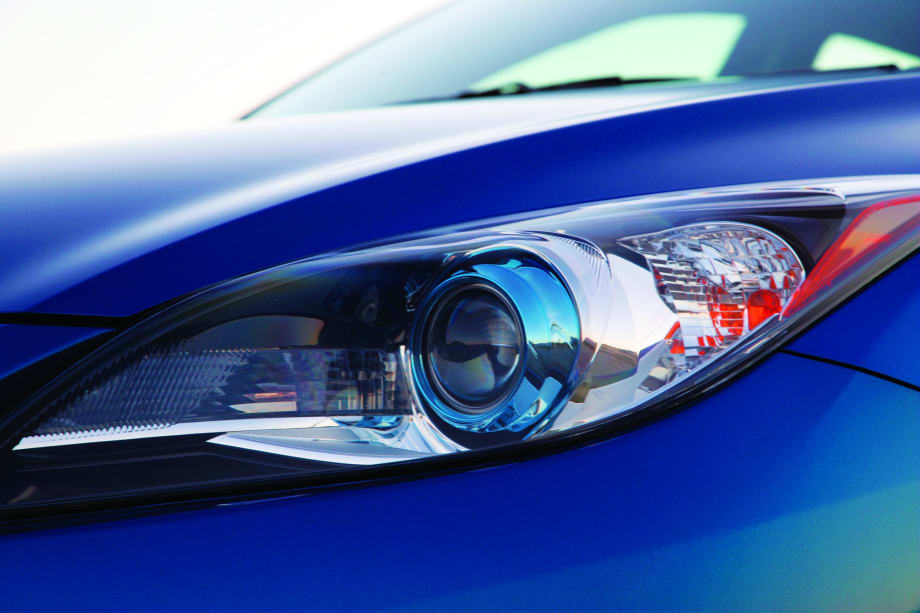
To identify Mazda vehicles equipped with SKYACTIV technology, look for a blue engine cover, transparent blue ring around the headlamp center lens, SKYACTIV interior and exterior badges, and blue lighting in the gauges. An available blind spot monitoring (BSM) system has also been added.
Originally posted on Automotive Fleet
More Small Fleet


Developing Budget-Friendly Driver Safety Programs
From driver training and safety meetings to one-on-one coaching and incentive programs, several small fleets share how they have developed a safety culture with their drivers using low- to no-cost resources.
Read More →
Boosting Last-Mile Fleet Uptime, Safety, and Value with AI Vehicle Inspections
AI-powered inspections are transforming last-mile fleets by replacing manual checks with highly accurate automated scans that detect defects in seconds. By giving fleet operations visibility into the daily condition of their vehicles, you can identify trends over the vehicle’s lifecycle that enable improved procurement decisions, route management, driver training and accountability.
Read More →
Five Ways Seat Belts Help Prevent Injuries
There are five ways seat belts protect occupants from injuries, according to the Tennessee Department of Safety and Homeland Security.
Read More →
It’s here: The 2026 Fleet Technology Trends Report
What does AI mean for fleets? Get the answer — and learn other top tech trends.
Read More →
Small Fleets, Big Impact: How Independent Drivers Power Wreaths Across America
Check out how small fleets and independent drivers power Wreaths Across America each December and why their impact matters more than ever.
Read More →
VMS Survey Finds 65% of Small Fleet Managers Run Operations Alone
A new VMS survey shows small fleet managers are stretched thin, with most handling operations solo and eager to adopt digital tools for relief.
Read More →
Tips for Driving Safely on Halloween Night
This video features a reminder from the Connecticut Department of Transportation (DOT) and the Connecticut Police Chiefs Association, urging drivers to prioritize safety this Halloween.
Read More →
AI, Access, and Uptime: VMS’s Next Chapter with David Prusinski
VMS’s new Co-CEO, David Prusinski, shares how an AI-first approach will give small fleets and repair shops the tools to compete like big players.
Read More →
Fleet Managers Share Winter Prep Tips: It's Never Too Early!
Three fleets share best practices to prep vehicles for winter and prevent downtime when the cold sets in.
Read More →