




Managing Without a Fleet Manager
By leasing and outsourcing aspects of fleet management, this health care company has added 26 new fleet vehicles to its home care service. Currently, it serves over 1,000 homebound patients in 23 counties across Michigan.

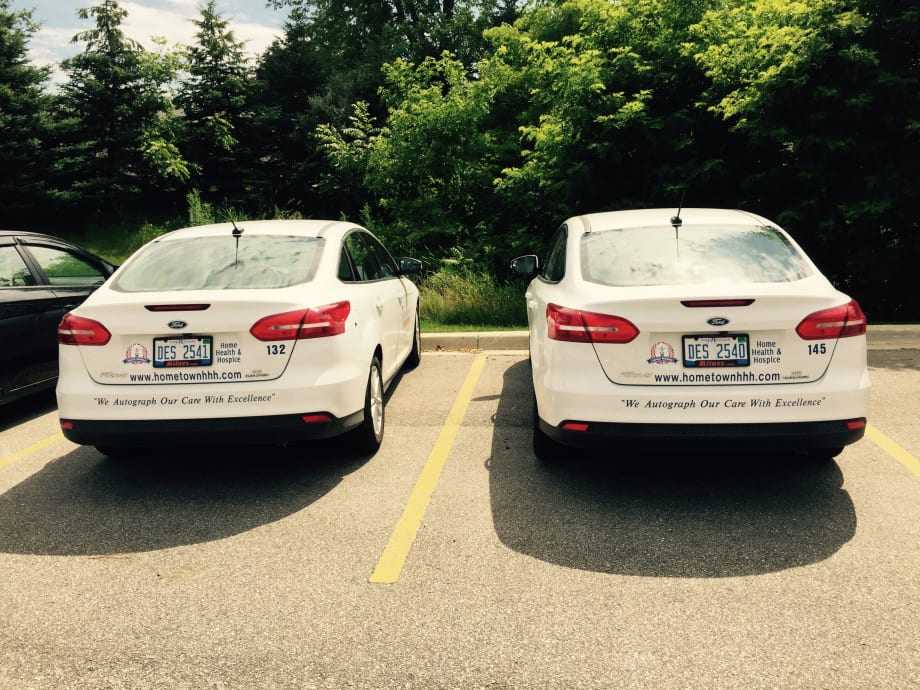
Hometown Home Care & Hospice currently leases 26 Ford Focuses. The branding on the vehicles serve as mobile billboards for the company.

Hometown Home Care & Hospice currently leases 26 Ford Focuses. The branding on the vehicles serve as mobile billboards for the company.
Not only did Hometown Home Health & Hospice need more vehicles to keep up with its growth, but it has also needed help managing its increasing service fleet.
“I don’t have a dedicated person to handle our fleet vehicles,” says James Reynolds, financial controller for Hometown Home Health & Hospice, a family-owned and operated health care provider headquartered in Lapeer, Mich. “Through Enterprise Fleet Management’s program, I can monitor vehicle repairs, insurance and fuel costs. I don’t have to hire a full-time fleet manager.”
Starting with only one company vehicle and three patients, Navneet Anand, a licensed physical therapist, opened the health care company — which specializes in home care — in 2003. Today, the company serves 1,500 patients in 23 counties across Michigan, according to Reynolds.
“As our business grows, working with Enterprise Fleet Management to expand our fleet provides more of our employees with newer, more reliable and fuel-efficient vehicles to help them serve patients throughout the region,” says Navneet Anand, Hometown’s CEO and president.
Fleet Management
In 2010, Hometown’s first lease agreement with Enterprise Fleet Management included two cars at a three-year contract. Two years later, Hometown’s renewed lease agreement went up to 20 vehicles. Today, the health care company leases 26 new Ford Focuses through Enterprise, according to Reynolds.
Because its clinicians (nurses, physical therapists, doctors) are driving to patients’ homes on a daily basis, Hometown needed a newer vehicle that was safe to drive. It chose the Ford Focus for both its reliability and fuel efficiency.
According to Reynolds, the new fleet vehicles have also helped with the company’s recruiting process.
“We found it easier to recruit clinicians if we provided means to get from one appointment to another,” says Reynolds. “It’s better for our employees to use company vehicles and not put wear and tear on their own vehicles.”
In addition to providing the vehicles, Enterprise offers fleets a routine service and maintenance program as well as a fuel card program that automatically monitors fuel purchases and miles for each vehicle. And when the lease is over, Enterprise will auction and resell the vehicles in the local market, according to the company.
For Reynolds, the repair and maintenance program has been one of the biggest benefits. Because clinicians take the company vehicles home each night, they can find a local repair shop within Enterprise’s repair program. That way, employees can get the vehicles fixed on the spot — wherever they are.
“With the maintenance program, we keep up with the mileage and take proactive decisions on the vehicles as soon as possible,” says Reynolds.
Moving Billboards
Providing home health care means a fleet vehicle could average 2,500 to 2,600 miles per month, according to Reynolds.
Because its fleet spends a lot of time on the road, the branded vehicles can be used as a good source for marketing.
“We use our vehicles as a mobile billboard,” says Reynolds. “Our vehicles help keep our name out there in the rural areas. It lets people know that if they are homebound, we can still provide them health care at their home.”
The vehicle decals include Hometown’s logo, phone number and website.
“The new vehicles can increase our employees’ job satisfaction, attract new talent and serve as mobile billboards with our logo on the side …” says Anand. “With the health care landscape changing so much in the last few years, our branded vehicles help remind residents they still have best-in-class options for choosing different health care providers.”
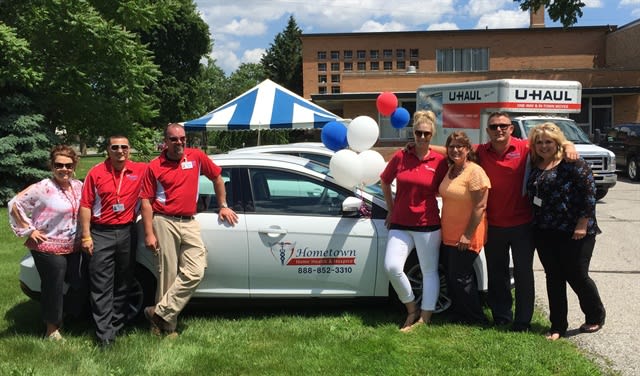
Some of the new fleet vehicles were unveiled at a health expo for senior citizens in Saginaw, Mich.
More Small Fleet


Developing Budget-Friendly Driver Safety Programs
From driver training and safety meetings to one-on-one coaching and incentive programs, several small fleets share how they have developed a safety culture with their drivers using low- to no-cost resources.
Read More →
Boosting Last-Mile Fleet Uptime, Safety, and Value with AI Vehicle Inspections
AI-powered inspections are transforming last-mile fleets by replacing manual checks with highly accurate automated scans that detect defects in seconds. By giving fleet operations visibility into the daily condition of their vehicles, you can identify trends over the vehicle’s lifecycle that enable improved procurement decisions, route management, driver training and accountability.
Read More →
Five Ways Seat Belts Help Prevent Injuries
There are five ways seat belts protect occupants from injuries, according to the Tennessee Department of Safety and Homeland Security.
Read More →
It’s here: The 2026 Fleet Technology Trends Report
What does AI mean for fleets? Get the answer — and learn other top tech trends.
Read More →
Small Fleets, Big Impact: How Independent Drivers Power Wreaths Across America
Check out how small fleets and independent drivers power Wreaths Across America each December and why their impact matters more than ever.
Read More →
VMS Survey Finds 65% of Small Fleet Managers Run Operations Alone
A new VMS survey shows small fleet managers are stretched thin, with most handling operations solo and eager to adopt digital tools for relief.
Read More →
Tips for Driving Safely on Halloween Night
This video features a reminder from the Connecticut Department of Transportation (DOT) and the Connecticut Police Chiefs Association, urging drivers to prioritize safety this Halloween.
Read More →
AI, Access, and Uptime: VMS’s Next Chapter with David Prusinski
VMS’s new Co-CEO, David Prusinski, shares how an AI-first approach will give small fleets and repair shops the tools to compete like big players.
Read More →
Fleet Managers Share Winter Prep Tips: It's Never Too Early!
Three fleets share best practices to prep vehicles for winter and prevent downtime when the cold sets in.
Read More →