




Making the Case for In-House Maintenance
With a fleet of only 25 vehicles, this rain gutter installation company set up a service facility in-house and is realizing a 60% reduction in maintenance expense.

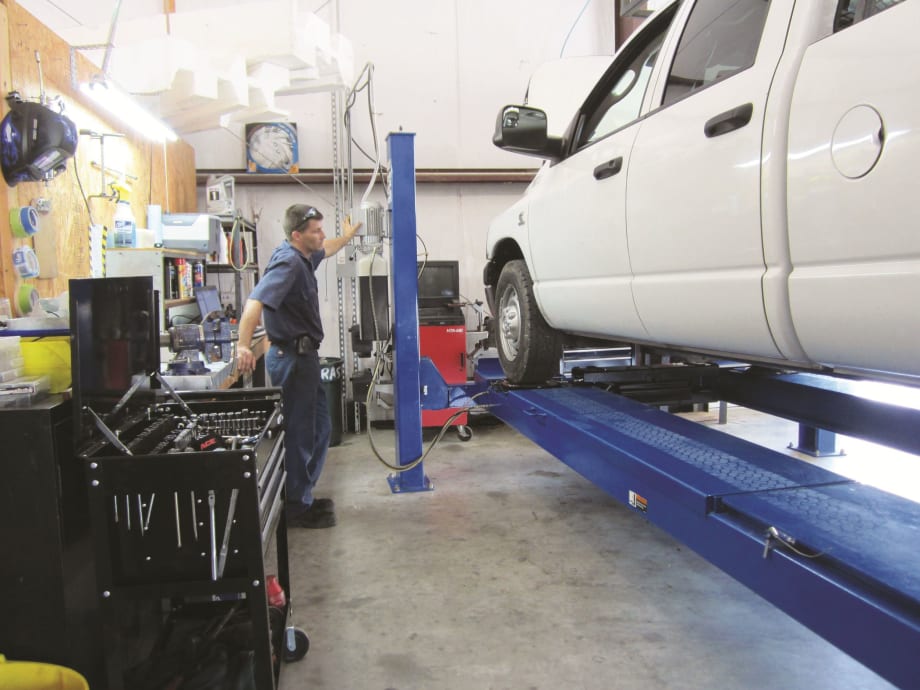
The in-house maintenance facility at Dallas Gutter King alleviates owner Gary Kulp from having to pay the overhead of an outside mechanic's shop, which could run $100 per hour or more.
The in-house maintenance facility at Dallas Gutter King alleviates owner Gary Kulp from having to pay the overhead of an outside mechanic's shop, which could run $100 per hour or more.
For larger fleets, especially those with trucks used in heavy-duty or vocational situations, servicing fleet vehicles in-house is a no-brainer. For small fleets, however, the expense of a company-run maintenance facility would seem to surpass taking your vehicles to an outside shop on an as-needed basis.
The maintenance facility operated within Dallas Gutter King belies that assertion. The rain gutter installation company runs a fleet of 25 standard work vehicles and, according to owner Gary Kulp, is saving some 60% in maintenance expense by doing most of it in-house.
Kulp runs a typical small service fleet of light-duty vans, pickups and sedans. The local service vehicles put on an average of only 10,000 miles per year, while the ones traveling further do 20,000 to 25,000 miles. The sales vehicles average 30,000 miles, according to Kulp.
These commonplace work vehicles produce commonplace maintenance issues — flat tires, tire balancing and alignments, parts wear and tear and brakes and front ends — along with standard preventive maintenance (PM) needs and the occasional major part breakdown.
It all started in 2007 when Kulp purchased two used tire balance-and-mounting machines for $6,000. The in-house maintenance initiative became a reality, however, when Kulp bought a brand-new vehicle lift two years later for $12,000.
A lift is the first component of maintenance, as it allows mechanics safe and easy access to a vehicle’s undercarriage. Kulp then added an alignment rack to the lift to perform wheel alignments.
Initially, Kulp allowed his shop manager and shop assistants to perform basic maintenance, such as oil and filter changes, tire rotations, tire rod replacements and other simple repairs.
These basic repairs led to more involved repairs, including front-end work and even complete transmission replacements. “It’s surprising how much you can learn online and through YouTube,” Kulp says. “It’s easy to do if you have a lift.”
Six months ago, Kulp determined he had enough work to hire a trained mechanic to come in once a week. The PM and repair work more than covered his mechanic’s wage, which is more than the national service center chains pay, Kulp says. One day a week quickly turned into three.
“The overhead of operating a business is so high that mechanics [in retail maintenance shops] now have to bill $100 per hour or more, and there’s a markup on parts,” says Kulp. “Now I just pay my mechanic’s salary and the parts, and the savings are enormous.”
[PAGEBREAK]
Kulp buys parts online for about a third of the price of a repair shop, though timing is critical because parts can take up to seven days to ship.
Comparing standard repair costs to his in-house arrangement, wheel alignments that run $60 to $120 offsite are now done in house for 30 minutes of wages plus a few bucks to cover the depreciation of the equipment.
Repairing a front end on a half-ton or one-ton pickup can run $900 to $1,500, whereas Kulp pays for four hours of labor and $200 in parts. Brake jobs can be done for $150 instead of $350 at a service center chain.
Kulp also points out the soft-cost savings, which include the personnel and logistics hassle of getting the vehicles to and from the repair facility and the dependency on the facility for servicing on its schedule.
Kulp plans to bring the mechanic on full time this year to take the next step — long-term preventive maintenance. The plan is to have each vehicle in the shop about once a month for a complete service.
“We’re anticipating more uptime on the vehicles because we’ll get to the big problems before they happen,” Kulp says. Kulp not only expects to extend the life of his tires by a third, but also extend vehicle life by as much as 70%.
More Small Fleet


Developing Budget-Friendly Driver Safety Programs
From driver training and safety meetings to one-on-one coaching and incentive programs, several small fleets share how they have developed a safety culture with their drivers using low- to no-cost resources.
Read More →
Boosting Last-Mile Fleet Uptime, Safety, and Value with AI Vehicle Inspections
AI-powered inspections are transforming last-mile fleets by replacing manual checks with highly accurate automated scans that detect defects in seconds. By giving fleet operations visibility into the daily condition of their vehicles, you can identify trends over the vehicle’s lifecycle that enable improved procurement decisions, route management, driver training and accountability.
Read More →
Five Ways Seat Belts Help Prevent Injuries
There are five ways seat belts protect occupants from injuries, according to the Tennessee Department of Safety and Homeland Security.
Read More →
It’s here: The 2026 Fleet Technology Trends Report
What does AI mean for fleets? Get the answer — and learn other top tech trends.
Read More →
Small Fleets, Big Impact: How Independent Drivers Power Wreaths Across America
Check out how small fleets and independent drivers power Wreaths Across America each December and why their impact matters more than ever.
Read More →
VMS Survey Finds 65% of Small Fleet Managers Run Operations Alone
A new VMS survey shows small fleet managers are stretched thin, with most handling operations solo and eager to adopt digital tools for relief.
Read More →
Tips for Driving Safely on Halloween Night
This video features a reminder from the Connecticut Department of Transportation (DOT) and the Connecticut Police Chiefs Association, urging drivers to prioritize safety this Halloween.
Read More →
AI, Access, and Uptime: VMS’s Next Chapter with David Prusinski
VMS’s new Co-CEO, David Prusinski, shares how an AI-first approach will give small fleets and repair shops the tools to compete like big players.
Read More →
Fleet Managers Share Winter Prep Tips: It's Never Too Early!
Three fleets share best practices to prep vehicles for winter and prevent downtime when the cold sets in.
Read More →