





Looking Ahead: Maintenance Costs Increase as Labor Rates Rise
Maintenance Costs Up Due to Frequency of Repair Increases
Maintenance costs increased in 2009 due to higher cost of replacement tires, PM oil changes, and labor rates. However, the biggest factor was widespread deferment of vehicle replacement, resulting in the operation of older units.
March 2, 2010

Deferred vehicle replacement appears to be the key factor behind the increase in maintenance expenses in calendar-year 2009.
Photo: Bobit
6 min to read
In calendar-year 2009, overall fleet car maintenance costs increased compared to 2008-CY due to a higher frequency of repairs on higher-mileage units resulting from the widespread deferment of vehicle replacements by many fleets.
"There has been a significant increase in maintenance costs year over year, less due to an increase in parts and labor cost, but predominantly because of the increased frequency of repairs as a result of aging inventories," said Alyssa Dwyer, strategic consultant for GE Capital Fleet Services.
Deferred vehicle replacement appears to be the key factor behind the increase in maintenance expenses in calendar-year 2009.
"Although the cost for the same repair did not increase at any significant rate from 2008 to 2009, with the exception of tires and oil changes due to higher petroleum costs, the frequency of repairs and number of tires replaced per occurrence increased as well as more expensive repairs due to aging inventory," said Dwyer.
These were among the key findings of the 15th annual fleet passenger car maintenance study conducted by GE Capital Fleet Services, a fleet management company headquartered in Eden Prairie, Minn. The GE study is based on a survey of actual maintenance expenses incurred by 21,552 passenger cars during the 2007, 2008, and 2009 calendar-years.
"Spend increases have been as high as nearly 50 percent, particularly for those fleets that have historically enjoyed a low age, between 12-18 months in service," said Dwyer. "Older fleets were incrementally impacted by the need for an additional set of tires and brakes, and there was also a spike in unscheduled, higher-cost maintenance as a larger percentage of portfolios shifted into their post-warranty period, which impacted not only maintenance dollars, but increased rentals and driver downtime."
PM Costs Up 10% in CY-2009
Preventive maintenance (PM) expenses experienced a double-digit increase in 2009 compared to 2008.
"The average cost for individual oil changes increased more than 10 percent in the past three years. These costs are expected to rise slightly as petroleum costs increase," said Eric Strom, maintenance & safety product manager for GE Capital Fleet Services.
Despite the lengthening of oil change intervals due to the increasing predominance of oil-life monitoring systems, there was an uptick in PM expense as a result of the increase in oil change prices and, to a smaller extent, a shift to synthetic oil for some models.
OEMs did not make any significant changes to their scheduled maintenance programs or vehicles that impacted maintenance expenses in 2009. However, this is expected to change in the 2011 model-year.
"The OEMs' vehicle model changes had little impact on 2009 operating costs for passenger cars. There have been no significant modifications to the OEMs' 2010 recommended maintenance schedules or basic and powertrain warranty coverage," said Strom. "We expect to see OEM production changes in 2011 that will impact operating costs because of emissions and other fuel economy technology."
Tire Expenses Up 6% in 2009-CY
Replacement tire costs increased in 2009-CY compared to 2008.
"Average per-tire costs are up 6 percent over the past three years, while tire costs on a per-vehicle basis are up over 40 percent over the same time period because of the extended vehicle cycling and need for additional tires," said Strom.
A continuing issue has been the introduction of non-major brand tires with unique tire sizes by several OEMs limiting available store outlets for the initial 12 months.
Helping moderate this increase is the restraint national account tire programs showed in tempering price hikes.
"There were several 2009 limited-time tire pricing specials, and several brands had modest year-over-year price increases," said Strom.
Another offsetting factor is tires are built with lower rolling resistance, helping increase a vehicle's fuel economy.
"The national account tire providers have shown a strong focus on lifecycle cost reduction with improved fuel economy tires," said Strom. "Goodyear's Assurance Fuel Max and Michelin's Energy LX4 tires are examples of fuel-efficient replacement tires," said Strom.
Despite Recession, Labor Rates Increase 2 Percent in 2009-CY
Although the economy slowed during the recession in 2009, billable labor rates increased compared to 2008.
"The Consumer Price Index showed a 2.5-percent increase in 2009 compared to 2008 for consumer motor vehicle repairs. Although hourly wage rates for tire and parts store employees were flat for the same time period, we have seen shop-billed labor rates increase as other business costs are influencing end-service repair prices. We expect the billed labor rates to increase slightly in 2010," said Strom.
In addition, new technology, such as tire pressure monitoring systems (TPMS), navigation, sensors, and other electronic components, continue to proliferate and often lead to fleet cost reductions.
For instance, advanced engine technology will help OEMs to meet higher aver-age CAFE fuel economy standards man-dated by the U.S. federal government. "We expect to see more dramatic OEM fuel efficiency engineering changes in the next several years to help meet the CAFE miles per gallon standards - this is good news for fleets," said Strom.
New automotive technology is also emerging that will help prevent relatively minor maintenance problems from becoming major problems. "New mobilization technology has enabled real-time, remote visibility for diagnostic issues that can help vehicles avoid catastrophic repairs altogether," said Dwyer. "This technology provides alerts that direct drivers to a repair shop for diagnosis and repair. Though use of this technology is limited today, we see this ability to monitor and manage vehicles remotely becoming more commonplace in the future," said Dwyer.
Another factor helping to moderate maintenance costs is that overall vehicle build-quality continued to be high in 2009. "There have been very few OEM vehicle engineering changes adversely impacting service repair frequency," said Strom.
Emerging Maintenance Trends
Based on this analysis of 2009 maintenance data, several key maintenance trends are emerging.
"The single biggest trend related to the increase in maintenance costs in 2009 has less to do with the intrinsic cost of a repair, but is related to companies holding onto their vehicles in 2009 as a reaction to economic conditions, which drove up age and increased the need for repairs," said Dwyer. "Fleets with aging inventory should expect to see tire costs increase with the number of tires having to be replaced at higher mileages."
What is the trend for fleet car maintenance expenses going forward into 2010 and beyond?
"Maintenance expenses will continue to rise for fleets that do not accelerate vehicle replacement cycles. The expenses climb with increased occurrence rates for additional sets of tires and unscheduled first-time maintenance repairs, such as alternators, starters, exhaust, and suspension," said Strom. "The extended number of miles driven increases the chances of catastrophic component failures that cost $2,000 or more each. The individual costs for replacement tires, oil changes, and repairs will rise slightly in 2010-2011, despite the low inflation rate."
In the final analysis, the biggest influence on future maintenance costs is de-ferment of vehicle replacement and operating older, higher-mileage vehicles.
"There are a number of ways to help control maintenance costs; however, aging is the single biggest driving factor in increased maintenance costs and can be particularly volatile at higher mileage," said Dwyer. "Cycling older vehicles is a great way to mitigate increases in maintenance spends, but careful consideration must be made not only to maintenance, but all aspects of lifecycle costs. The market today is actually favorable to cycling in many cases, due to stronger resale markets as well as better technology that is increasing fuel economy."
Originally posted on Automotive Fleet
Subscribe to Our Newsletter
More Maintenance & Uptime
LaFontaine Partners With UVeye to Expand AI Vehicle Inspections in Michigan
LaFontaine is expanding UVeye AI vehicle inspections across Michigan, while UVeye tells Work Truck how the technology can support fleet maintenance and heavy-duty vehicle inspections.
Read More →
Les Schwab Expands Commercial Tire Footprint Into Arizona
Les Schwab Tires has expanded into Arizona with two commercial tire locations in Phoenix and Tucson, strengthening its fleet service footprint in the Southwest.
Read More →
Volvo Trucks’ 'Lock and Leave' Software Updates Go Live Across North America
Unattended over-the-air software updates are now available in Volvo trucks across the U.S. and Canada. The new capability lets trucks stay current with the latest software without interrupting operations or requiring a dealership visit.
Read More →From Our Partners



Why Technician Appreciation Can’t Be a Once-a-Year Thought
For fleets trying to keep skilled technicians, recognition cannot begin and end with Technician Appreciation Week. Learn what year-round appreciation really looks like and why the everyday technician experience matters just as much as pay when fleets are trying to keep good people.
Read More →
How Faster Driver Reporting Can Keep Small Truck Problems Small
When minor damage, warning lights, or equipment issues are reported late, small problems can quickly become bigger maintenance headaches. Conversational AI can help shorten the path from what a driver notices in the field to the person who can act on it.
Read More →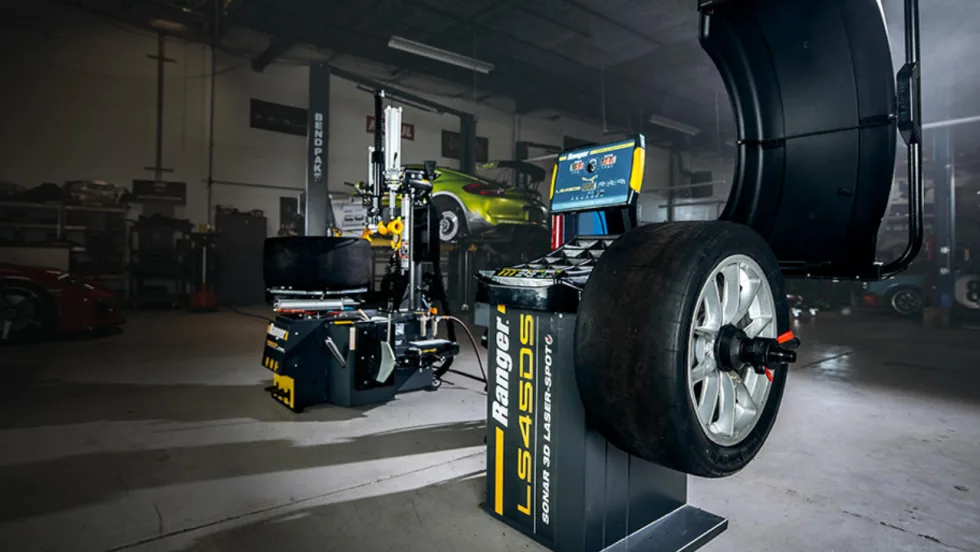
BendPak’s Ranger Wheel Service Equipment Achieves North American Safety Certification
BendPak’s full line of Ranger tire changers and wheel balancers has been ETL certified to UL and CSA standards to improve operator safety.
Read More →
Isuzu & U.S. Department of Labor Celebrate Milestone for Veterans Apprenticeship Program
The Isuzu Veterans Apprenticeship Program (IVAP) signing ceremony highlighted Isuzu’s long-term commitment to veterans, Isuzu dealers, and the skilled workforce supporting its customers and the commercial transportation industry.
Read More →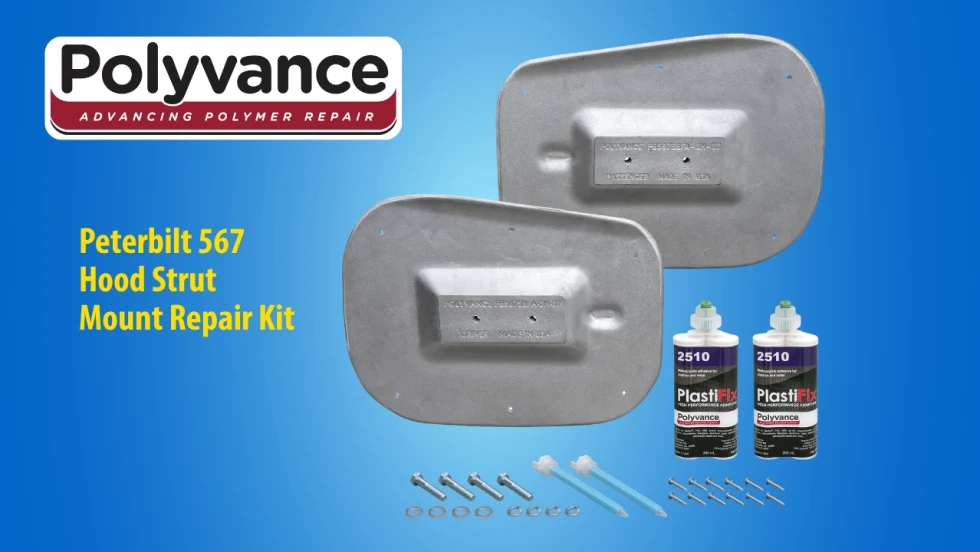
Polyvance Introduces New Peterbilt 567 Hood Strut Mount Repair Kit
Polyvance has launched a repair solution for Peterbilt 567 hood struts, helping truck owners and repair facilities avoid costly hood replacements.
Read More →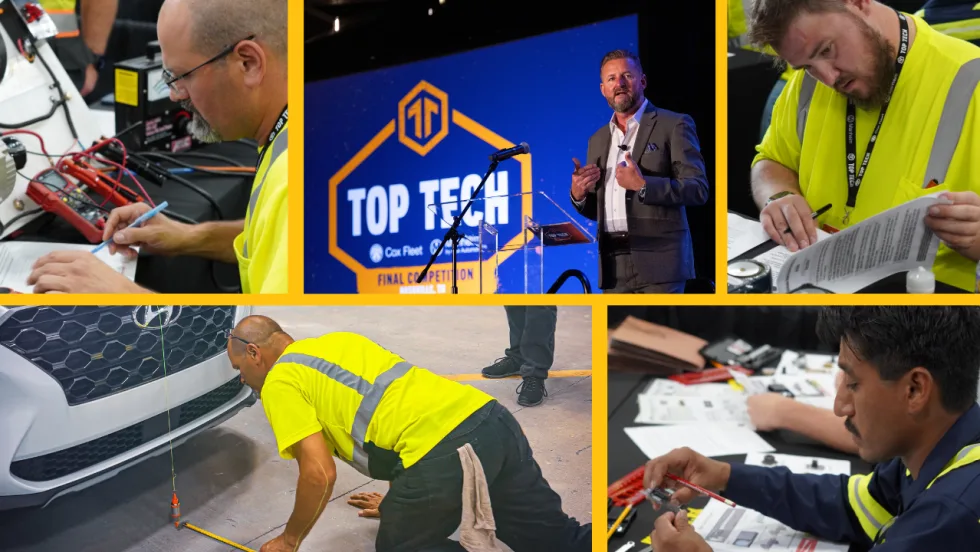
Cox Automotive Celebrates Technical Excellence at 2026 Top Tech Finals
The top technicians from Cox Fleet and Manheim tested their skills in Nashville, Tennessee, at Cox Automotive’s 2026 Top Tech Finals. The overall winners will advance to compete at the American Trucking Association’s TMC SuperTech competition.
Read More →
Grote Industries Appoints Vice President of North American Operations
Grote Industries has appointed Patrick Smith as vice president of North American operations as it celebrates 125 years of innovation and manufacturing excellence. He has more than 20 years of manufacturing leadership experience.
Read More →