





Truck Fleet Maintenance Guide: 3 Strategies for Success
Maintaining Dispersed Truck Fleets
More communication, adherence to maintenance schedules, and utilizing technology to its fullest are just a few ways you can better maintain fleets that do not all return to the same home base.
February 7, 2022
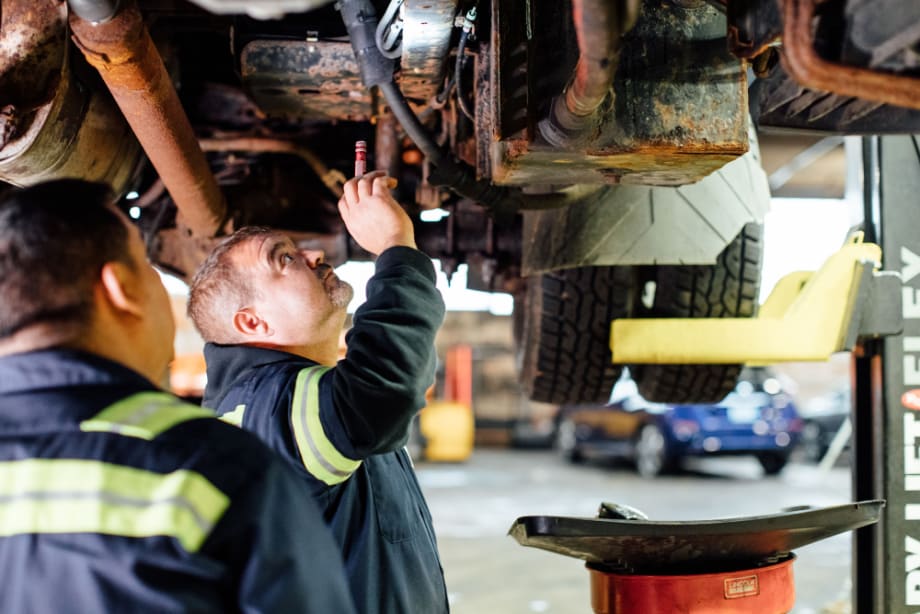
Communication, technology, and following schedules are the top recommendations for fleets looking to imrpove their maintenance across a dispersed fleet.
Photo: Fleetio
5 min to read
Not every fleet can house its vehicles under one roof. Some fleets might have a few offices within one region and numerous sites across several states. Keeping these vehicles maintained efficiently with exact quality expectations can be challenging.
Some challenges are similar to fleets in one location, while other geography-related issues pop up. Find out what the top challenges are and how to solve them.
Top Maintenance Challenges
The main challenge dispersed fleets face is related to communication.
“Communication is going to be an issue with dispersed fleets. If several branches or regions are operating in different time zones, it can be hard to get support,” said Ashlee Biggs, head of product marketing at Fleetio.
In addition, some branches or regions can also have differing policies when it comes to how preventive maintenance is authorized and executed, which can lead to branches or regions being siloed.
“If a fleet is working with paper and pencil, or even spreadsheets, maintenance information is going to be dispersed or difficult to sift through, and that’s a challenge when you’re trying to get a holistic picture of your fleet’s health. For that reason, having a centralized platform is one of the ways teams can get ahead of communication gaps,” Biggs added.
There are several other challenges fleets with multiple, dispersed locations face.
“Fleet manager oversite of a large and inconsistent vendor network is one issue. Also, ensuring drivers report issues in a timely and consistent manner to avoid major failures, standardized maintenance and repair processes can be tough. And, consistent quality of repairs and asset assignment tracking and scheduling is another challenge,” said Angelo Cinquegrana, AVP field operations for Amerit Fleet Solutions.
Consistency is another area that is tough to ensure, and often at the end of the day, the actual impact is felt most by your drivers.
“It becomes much harder to consistently service an entire fleet when there are geographically dispersed fleet managers and different service providers in those geographies. If the ‘fleet maintenance’ function is centralized within a company, managing the many different vendors for scheduling, support, and consistent quality of service becomes a full-time job. Typically, a driver is assigned to each vehicle and responsible for taking it to a service provider on that employee’s own time (or if they can sneak it in while the vehicle is not actively in commission),” said Mitchell Matsuo, director of fleet operations at Wrench.
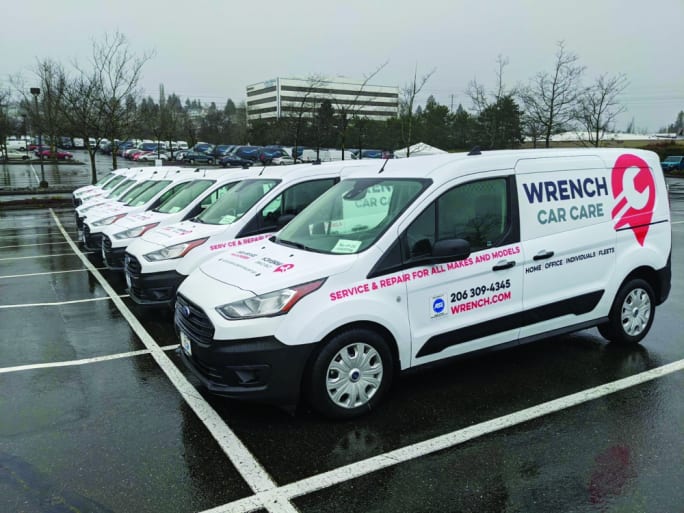
Consistency is key to maintenance, and operating in multiple locations can make this a challenge. Delaying repairs can increase costs and force a vehicle to be taken out of commission until it can get fixed.
Photo: Wrench
Impact When Trucks Don’t Return to Home Base
Not every fleet vehicle is returned to the home office or truck yard at the end of the day. Some fleets don’t return each truck home every day simply due to large regional coverage areas. Others need emergency technicians to get to a job 24/7.
“When vehicles are not all returning to the same base location, fleet managers face challenges with consistency. These challenges include driver write-ups as well as the completion of the repairs required, centralized collection of DOT forms, and shuttling vehicles to and from repair facilities,” said Cinquegrana of Amerit Fleet Solutions.
Fleets, where drivers take their vehicles home, tend to have greater challenges related to maintaining compliance because, typically, routine maintenance becomes the responsibility of the fleet vehicle driver.
“Fleet vehicle drivers typically spend their day on revenue-generating activities, so taking care of vehicle maintenance becomes a second priority to everything else. The driver also doesn’t typically like to spend their time off-the-clock taking care of the company vehicle’s maintenance, so this often prolongs the vehicle’s maintenance,” said Matsuo of Wrench.
Matsuo noted Wrench frequently sees this resulting in more costly repairs because the components meant to be replaced are now forcing the vehicle to be taken out of commission until it can get fixed.
“This unplanned downtime has severe consequences for the businesses that depend on their fleet vehicles to work with their customers,” Matsuo added.
One of the less talked about challenges facing fleet managers is simple appointment scheduling.
“We see many fleet managers try to help their drivers schedule maintenance since the drivers are so busy, but this creates a full-time job to help the driver find a service provider and an appointment time that works for the business and the driver. Simply communicating with large numbers of dispersed drivers and/or locations itself is a big challenge,” Matsuo noted.
Tips to Improve Maintenance in Dispersed Fleets
Communication, technology, and following schedules are the top recommendations for fleets looking to improve their truck maintenance in dispersed fleets.
“The biggest way to introduce standardization and consistency in dispersed fleets is real-time fleet maintenance software. The ability to gather data across all locations and see which locations are staying on top of preventive maintenance or seeing if there is a location with higher vehicle costs than others is powerful for accountability. It can also provide context for locations that may operate in regions with different policies,” said Biggs of Fleetio.
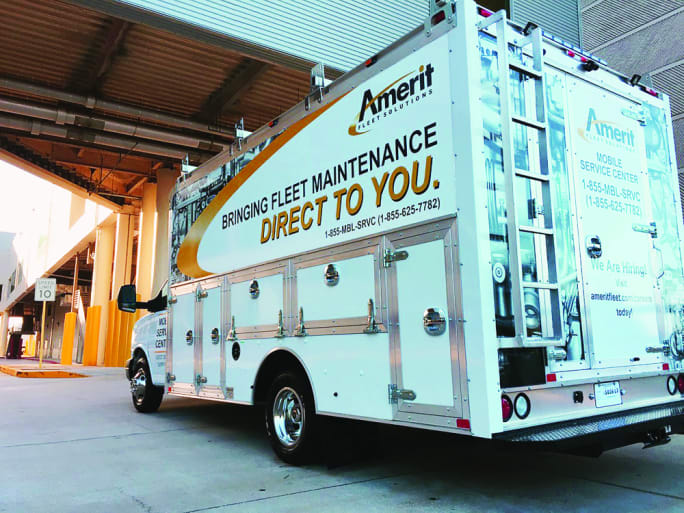
Fleet managers that oversee maintenance across multiple locations can struggle with ensuring network and vendor consistency.
Photo: Amerit Fleet Solutions
Telematics solutions are also beneficial when it comes to maintenance management.
“Telematics solutions can provide fleet managers with more data than they know what to do with. The data from telematics providers will help fleet managers better understand how their vehicles are being used to address any potential behavioral challenges from drivers. Telematics also enables fleet managers to stay on top of maintenance intervals for the multitude of vehicles they are managing,” said Mitchell Matsuo, director of fleet operations at Wrench.
And ensure your fleet stays on top of minor problems.
“We see small maintenance services are most often neglected with fleet vehicles, such as oil changes, uneven brake/tire wear, etc. The quicker these items are addressed, the less severe the problem becomes. We frequently hear from customers that the problem didn’t pose any significant issues to the drivers until the vehicle was required to be taken out of commission for unplanned maintenance and repair. This usually ends up being more costly from not only a maintenance and repair perspective, but the downtime creates additional challenges with their customers and drivers,” said Matsuo of Wrench.
At the end of the day, Freddy Muñoz, strategic account manager for Thermo King, recommended fleets “follow a maintenance schedule, adhere to a pre-trip inspection, use telematics to monitor your units remotely, and be proactive with maintenance.”
Subscribe to Our Newsletter
More Maintenance
Les Schwab Expands Commercial Tire Footprint Into Arizona
Les Schwab Tires has expanded into Arizona with two commercial tire locations in Phoenix and Tucson, strengthening its fleet service footprint in the Southwest.
Read More →
Volvo Trucks’ 'Lock and Leave' Software Updates Go Live Across North America
Unattended over-the-air software updates are now available in Volvo trucks across the U.S. and Canada. The new capability lets trucks stay current with the latest software without interrupting operations or requiring a dealership visit.
Read More →
Why Technician Appreciation Can’t Be a Once-a-Year Thought
For fleets trying to keep skilled technicians, recognition cannot begin and end with Technician Appreciation Week. Learn what year-round appreciation really looks like and why the everyday technician experience matters just as much as pay when fleets are trying to keep good people.
Read More →
How Faster Driver Reporting Can Keep Small Truck Problems Small
When minor damage, warning lights, or equipment issues are reported late, small problems can quickly become bigger maintenance headaches. Conversational AI can help shorten the path from what a driver notices in the field to the person who can act on it.
Read More →
BendPak’s Ranger Wheel Service Equipment Achieves North American Safety Certification
BendPak’s full line of Ranger tire changers and wheel balancers has been ETL certified to UL and CSA standards to improve operator safety.
Read More →
Isuzu & U.S. Department of Labor Celebrate Milestone for Veterans Apprenticeship Program
The Isuzu Veterans Apprenticeship Program (IVAP) signing ceremony highlighted Isuzu’s long-term commitment to veterans, Isuzu dealers, and the skilled workforce supporting its customers and the commercial transportation industry.
Read More →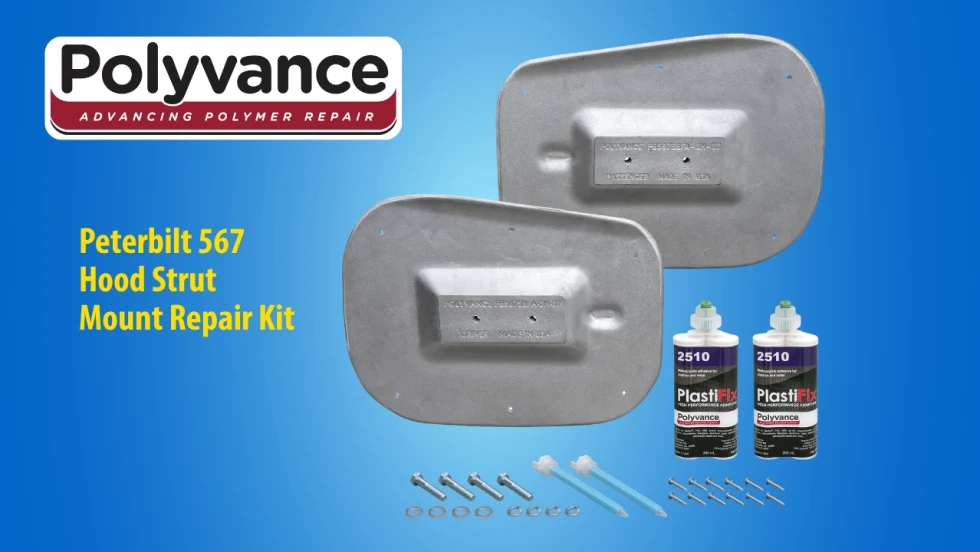
Polyvance Introduces New Peterbilt 567 Hood Strut Mount Repair Kit
Polyvance has launched a repair solution for Peterbilt 567 hood struts, helping truck owners and repair facilities avoid costly hood replacements.
Read More →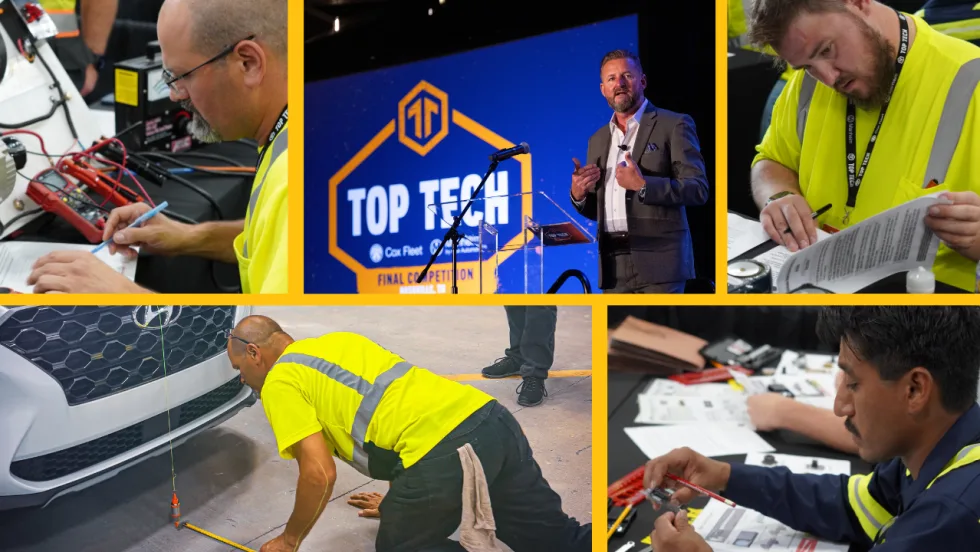
Cox Automotive Celebrates Technical Excellence at 2026 Top Tech Finals
The top technicians from Cox Fleet and Manheim tested their skills in Nashville, Tennessee, at Cox Automotive’s 2026 Top Tech Finals. The overall winners will advance to compete at the American Trucking Association’s TMC SuperTech competition.
Read More →
Grote Industries Appoints Vice President of North American Operations
Grote Industries has appointed Patrick Smith as vice president of North American operations as it celebrates 125 years of innovation and manufacturing excellence. He has more than 20 years of manufacturing leadership experience.
Read More →
Winter Fleet Prep: Expert Tips to Keep Vehicles Running Smoothly
Cold weather can expose weak batteries, tires, fuel systems, and maintenance gaps fast. Use this winter fleet checklist to prepare trucks and drivers before temperatures drop.
Read More →