




How to Evaluate and Hire Light-Duty Vehicle Drivers
In the Can Do/Will Do Model, there are six characteristics that contribute to whether or not someone will succeed in a role.

Driving tests, in-person structured interviews, and personality assessments are some actions you can take to hire a reliable light-duty driver.
Photo via pxhere.com
You need light-duty vehicle drivers who will avoid accidents, reduce risk, and get the job done without incident. In short, you need safe and reliable people behind the wheel for you. The question, of course, becomes how do you determine if a potential hire is a good fit for your company?
This article will explore how to evaluate, select, and hire high-quality light-duty vehicle drivers for your fleet of vans, sedans, or light-duty trucks.
Employee Selection 101
Employee selection is all about hiring the right person for the right job. You need someone who is safety-oriented, cares about succeeding in their role, and will complete the necessary work without causing any issues. You don’t want to hire your next accident.
In order to determine a potential hire’s projected fit into a position, companies should use something called the Can Do/Will Do Model.
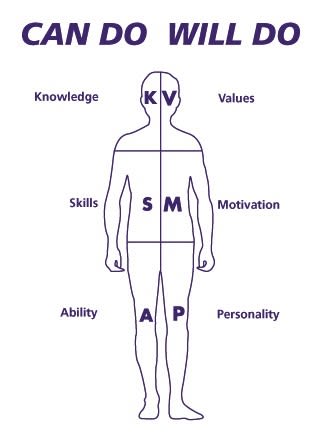
Source: Avatar Fleet
The Can Do/Will Do Model is Avatar Fleet’s proprietary tool used to determine if someone is a good fit for a job. In this model, there are six characteristics that contribute to whether or not someone will succeed in a role:
Knowledge
Skills
Abilities
Values
Motivations
Personality
These characteristics are split into two categories. There’s what someone CAN DO (knowledge, skills, and abilities) and there’s what someone WILL DO (values, motivations, and personality). All six of the characteristics determine if someone will succeed in any given role.
The six traits are defined as follows:
Knowledge - the concepts, principles, and mental processes committed to memory. Your drivers should know company policies, defensive driving practices, traffic laws, etc.
Skills - how to do something. Your drivers should know how to perform a safe left turn. They should know how to perform a pre-trip inspection. They should know how to maintain a safe following distance.
Abilities - physical and mental traits that are unlikely to change as the result of education or training. For example, no one can change a driver’s ability to sit for long periods of time or whether or not they are able to see and hear, but these are necessary abilities to succeed as a driver.
Values - the principles and beliefs upon which a person bases decisions. You want your drivers to value safety. The ones who don’t are more likely to cause an accident.
Motivations - the activities and rewards that attract a person. You need to hire people who are attracted to the type of work you offer.
Personality - the measure of how a person will typically interact with situational demands or other people. There are personality traits that make a good driver (even-keeled, reliable) and personality traits that make a bad driver (hot-headed, unpredictable).
The Can Do/Will Do Model and Hiring
With the Can Do/Will Do Model in mind, how can you use this to improve your employee selection and hiring process?
To begin, you must understand that there are some characteristics you cannot change about a person.
As hinted above, knowledge and skills can be changed. You can educate an employee on the necessary knowledge for a job. You can train an employee on the necessary skills for a job. However, you cannot change someone’s abilities, you cannot force an employee to adopt values that they don’t have, and you have little to no effect on a person’s motivations and personality.
That means you must hire for the characteristics you cannot change.
Laying The Groundwork: Characteristics of a Good Driver
If you want to hire someone who has the correct abilities, values, motivations, and personality, you have to begin by determining what you’re looking for.
Make a list of the ideal characteristics for your drivers for each category. Here are some examples to get you started:
Abilities - able to sit for long periods, able to lift 20 pounds or more, adequate vision or has corrective lenses.
Values - values safety, reducing risk, preventing accidents, working as a team, cooperation, and structure.
Motivations - is motivated by a consistent schedule, providing excellent service to customers, and receiving predictable pay.
Personality - is even-tempered, has a consistent demeanor and outlook on life, is cooperative and cordial with co-workers, and is kind and professional to customers.
If you need help coming up with the ideal characteristics for potential employees, think of your best current employee. Determine these characteristics based on him or her. Be as specific as possible.
Employee Selection Based on Can Do/Will Do Traits
Determining the characteristics of your ideal employee is the groundwork. Now, it’s time to put it to use. You need selection and hiring tools/processes that help you determine whether or not a potential job candidate has the ideal characteristics you’re looking for.
Here are three selection and hiring tools companies should use to select best-fit candidates for light-duty driving positions:
1. Self-Directed Personality Assessments
This is the first step we recommend to any company.
Have your potential light-duty drivers take a self-directed personality assessment. There are many great tools and resources available to create your personality assessments online.
When used properly, employee personality assessments will score potential hires based on the desired traits you’re looking for. It’s an easy way to screen out employees who would be a bad fit for your company. You can determine if they have the right values, motivations, and personalities to succeed in the given role.
2. In-Person Structured Interview
Interviews are a classic example of employee selection. However, interviews in their most common form are not always effective. That’s why we recommend a structured interview.
Structured interviews consist of specific, standardized questions that are asked in the same order every time. Then, the candidate is graded based on his or her responses. These grades are added up to determine if someone would be a good fit for a role. Think of it as an oral test used to determine someone’s values, motivations, and personality.
Depending on the questions you ask, you’ll quickly learn if someone values safety, teamwork, and any other ideal trait for your company.
3. Driving Tests/Exams
We highly recommend you perform a 20 to 30-minute behind-the-wheel driver assessment of potential hires. Without proper training, potential hires are unlikely to excel at this evaluation, but a driving test is a great way to determine if someone:
Obeys traffic laws
Speeds or takes unnecessary risks
Considers driving to be dangerous
Is prone to road-rage
Are You Hiring Your Next Accident?
Your company is only as good as the drivers you hire. Whether you’re pest control, delivering products, or performing road maintenance, you succeed or fail by your drivers. Make sure you’re putting the right people in your seats with proper selection and hiring processes.
About the Author: John Kuder is a senior instructional designer at Avatar Fleet, the creators of the non-CDL safety training course, The Fleet Safety Course.
Originally posted on Automotive Fleet
More Small Fleet


Developing Budget-Friendly Driver Safety Programs
From driver training and safety meetings to one-on-one coaching and incentive programs, several small fleets share how they have developed a safety culture with their drivers using low- to no-cost resources.
Read More →
Boosting Last-Mile Fleet Uptime, Safety, and Value with AI Vehicle Inspections
AI-powered inspections are transforming last-mile fleets by replacing manual checks with highly accurate automated scans that detect defects in seconds. By giving fleet operations visibility into the daily condition of their vehicles, you can identify trends over the vehicle’s lifecycle that enable improved procurement decisions, route management, driver training and accountability.
Read More →
Five Ways Seat Belts Help Prevent Injuries
There are five ways seat belts protect occupants from injuries, according to the Tennessee Department of Safety and Homeland Security.
Read More →
It’s here: The 2026 Fleet Technology Trends Report
What does AI mean for fleets? Get the answer — and learn other top tech trends.
Read More →
Small Fleets, Big Impact: How Independent Drivers Power Wreaths Across America
Check out how small fleets and independent drivers power Wreaths Across America each December and why their impact matters more than ever.
Read More →
VMS Survey Finds 65% of Small Fleet Managers Run Operations Alone
A new VMS survey shows small fleet managers are stretched thin, with most handling operations solo and eager to adopt digital tools for relief.
Read More →
Tips for Driving Safely on Halloween Night
This video features a reminder from the Connecticut Department of Transportation (DOT) and the Connecticut Police Chiefs Association, urging drivers to prioritize safety this Halloween.
Read More →
AI, Access, and Uptime: VMS’s Next Chapter with David Prusinski
VMS’s new Co-CEO, David Prusinski, shares how an AI-first approach will give small fleets and repair shops the tools to compete like big players.
Read More →
Fleet Managers Share Winter Prep Tips: It's Never Too Early!
Three fleets share best practices to prep vehicles for winter and prevent downtime when the cold sets in.
Read More →