




How TigerTough Blends Family Roots, Midwest Grit, and Fleet-Ready Innovation
From small-town roots to nationwide fleets, here’s how TigerTough builds seat protection that’s durable, safe, and made to actually work.

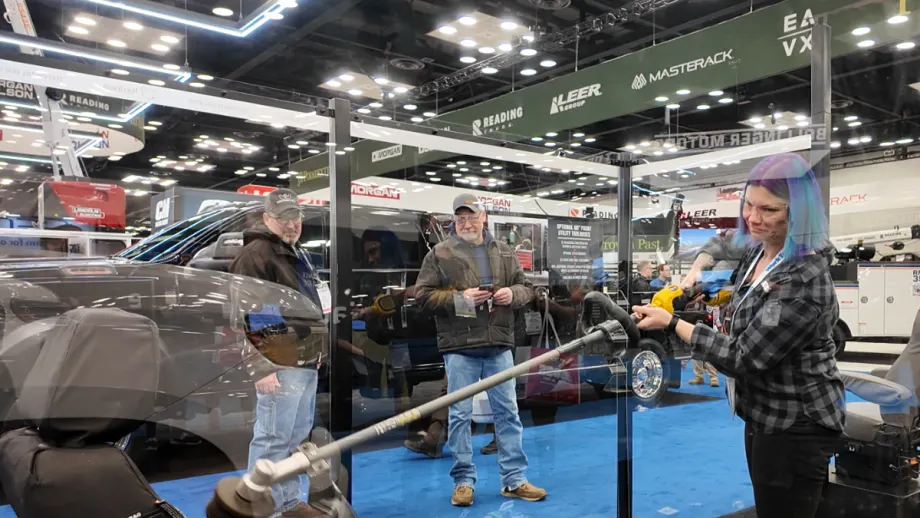
A live durability demonstration with Work Truck's Lauren Fletcher highlights Tiger Tough’s focus on real-world performance, not just marketing claims.
Credit: Work Truck
There’s something different about a company when the story doesn’t start with venture capital or a growth strategy deck. Sometimes it starts with a family looking at a business and saying, we can do this better. We can do this tougher. And we can do it right here at home.
That’s the story behind TigerTough.
When I sat down with Sheldon Zitzmann, marketing director at TigerTough, for this edition of Faces of Fleet, I wanted to understand what happens when a family doesn’t just acquire a company but decides to root it in their hometown and build it around real people.
His family took over TigerTough in 2016 with two goals: to make seat protection that could actually survive fleet life and bring meaningful jobs back to small-town Minnesota.
And yes, it is a small town. Small enough that when I mentioned the name, I had to double-check it wasn’t a Spaceballs reference. (It wasn’t, but he laughed, and I still stand by the joke.)
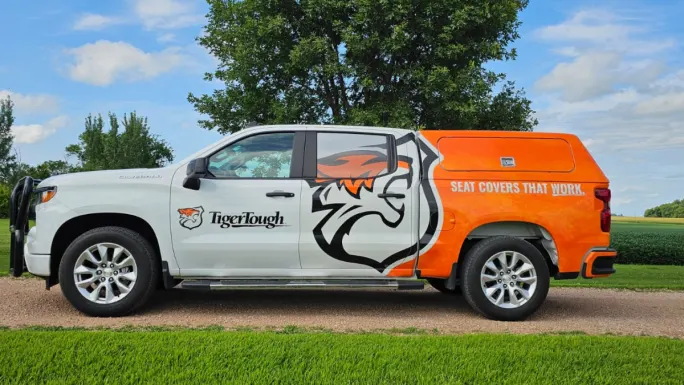
TigerTough’s branded work truck reflects the company’s bold identity and commitment to seat covers built to handle real fleet demands.
Credit: TigerTough
When Family Ownership Isn’t Just a Label
Many companies say they’re family-owned. Fewer can point to generations choosing to stay. For Zitzmann, that’s one of the clearest indicators of culture.
“It’s a testament to the company when you’ve got not just your family, but… kids with their moms and dads. If you see something and your parents are happy and supported and you’re joining that same company, that really does say a lot about the company itself,” he said.
That line stuck with me. Because that’s not branding, it’s lived experience.
When you’re building in a town where people know your name, your decisions look different. Growth isn’t just numbers on a spreadsheet. It’s jobs for neighbors, stability for families, and making sure the work you create is something people are proud to show up to.
And when demand grows, so does responsibility.
“It’s important to pivot when needed,” Zitzmann said. “But it’s a good problem to have, to have the demand out-supplying so much that you’ve got to continue to grow. That’s fantastic.”
Growth, in this case, isn’t about chasing scale at any cost. It’s about scaling without losing what made you strong in the first place.
Fleet Drivers Are Tough on Seats. Period.
Let’s be honest for a second: Fleet drivers are hard on interiors. Not because they’re careless but because they’re working. Mud, tools, equipment, long shifts, in and out all day, the seats take a beating.
And the fleet world is full of “cheap now, replace later” seat covers that don’t survive a week. To make it real, I put a TigerTough seat cover through a weed whacker test on the Work Truck Week show floor, and it held up exactly like you’d hope.
But TigerTough built its reputation on the opposite approach. Hand-inspected craftsmanship. American-made materials. Products designed to fit the vehicle and stay put.
But fleets don’t just need tough, they also need safe. They need products that work with side-impact air bags and installation that doesn’t require a full afternoon and three YouTube tutorials.
When we talked about the tension between durability and safety compliance, Zitzmann didn’t oversell it.
“That’s a science right there for sure,” he said.
Innovation for TigerTough isn’t about slapping a new buzzword on a product. It’s about asking, what are fleet managers actually dealing with?
Antimicrobial fabrics, airbag compatibility, and materials that hold up to abuse without interfering with factory safety systems. These aren’t flashy upgrades; they’re practical ones. And they matter when you’re protecting a six-figure asset that’s out in the field every day.
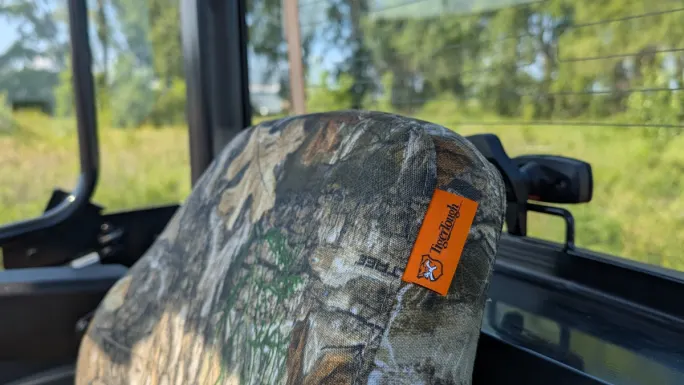
A close-up of a TigerTough seat cover shows durable materials and branding designed to withstand demanding work environments.
Credit: TigerTough
Why Made in the USA Still Matters
Here’s what I appreciated about this part of the conversation: Zitzmann wasn’t treating “Made in the USA” like a tagline. He talked about it like something they live with every day. The materials are American-made. The production is domestic. The quality checks happen in-house.
And sure, it’s something customers care about. But it’s also about control. When you’re building for fleets, you don’t get to shrug and say “supply chain” when something needs fixing. Keeping it close means they can move faster, adjust faster, and scale without losing the craftsmanship that got them here.
Plus, when the company grows, the town grows with it.
Staying Relevant as Trucks Get Smarter
One thing we know for sure right now is that truck interiors aren’t getting simpler. They’re getting more complex, more integrated, and more tech-heavy. Which means seat protection can’t be an afterthought.
TigerTough has had to evolve alongside that shift. Air bag integration alone changes the entire engineering approach. You can’t just build something thick and indestructible and call it a day. The product must work with the vehicle, not against it.
That’s where listening becomes a competitive advantage. Staying close to fleet managers. Paying attention to how drivers actually use the vehicle. Watching where failures happen.
It’s not glamorous work. But it’s real.
And Yes, Humor Helps
If you follow Zitzmann online, you already know he’s not afraid to call out “confident commenters” with a little humor.
So I had to ask how he’d handle this interview if it showed up in his comment section.
He didn’t hesitate. "I'd ask what happened to that guy's hair!"
To which I responded with the ever thoughtful commentary, “And I’d make sure everybody knows that pants are required when putting butts in seats.”
Fleet may be serious business, but TigerTough shows you can still have a personality while you’re doing it.
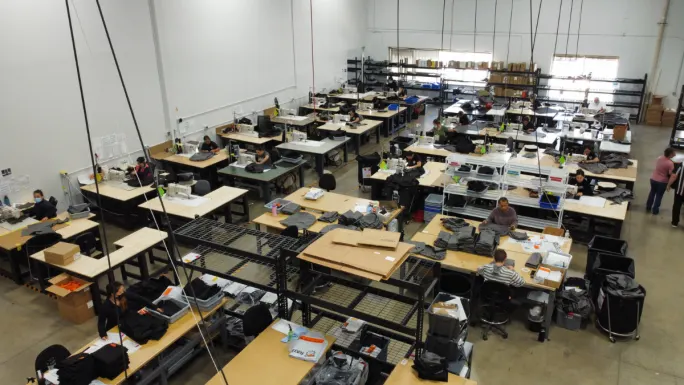
Inside TigerTough’s Minnesota facility, team members inspect and assemble seat covers, reinforcing the company’s hands-on, domestic production approach.
Credit: TigerTough
The Bigger Takeaway
TigerTough’s story isn’t just about seat covers. It’s about what happens when craftsmanship, community, and accountability are all part of the same mission. It’s about building something tough because the people using it don’t have time for fragile solutions.
And, it’s about proving that small-town operations can scale nationally without losing the culture that made them work in the first place.
If you want to hear Zitzmann’s full story and see what happens when durability meets real-world testing, watch the full episode of Faces of Fleet.
If this helped, hit like and subscribe for more episodes of Truck Chat, including Shades of Fleet, featuring real conversations from across the fleet industry.
And if there’s someone in fleet you think we should spotlight next, you know where to find me.
More Operations
Family Ties Inside the Fleet Families Building Careers Across Generations
Three fleet families share what it really takes to work together, learn across generations, and keep business from following them home.
Read More →
Shades of Fleet Call for Voices: Fleet's Hidden Heroes
Fleet’s hidden heroes are often the ones keeping everything moving behind the scenes. September’s Shades of Fleet is looking for dispatchers, coordinators, parts specialists, and other support pros to share their stories.
Read More →
Truck Centers, Inc. Celebrates National Truck Driver Appreciation Week with $1,000 Fuel Card Giveaways
During National Truck Driver Appreciation Week, Truck Centers, Inc. is offering customers a chance to fuel up for free. Customers at all Truck Centers locations can enter to win one of four $1,000 fuel cards from Sept. 14 - 18.
Read More →
Fleet Guides, AI Time-Savers, Truck Tariffs & Fuel Strategy Lead the News
This week’s Truck Chat Cheat Sheet covers new fleet vehicle guides, practical AI use cases, U.S.-Canada truck production, mixed-energy strategy, and more.
Read More →
What Fleet Employers Are Missing When Hiring Veterans
What if some of the strongest candidates for fleet are already out there, but their experience is written in a language our industry does not always recognize?
Read More →
Automotive Fleet Opens 2026 Personal Use Survey for Commercial Fleet Managers
Less than two weeks left! Commercial and corporate fleet managers are invited to share how their organizations handle company vehicle personal-use policies, charges, and driver eligibility.
Read More →
What Resilient Fleets Do Differently When Conditions Change
Fleet resilience is about more than reacting to disruption. Lauren Fletcher talks with AP Fleet’s Alex Coveney about flexibility, planning, scaling, and what helps fleets adapt when business conditions shift.
Read More →
If We Want the Next Generation in Automotive, We Have to Give Them a Reason to Care
The automotive industry talks constantly about its workforce shortage. But before we can recruit the next generation, we may need to do a better job giving kids a reason to care about automotive in the first place.
Read More →
Ram ProMaster City Under $40K, Truck Tariffs, and AI Maintenance Lead the News
A sub-$40K commercial van, tariff questions, AI-powered maintenance, and a new EV production strategy headline this week’s Truck Chat Cheat Sheet.
Read More →
Bob Adamsky Shares the Fleet Lessons You Usually Learn the Hard Way
After more than 30 years in fleet, Arrow International’s Bob Adamsky has learned that the job is about far more than vehicles. He shares the lessons he wishes every fleet manager could learn a little earlier.
Read More →