





Want More? Cell Connectivity Crucial to Effective Vaccine Delivery
How Cell Signal Boosters Improve Fleet Communications
Clear and fast communication is essential in all fleets, but especially so in motorsports. Ensuring racers have the support if they need is critical.
August 24, 2021
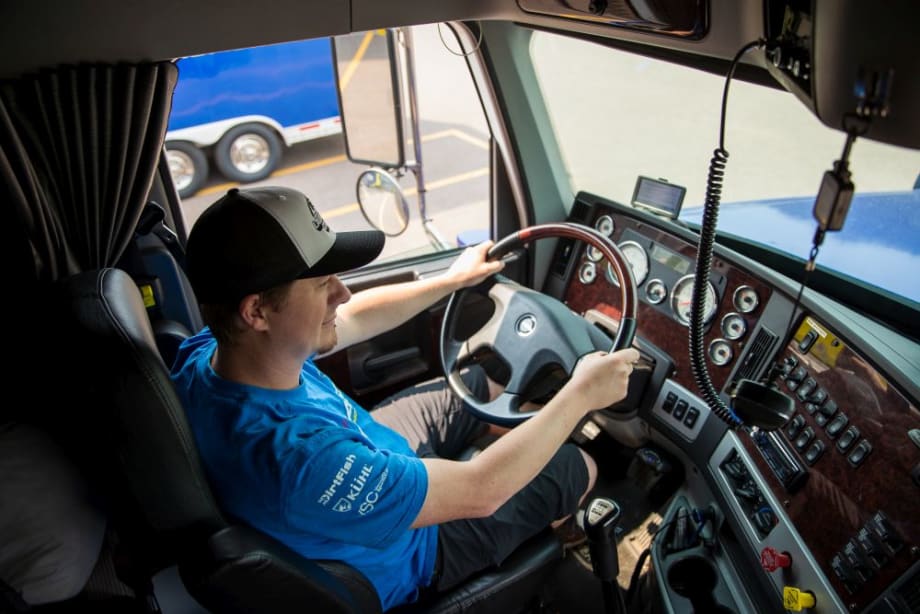
The Vermont SportsCar/Subaru Motorsports USA fleet can now easily now communicate with the race crew, each other, and our loved ones back home.
Photo: Wilson Electronics
3 min to read
Between Rally, Rallycross, and the show program, the Vermont SportsCar/Subaru Motorsports USA fleet operates eight heavy-duty trucks that require a CDL. These are active during a race season. Around a half dozen smaller pickup trucks and company cars aid in the racing effort or transport personnel.
Seth Alarie is a Motorsport technician and truck driver for Vermont SportsCar/Subaru Motorsports USA.
Work Truck caught up with Alarie to find out more about his fleet and how his use of weBoost by Wilson Electronics has helped improve the fleet’s communication.
WT: How do you utilize your fleet?
ALARIE: The larger service rigs (Nascar style truck and trailer combinations for Rallycross and straight trucks with stackers for Rally) are the core of our racing effort. Especially on the rally side of things, you find yourself out in the middle of nowhere in rural towns, out on logging roads, or up in mountain towns, that time forgot.
Stage rally takes place in locations that are often miles from civilization. Dirt roads, water crossings, and big jumps are hard to come by in downtown Manhattan. It is just the nature of the sport.
WT: What challenge were you facing that caused you to turn to Wilson Electronics?
ALARIE: As you can imagine, finding reliable cell service has always been a struggle with this type of rural setting. A bunch of us bounced around between different carriers, but there was no magic cure-all. Different carriers worked at various events, but none covered the whole circuit, and some events were still a total blackout.
I was very optimistic when I started hearing about weBoost and what it could do for our company.
At events, communication is critical. Cell phones are how we communicate with the racecars when they are out of range of our team radio. This has been problematic in the past and led to a few awkward instances.
At one event, a driver and codriver were found sitting with a disabled racecar on a back road somewhere in Missouri, throwing rocks at an empty water bottle to pass the time while waiting to be discovered. They were unable to relay their location back to the service area due to poor cell phone service.
(Events do have emergency beacons for accidents and situations that require immediate response, just not if you need a ride home)
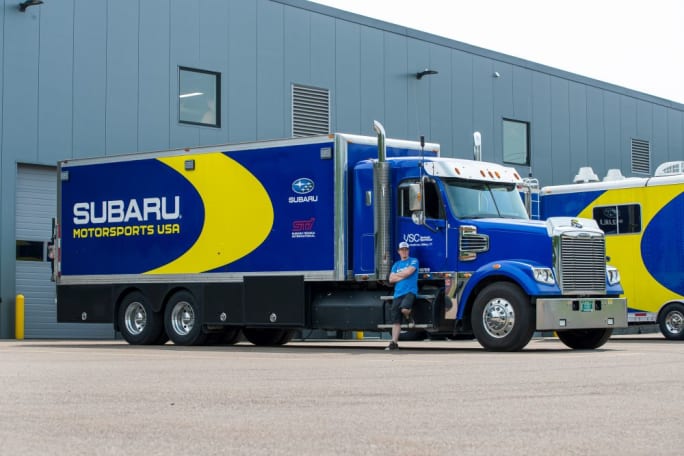
The Vermont SportsCar/Subaru Motorsports USA fleet has weBoost installed in the cab of the trucks, in the box (workshop area), and in the competition cars themselves. There has been an incredible difference in the reliability of the fleet's coverage no matter what carrier you use.
Photo: Wilson Electronics
WT: Can you share any successes, savings, or improvements since implementing their product?
ALARIE: First trip out with weBoost installed in the cab of the truck was a night and day difference.
The first thing I noticed was that I had a usable signal on stretches of highway that I knew were dead zones in the past on the drive out. This makes it much easier to stay in contact with everybody while you are over the road.
Once we arrived at the event, which happened to be in southern Ohio, also somewhere I know from past experiences has terrible coverage, the difference was clear. Places that I just had just enough service to entertain the thought of sending a text, I could now make clear phone calls.
We have weBoost installed in the cab of the trucks, in the box (workshop area), and in the competition cars themselves. There has been an incredible difference in the reliability of our coverage no matter what carrier you use.
We can now communicate with the race crew, each other, and our loved ones back home. I can’t even begin to quantify what a relief it is when you are on the road as much as we are.
Subscribe to Our Newsletter
More Operations
Family Ties Inside the Fleet Families Building Careers Across Generations
Three fleet families share what it really takes to work together, learn across generations, and keep business from following them home.
Read More →
Shades of Fleet Call for Voices: Fleet's Hidden Heroes
Fleet’s hidden heroes are often the ones keeping everything moving behind the scenes. September’s Shades of Fleet is looking for dispatchers, coordinators, parts specialists, and other support pros to share their stories.
Read More →
Truck Centers, Inc. Celebrates National Truck Driver Appreciation Week with $1,000 Fuel Card Giveaways
During National Truck Driver Appreciation Week, Truck Centers, Inc. is offering customers a chance to fuel up for free. Customers at all Truck Centers locations can enter to win one of four $1,000 fuel cards from Sept. 14 - 18.
Read More →
Fleet Guides, AI Time-Savers, Truck Tariffs & Fuel Strategy Lead the News
This week’s Truck Chat Cheat Sheet covers new fleet vehicle guides, practical AI use cases, U.S.-Canada truck production, mixed-energy strategy, and more.
Read More →
What Fleet Employers Are Missing When Hiring Veterans
What if some of the strongest candidates for fleet are already out there, but their experience is written in a language our industry does not always recognize?
Read More →
Automotive Fleet Opens 2026 Personal Use Survey for Commercial Fleet Managers
Less than two weeks left! Commercial and corporate fleet managers are invited to share how their organizations handle company vehicle personal-use policies, charges, and driver eligibility.
Read More →
What Resilient Fleets Do Differently When Conditions Change
Fleet resilience is about more than reacting to disruption. Lauren Fletcher talks with AP Fleet’s Alex Coveney about flexibility, planning, scaling, and what helps fleets adapt when business conditions shift.
Read More →
If We Want the Next Generation in Automotive, We Have to Give Them a Reason to Care
The automotive industry talks constantly about its workforce shortage. But before we can recruit the next generation, we may need to do a better job giving kids a reason to care about automotive in the first place.
Read More →
Ram ProMaster City Under $40K, Truck Tariffs, and AI Maintenance Lead the News
A sub-$40K commercial van, tariff questions, AI-powered maintenance, and a new EV production strategy headline this week’s Truck Chat Cheat Sheet.
Read More →
Bob Adamsky Shares the Fleet Lessons You Usually Learn the Hard Way
After more than 30 years in fleet, Arrow International’s Bob Adamsky has learned that the job is about far more than vehicles. He shares the lessons he wishes every fleet manager could learn a little earlier.
Read More →