




How C-SPAN Manages A Cross-Country Fleet
With a small fleet of Ford Transit Connects, C-SPAN has produced more than 400 broadcasts on the road through its Local Content Vehicle program.

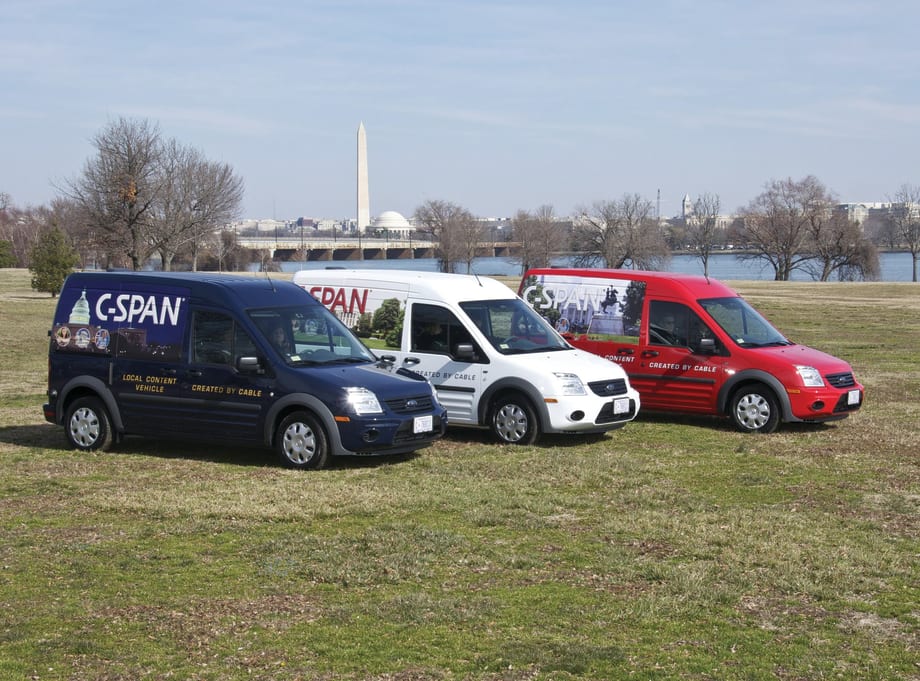
C-SPAN turns Ford Transit Connects into Local Content Vehicles (LCVs), the wheels driving a media project that captures stories of literary and historic significance from across the U.S.
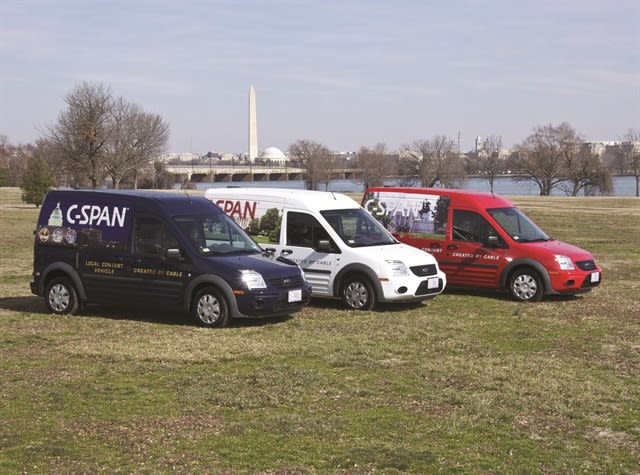
C-SPAN turns Ford Transit Connects into Local Content Vehicles (LCVs), the wheels driving a media project that captures stories of literary and historic significance from across the U.S.
From the iconic C-SPAN, its Local Content Vehicles (LCVs) are the wheels driving a media project that is mapping out the literary and historical riches of cities across the U.S.
While it would be easy to write a full article on the news project itself (which can be checked out online at www.c-span.org/LocalContent), we at Business Fleet were more intrigued by the LCV fleet of six Ford Transit Connects. Since launching in 2010, the LCVs have traveled to at least 24 cities, and the team has produced at least 425 programs.
So how does C-SPAN manage six vans traveling across the country to produce and edit content on the spot?
BEYOND D.C.
In 2010, nonprofit C-SPAN started the LCV project with one Transit Connect, says Mark Farkas, a C-SPAN producer who leads the project. “When the Gulf oil spill happened, we realized we needed to expand our reach beyond Washington, D.C. — we needed to be able to shoot and edit things from the road,” Farkas says.
As the project grew, that one vehicle quickly grew to three, and the fleet traveled together city to city.
But now with six Transit Connects under C-SPAN ownership, the fleet is separated into two teams — three vehicles each and one person per vehicle. One team sticks around the West Coast while the other roams on the East.
Every vehicle is equipped with video production and editing equipment for quick turnaround of the footage for each featured city.
Each team is typically in every city for about a week and then flies back to D.C. between gigs, leaving the vans behind. C-SPAN uses its local cable company station partners and local city governments not only to broadcast the segments on local channels, but also to help house the Transit Connects between filming. C-SPAN also gets help from local city governments throughout the filming process.
C-SPAN decided against issuing fuel cards to drivers, and instead, each person has an American Express corporate card and files expense reports as needed. C-SPAN uses AAA for roadside service and maintains the vehicles, which are all still under warranty, at Ford dealerships.
THE CHALLENGES
The equipment probably costs just as much as the vans themselves, so most of it is taken out between projects. But leaving the vehicles sitting can still be risky since they often hang out for two to three weeks before moving on. At the beginning of the project, Farkas says they tried out an expensive alarm system, though it ended up drawing too much power from the battery. And installing solar panels on the tops of the vehicles didn’t seem to help.
Now that the LCVs have returned to a standard alarm system, Farkas says they’re trying to find another use for the panels, aside from just powering the AC. According to Farkas, one obvious use won’t work — powering up video equipment on the road. “I’m sure if we got really creative, we could find another use for them,” he says, but in the meantime they don’t take much maintenance and are hardly visible.
At this point, the equipment and risk management is the least of Farkas’ worries. Per motor vehicle laws in Washington, D.C., the vehicles must return every year to the capital for annual inspections. Only once in a vehicle’s lifetime does D.C. law allow a vehicle to receive an out-of-state inspection. “That’s our biggest challenge right now,” says Farkas.
Surprisingly, the vehicles don’t rack up too much mileage. Farkas says even their first-purchased vehicles, 2010-MY vans, only have 40,000 miles so far. “They will last us for a while,” he says.
More Small Fleet


Developing Budget-Friendly Driver Safety Programs
From driver training and safety meetings to one-on-one coaching and incentive programs, several small fleets share how they have developed a safety culture with their drivers using low- to no-cost resources.
Read More →
Boosting Last-Mile Fleet Uptime, Safety, and Value with AI Vehicle Inspections
AI-powered inspections are transforming last-mile fleets by replacing manual checks with highly accurate automated scans that detect defects in seconds. By giving fleet operations visibility into the daily condition of their vehicles, you can identify trends over the vehicle’s lifecycle that enable improved procurement decisions, route management, driver training and accountability.
Read More →
Five Ways Seat Belts Help Prevent Injuries
There are five ways seat belts protect occupants from injuries, according to the Tennessee Department of Safety and Homeland Security.
Read More →
It’s here: The 2026 Fleet Technology Trends Report
What does AI mean for fleets? Get the answer — and learn other top tech trends.
Read More →
Small Fleets, Big Impact: How Independent Drivers Power Wreaths Across America
Check out how small fleets and independent drivers power Wreaths Across America each December and why their impact matters more than ever.
Read More →
VMS Survey Finds 65% of Small Fleet Managers Run Operations Alone
A new VMS survey shows small fleet managers are stretched thin, with most handling operations solo and eager to adopt digital tools for relief.
Read More →
Tips for Driving Safely on Halloween Night
This video features a reminder from the Connecticut Department of Transportation (DOT) and the Connecticut Police Chiefs Association, urging drivers to prioritize safety this Halloween.
Read More →
AI, Access, and Uptime: VMS’s Next Chapter with David Prusinski
VMS’s new Co-CEO, David Prusinski, shares how an AI-first approach will give small fleets and repair shops the tools to compete like big players.
Read More →
Fleet Managers Share Winter Prep Tips: It's Never Too Early!
Three fleets share best practices to prep vehicles for winter and prevent downtime when the cold sets in.
Read More →