




High Fuel Costs Push Companies Toward a Managed Fleet Program
Two home healthcare providers implement ways to control fleet costs using their managed fleet programs, which would not have been possible under a reimbursement plan.
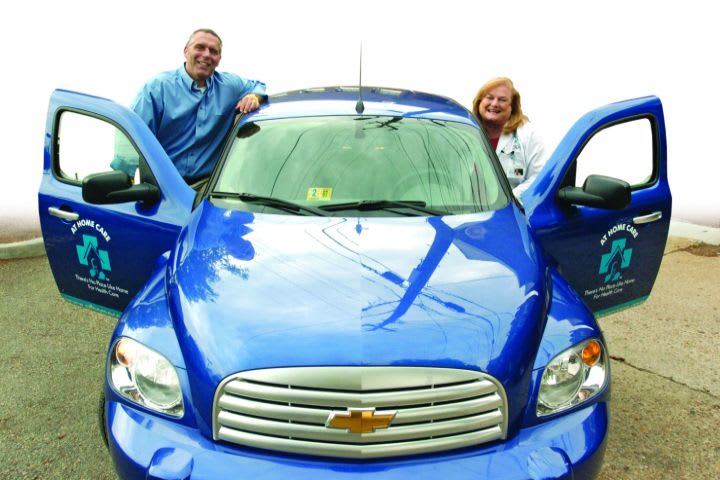
Ed Kassab, AT Home Care’s CEO, stands next to a Chevrolet HHR with a nurse. The company has decided to move to a five-door Chevy Aveo and estimates it will save $55,000 a year on fuel and lease costs.
In June the IRS announced an 8-cent increase in the optional standard mileage rate from 50.5 cents per mile for business miles driven to 58.5 cents a mile through Dec. 31, 2008.
Even small fleets that reimburse at the IRS rate are being hit hard. Multiplying the 8-cent increase by 30 vehicles that drive 12,000 miles per year adds about $30,000 per year in fleet expense.
Even before the IRS increase, sky-high fuel bills were a major reason these two home healthcare providers moved to a managed fleet program from reimbursement. In so doing, they are saving substantial costs by switching to more fuel-efficient vehicles and using a fleet fuel card, while experiencing benefits not immediately visible on the bottom line.
Foundation Management Services
Foundation Management Services provides home care and hospice services in three southwest states. Before gas prices reached $4 per gallon, the Denton, Texas–based company provided company-owned vehicles for supervisors and reimbursed the home care providers for using personal vehicles.
Enterprise Fleet Management analyzed the FMS fleet and determined that the company could save about $100,000 a year by switching from reimbursement to leased vehicles. The figures were based on an estimated 80 drivers who average 15,000 to 20,000 miles per year and included factors such as miles driven, maintenance, insurance, lease terms and monthly payments, as well as having a fleet of uniformly fuel-efficient vehicles.
"We provided the mileage by employee category and they did all the calculations, showing us the break-even point and what the savings to the company would be," says Lawrence Leahy, vice president of finance.
Today Leahy is looking to further expand his fleet and change fleet models to save fuel expense. The company began leasing mid-sized sedans and has decided to switch to the more fuel-efficient Ford Focus.
FMS has also saved money using a Wright Express fuel card program.
At the end of the month, the fleet department receives one report that tracks all fuel purchases. The reports help Leahy monitor possible driver abuse of the cards, such as use of higher octane gas. The cards also record mileage, which helps monitor maintenance and repairs.
AT Home Care
AT Home Care is the largest independent home healthcare agency in Virginia. Three years ago the company moved from a reimbursement program to a mix of reimbursement for part-time clinicians and a managed fleet for 35 of its full-time clinicians. Enterprise manages the company's fleet as well.
AT Home Care providers drive an average of 25,000 miles per year, so the increase in the IRS rate represented a substantial expense spike, says Carrie Dorsey, director of public relations.
AT Home Care is also moving to more fuel-efficient vehicles, switching from the Chevy HHR to the Chevy Aveo hatchback. The company is including OnStar service as an added perk.
Because the lease payments are less than the 58 cents-per-mile IRS reimbursement rate, the company plans to increase the managed fleet to 50 vehicles in the coming months. Dorsey estimates these moves will save the company about $55,000 per year.
AT Home Care clinicians use a fuel card as well. Dorsey says that not only is the actual gas reimbursement expense lower with the cards, the time involved reviewing receipts and processing the resulting paperwork is cut down considerably.
[PAGEBREAK]
Other Benefits:
Retention and Recruitment
Leased vehicles serve as a recruitment and retention tool. Leahy says health care providers are in demand right now.
Dorsey of AT Home Care agrees. "The car we offer has been a nice perk for employees. "Not only is it a hiring incentive, but employee retention has been much higher. These are the soft benefits you don't necessarily see in the bottom line."
The employees, with some minor limitations, can use the vehicle for personal driving, and can even use the fuel card for personal use.
Less Paperwork, Fewer Headaches
Leahy reports that two of his company drivers were recently involved in separate accidents. Enterprise handled everything, he says. "They got the loaner cars, and the cars were repaired in a timely manner," he says.
"They take the fleet management responsibilities out of your hands," he says. "They send me invoices on the fuel usage, if somebody's behind on their maintenance schedule or if the mileage is going over the original lease. They keep me posted pretty well on a regular basis."
With less paperwork to sort through, companies have more time to focus on their core business.
Helping the Environment
When going to reimbursement, fleet administrators can take satisfaction that some employees' less-fuel-efficient vehicles are off the road. Going further, Dorsey says her company is thinking about signing with a new Enterprise carbon emission offset program that is currently in development.
"That's a nice feel-good benefit that the employees will be part of, and something our company feels strongly about," she says.
Reduced Downtime
A well-maintained company-owned fleet can help reduce lost revenue due to missed appointments when employees' own vehicles break down and are out of service.
Improved Company Image
Dorsey says the company places its logo on the company cars, which is not possible with an employee-owned car. The branding is essentially free advertising.
Logo or not, companies with employees driving newer vehicles as part of a managed fleet program represent the company image in a much more positive light than would an older employee-owned clunker. BF
To read more small fleet profiles, click here to see a full list.
More Small Fleet


Developing Budget-Friendly Driver Safety Programs
From driver training and safety meetings to one-on-one coaching and incentive programs, several small fleets share how they have developed a safety culture with their drivers using low- to no-cost resources.
Read More →
Boosting Last-Mile Fleet Uptime, Safety, and Value with AI Vehicle Inspections
AI-powered inspections are transforming last-mile fleets by replacing manual checks with highly accurate automated scans that detect defects in seconds. By giving fleet operations visibility into the daily condition of their vehicles, you can identify trends over the vehicle’s lifecycle that enable improved procurement decisions, route management, driver training and accountability.
Read More →
Five Ways Seat Belts Help Prevent Injuries
There are five ways seat belts protect occupants from injuries, according to the Tennessee Department of Safety and Homeland Security.
Read More →
It’s here: The 2026 Fleet Technology Trends Report
What does AI mean for fleets? Get the answer — and learn other top tech trends.
Read More →
Small Fleets, Big Impact: How Independent Drivers Power Wreaths Across America
Check out how small fleets and independent drivers power Wreaths Across America each December and why their impact matters more than ever.
Read More →
VMS Survey Finds 65% of Small Fleet Managers Run Operations Alone
A new VMS survey shows small fleet managers are stretched thin, with most handling operations solo and eager to adopt digital tools for relief.
Read More →
Tips for Driving Safely on Halloween Night
This video features a reminder from the Connecticut Department of Transportation (DOT) and the Connecticut Police Chiefs Association, urging drivers to prioritize safety this Halloween.
Read More →
AI, Access, and Uptime: VMS’s Next Chapter with David Prusinski
VMS’s new Co-CEO, David Prusinski, shares how an AI-first approach will give small fleets and repair shops the tools to compete like big players.
Read More →
Fleet Managers Share Winter Prep Tips: It's Never Too Early!
Three fleets share best practices to prep vehicles for winter and prevent downtime when the cold sets in.
Read More →