




Ford Explorer: Power and Prestige
For the 2016-MY, Ford is rolling out a refresh of the Explorer that includes design elements from both vintages and adds an upgraded EcoBoost four-cylinder and an all-new Platinum trim level.

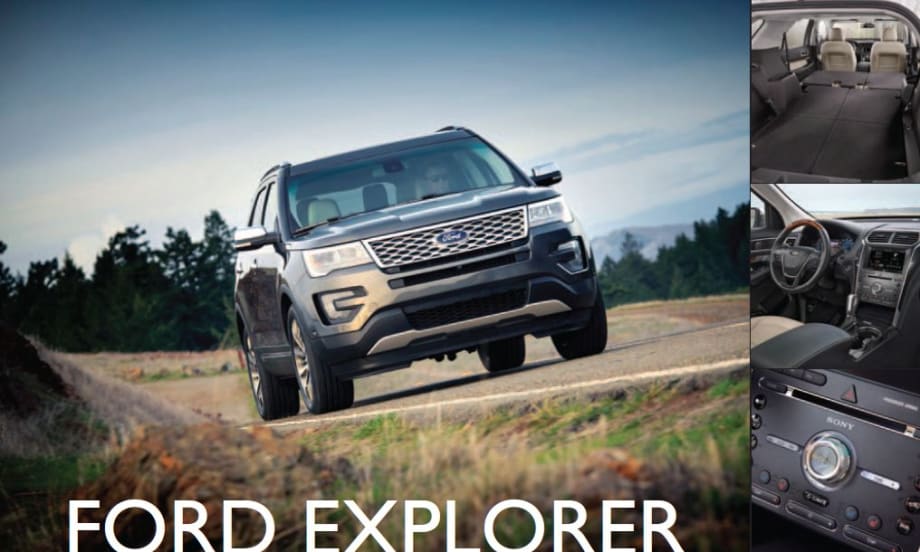
First introduced as a rear-wheel-drive, body-on-frame, truck-based SUV in 1991, the Ford Explorer took the nation by storm and has been America’s best-selling sport utility ever since.
In 2011, with fuel-economy concerns taking center stage, the Explorer moved to a front-wheel-drive, unibody platform and took on some decidedly carlike styling cues. For the 2016-MY, Ford is rolling out a refresh that includes design elements from both vintages and adds an upgraded EcoBoost four-cylinder and an all-new Platinum trim level.
The new 2.3-liter turbo replaces the outgoing 2.0-liter EcoBoost and can be added to the base XLT and Limited trims for $995. With an estimated output of 270 horsepower (hp) at 300 pound-feet (lb.-ft.) of torque, the new four-banger offers a true alternative to the base engine, a 3.5-liter V-6 that will deliver 290 hp at 255 lb.-ft. Sport and Platinum models will be equipped with a 3.5-liter twin-turbo V-6 that ups the ante to 365 hp at 350 lb.-ft.
Sport models will also include a unique suspension and sporty leather seats, while the Platinum series adds a 500-watt Sony stereo, leather upholstery, a dual-panel moonroof and a digital instrument cluster. Both upper trim levels offer available four-wheel drive.
Standard and available equipment on the lower trim levels includes 18- or 20-inch wheels, a rearview camera and a 12-speaker stereo.
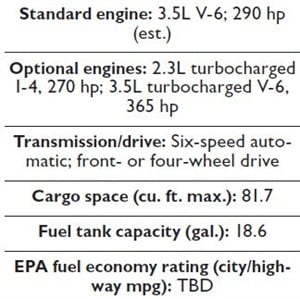
Specs for the 2016 Ford Explorer.
Though marketed as a refresh, the exterior styling is decidedly different — especially on Sport and Platinum models, which add elements such as dual exhaust ports and satin-chrome body cladding and mirror accents, respectively. The side sheet metal carries over, but the front and rear fascias were completely redesigned.
A single-panel honeycomb grille and square headlights replace the tiered grille and heavy front turn signals that distinguished the outgoing façade. The rear end was redesigned, as well, but retained the 2015 Explorer’s wraparound rear window-and-windshield effect.
Much of the 2016 lineup’s technical data is not yet known, but Ford has pledged to retain its high-for-the-class fuel economy and full suite of safety features, which includes lane-keeping, blind-spot and cross-traffic alerts as well as adaptive cruise control with collision warning and brake support.
The 2016 Ford Explorer is due in showrooms this summer. Stay tuned to BusinessFleet.com for updates on pricing, specs and mpg.
More Small Fleet


Developing Budget-Friendly Driver Safety Programs
From driver training and safety meetings to one-on-one coaching and incentive programs, several small fleets share how they have developed a safety culture with their drivers using low- to no-cost resources.
Read More →
Boosting Last-Mile Fleet Uptime, Safety, and Value with AI Vehicle Inspections
AI-powered inspections are transforming last-mile fleets by replacing manual checks with highly accurate automated scans that detect defects in seconds. By giving fleet operations visibility into the daily condition of their vehicles, you can identify trends over the vehicle’s lifecycle that enable improved procurement decisions, route management, driver training and accountability.
Read More →
Five Ways Seat Belts Help Prevent Injuries
There are five ways seat belts protect occupants from injuries, according to the Tennessee Department of Safety and Homeland Security.
Read More →
It’s here: The 2026 Fleet Technology Trends Report
What does AI mean for fleets? Get the answer — and learn other top tech trends.
Read More →
Small Fleets, Big Impact: How Independent Drivers Power Wreaths Across America
Check out how small fleets and independent drivers power Wreaths Across America each December and why their impact matters more than ever.
Read More →
VMS Survey Finds 65% of Small Fleet Managers Run Operations Alone
A new VMS survey shows small fleet managers are stretched thin, with most handling operations solo and eager to adopt digital tools for relief.
Read More →
Tips for Driving Safely on Halloween Night
This video features a reminder from the Connecticut Department of Transportation (DOT) and the Connecticut Police Chiefs Association, urging drivers to prioritize safety this Halloween.
Read More →
AI, Access, and Uptime: VMS’s Next Chapter with David Prusinski
VMS’s new Co-CEO, David Prusinski, shares how an AI-first approach will give small fleets and repair shops the tools to compete like big players.
Read More →
Fleet Managers Share Winter Prep Tips: It's Never Too Early!
Three fleets share best practices to prep vehicles for winter and prevent downtime when the cold sets in.
Read More →