





More Fleet Opinions: AF Readers on Allocation, Finance Trends & Operational Efficiencies
Fleet Readers Are Talking: Curb Weight, Global Tensions, Policy & Pressures
To facilitate discussion of today’s industry challenges, Automotive Fleet offers a platform for fleet managers and other fleet professionals to exchange their diverse opinions and perspectives.
August 18, 2023

A Mike Antich blog post examining the correlation between vehicle weight and fuel economy drew reader response. Antich stated that not only does unnecessary vehicle weight consume additional fuel and decreases battery range, it also causes unnecessary vehicle wear and tear.
Photo: Pavel Danilyuk
3 min to read
Fleet professionals responded to several Automotive Fleet recent articles, including a Mike Antich blog, Eliminate Needless Curb Weight to Maximize ICE & EV Efficiencies.
In this blog, Antich points out:
To facilitate discussion of today’s industry challenges, Automotive Fleet offers a platform for fleet managers and other fleet professionals to exchange their diverse opinions and perspectives.
Vehicle weight directly correlates to fuel economy in both ICE vehicles and EVs. The greater the payload the more the motor has to work to offset the weight.
Typically, the chief culprits responsible for accumulating unnecessary weight are drivers.
The battery load contributes to greater EV weight.
“I just read the blog you wrote on ‘Eliminate Needless Curb Weight to Maximize ICE & EV Efficiencies.’ I agree 100%.
“In my early days in truck sales, I had a customer who had 10 heating and cooling trucks that were used for residential and commercial repairs and installations. His manager wanted to continue to use step vans with bins and racks that were literally warehouses on wheels. The owner asked me what he could save in just the cost of a step vans vs a cargo 1-ton van.
“It was significant. He was not concerned about the additional cost and poorer fuel economy as much as the fact that the $10,000-15,000 in parts on each of his 10 trucks. I am sure if he were to go electric, he would be better off to have a compact electric truck deliver the required parts to the job site and give the repair trucks better range.”
Edward Burke, Director, Commercial Sales, Bollinger Motors, Oak Park, Mich.
A Bumpy Ride Ahead
Another reader offered his option on the topics raised in the videoGeopolitical Friction Exposes Vulnerability of Future Microprocessor Inventories.
“After watching Episode 107 of the State of the Fleet Industry video series about how the China-Taiwan tensions expose vulnerabilities to the microprocessor supply chain, my advice to everyone is ‘Buckle up, it’s going to get bumpy.’”
Keith McLaughlin, President , Fleet Business Communications, Toronto, Ontario, Canada
Avoid ‘Set It and Forget It’
Another Market Trends blog, The Dangers of a Static Fleet Policy, explored six potential dangers associated with maintaining a static fleet policy, eliciting the following response”
“When it comes to your fleet policy, steer clear of the ‘set it and forget it’ mindset. This was the point of the recent Market Trends blog “The Dangers of a Static Fleet Policy.”
“It’s crucial to regularly review and update your policies to stay ahead of emerging trends and maintain strong performance and cost efficiency!”
Rik Ritter, Area Sales Manager, Enterprise Fleet Management, Los Angeles
Lots of Truth
There is so much truth in the State of the Fleet Industry video entitled “More Fleet Cite Cost Containment Pressures from Management.” Check it out.
Lisa Kneggs, Fleet Manager, Fleet Pride, Dallas
Burnout Survival Tips
In his blog, Fleet Manager Burnout is Real: Here’s How to Avoid It, Antich ponders “Why some fleet professionals become overwhelmed while others persevere?” during stressful times. His answer: “My theory is that it is the resilient fleet managers who persevere.” Here’s what one fleet supervisor observed.
“I want to reply to the Market Trends blog entitled: ‘Fleet Manager Burnout is Real: Here’s How to Avoid It.’ For those of us who were in fleet management during those difficult periods, resilience played a big part; however, I believe that creativity plays a major role as well. Most fleet managers I know are highly creative when it comes to finding a way to get the job done, whether it be finding new suppliers or totally new ways to do things.
“It is like every defensive driving course recommends — always scan ahead. You have to scan ahead to stay ahead.
‘“This is how we have always done it’ just doesn't get it done.’”
Jennifer Morgan, CAFM, BWC - Fleet Supervisor, Ohio Bureau of Workers Compensation, Columbus, Ohio
Topics:Small Fleet
Originally posted on Automotive Fleet
Subscribe to Our Newsletter
More Small Fleet

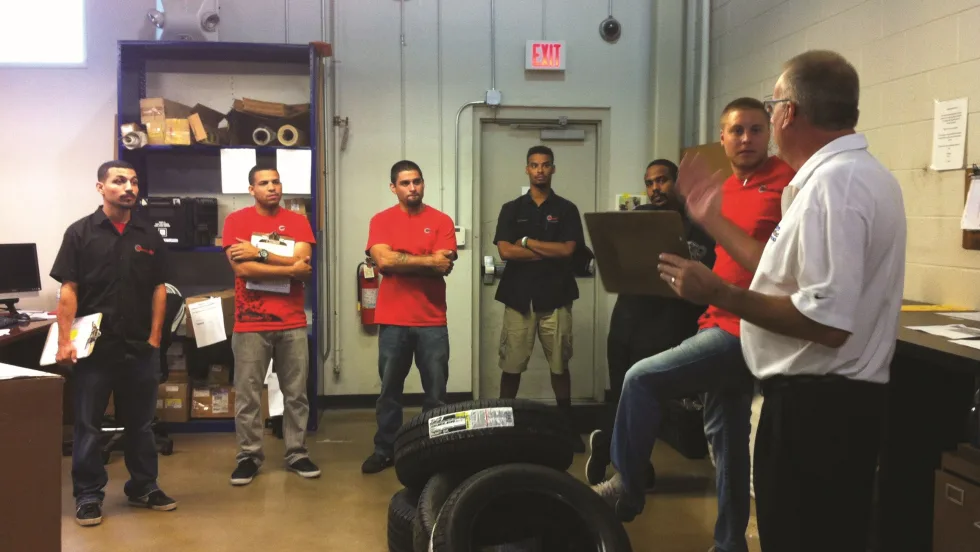
Developing Budget-Friendly Driver Safety Programs
From driver training and safety meetings to one-on-one coaching and incentive programs, several small fleets share how they have developed a safety culture with their drivers using low- to no-cost resources.
Read More →
Sponsored•March 9, 2026
Boosting Last-Mile Fleet Uptime, Safety, and Value with AI Vehicle Inspections
AI-powered inspections are transforming last-mile fleets by replacing manual checks with highly accurate automated scans that detect defects in seconds. By giving fleet operations visibility into the daily condition of their vehicles, you can identify trends over the vehicle’s lifecycle that enable improved procurement decisions, route management, driver training and accountability.
Read More →
Five Ways Seat Belts Help Prevent Injuries
There are five ways seat belts protect occupants from injuries, according to the Tennessee Department of Safety and Homeland Security.
Read More →
Sponsored•January 14, 2026
It’s here: The 2026 Fleet Technology Trends Report
What does AI mean for fleets? Get the answer — and learn other top tech trends.
Read More →
Small Fleets, Big Impact: How Independent Drivers Power Wreaths Across America
Check out how small fleets and independent drivers power Wreaths Across America each December and why their impact matters more than ever.
Read More →
VMS Survey Finds 65% of Small Fleet Managers Run Operations Alone
A new VMS survey shows small fleet managers are stretched thin, with most handling operations solo and eager to adopt digital tools for relief.
Read More →
Tips for Driving Safely on Halloween Night
This video features a reminder from the Connecticut Department of Transportation (DOT) and the Connecticut Police Chiefs Association, urging drivers to prioritize safety this Halloween.
Read More →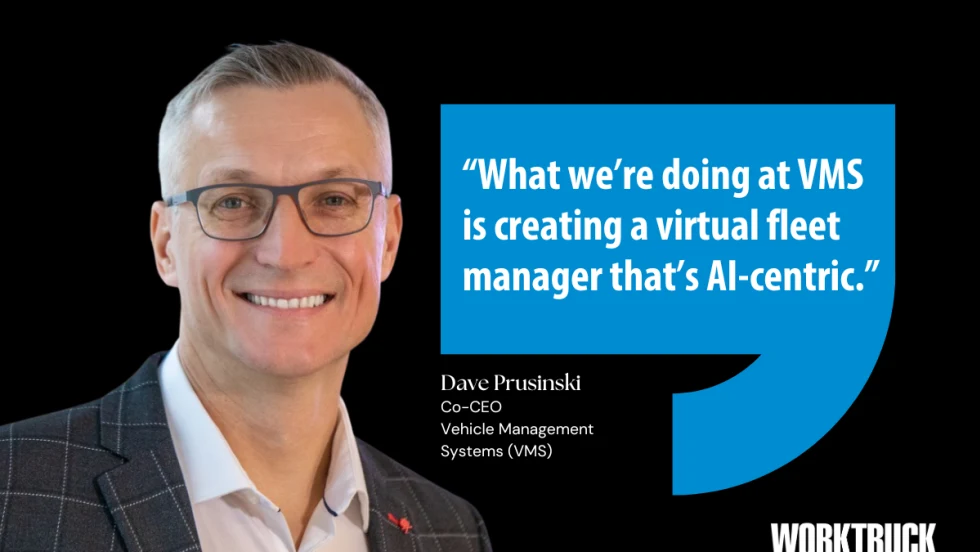
AI, Access, and Uptime: VMS’s Next Chapter with David Prusinski
VMS’s new Co-CEO, David Prusinski, shares how an AI-first approach will give small fleets and repair shops the tools to compete like big players.
Read More →
Fleet Managers Share Winter Prep Tips: It's Never Too Early!
Three fleets share best practices to prep vehicles for winter and prevent downtime when the cold sets in.
Read More →