




Fleet Forward Experience Day 2: Ford’s Electrification and the Autonomy Trifecta
Yaro Hetman outlined Ford’s plans to scale its electric ecosystem while fleet management and autonomous technology providers came together for a view on viable autonomous business models.

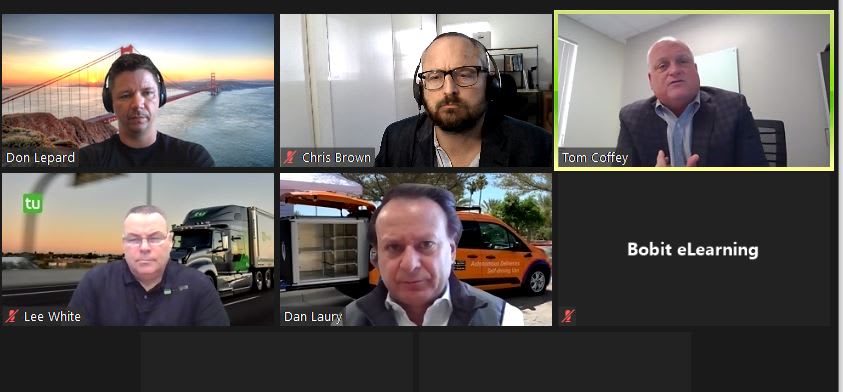
Tom Coffey of Merchants Fleet corralled three autonomous technology SME’s — Daniel Laury of Udelv, Don Lepard of Kodiak Robotics, and Lee White of TuSimple — to discuss the business models for fleets to integrate autonomous technology.
[EMPTY CREDIT]
Day 2 of the virtual Fleet Forward Experience is in the books. Ford’s Yaro Hetman laid out the manufacturer’s plans for electrification, which is more than just vehicle production.
Tom Coffey of Merchants Fleet corralled three autonomous technology SME’s — Daniel Laury of Udelv, Don Lepard of Kodiak Robotics, and Lee White of TuSimple — to discuss the business models for fleets to integrate autonomous technology.
For the concurrent seminars, B.J. Adams of Fleetio and Scot Wingo of Spiffy explained how maintenance data is being used to improve uptime, while Simon Lonsdale of Amply Power and Dean Kunesh of PG&E explained the need to have a plan when you embark on the process of electrification and walk into your utility for the first time.
Here are today’s four takeaways:
Remember the Ford Focus Electric? It’s different this time.
Like other major manufacturers, Ford played in Electrification 1.0. And like other manufacturers, Ford’s foray into electrification — the Ford Focus Electric — sold fewer than 10,000 units in its eight-year run, mostly in California to satisfy its zero emissions mandate. “This time, it’s different” was one point made by Yaro Hetman of Ford’s Team Edison during his morning presentation.
While Hetman couldn’t get into specifications on the Ford E-Transit, with those tantalizing details coming in an announcement in just two days, he did lay out Ford’s plan for an electric future. The Mustang Mach-E (fleets need not apply) is shipping by the end of this year, while the E-Transit arrives in late 2021 followed by the electric F-150 in 2022.
The electric F-150 will be built at an electric vehicle center as part of Ford’s Dearborn plant, which also builds the current F-150. “The F-150 BEV is not just a side project for Ford, where we’ll build a few hundred vehicles a year and call it a day,” he said. “This is a vehicle that will be part of our core lineup.”
Meanwhile, the E-Transit will be built in Ford’s Kansas City Assembly plant, where the gas-powered Transit is built. This allows the same upfitters access to the E-Transit, which will come in cargo, chassis cab, and cutaway configurations along with three roof heights and three body weights.
With batteries placed under the vehicle, the E-Transit will have the same cargo capacity as today’s gas-powered Transit. “If you stand in the back of the van, you’ll have no idea if it’s electric, gasoline, or diesel powered,” Hetman said.
The rest of the ecosystem includes the charging network and dealer footprint. While the vast majority of commercial customers will charge at the depot during downtime, Ford EV customers will access its network of 13,500 public chargers nationwide. Pulling into one of those charging stations will automatically bill the customer.
Unlike Electrification 1.0, where EV were sold primarily on the West Coast, Hetman said the new Ford EVs will be sold nationwide through 2,100 EV-certified Ford dealers and serviced through Ford’s 640 commercial vehicle service centers, with 90% EV-certified by next year.
Autonomy where and when? Follow the tech, regulatory, and profits paths.
In the second plenary seminar, Tom Coffey of Merchants Fleet moderated a seminar that engaged the fleet management sector with autonomous technology providers for a view into the viable autonomous business models for fleets.
Don Lepard of Kodiak Robotics, which specializes in middle-mile autonomous trucking, said autonomy will scale with a trifecta of dense shipping lanes, mild climate conditions, and a favorable regulatory environment.
The Southern and Western states sliced by the I-40 and I-10 are where most autonomous trucking pilots are already deploying, including those run by Kodiak Robotics and TuSimple. These well-trafficked routes have favorable state regulatory environments, more reliable weather, and open, straight highways.
“We won’t be going over the George Washington Bridge any time soon,” said Lee White of TuSimple. “But moving a load 623 miles from Dallas to El Paso, we’re perfectly set up for that.”
From a journey standpoint, the most direct path to scale entails middle-mile, on-highway routes that are offloaded and transported by humans for the first and final miles. When the driver is removed from this scenario, the financial model emerges:
“When you take the hours-of-service handcuffs away, the competitive edge for an autonomous fleet is uptime, versus your (non-autonomous) competitor that must abide by eight hours of downtime,” White said, adding adoption will increase with shippers looking to add routes via autonomy.
Laury’s company, which runs autonomous last-mile deliveries, is competing for crowdsourced gig workers rather than higher paid truck drivers. He says the path to viability depends on whether the cost of equipment is so high that there’s no advantage to switching to an unmanned service.
Beyond the technology, understanding how to automate the delivery journey needs to happen now. “It’ll take one to three years to get shippers and retailers used to this (new process) before you can scale an autonomous driving fleet,” Laury said.
White, who previously directed transportation technology for UPS and was an admitted autonomy agnostic, said TuSimple is moving 100 loads a week now for top commercial customers. TuSimple’s partnership with Navistar is designed to produce a Level 4 autonomous truck by 2024, he said. “We’ve moved past ‘if’ to ‘when.’ There are 162 weeks to the year 2024. It’s coming soon.”
So you want to electrify your fleet? Your utility needs your plan.
“If you're electrifying your fleet, you're going to need more power,” began Dean Kunesh of PG&E in his concurrent seminar with Simon Lonsdale of Amply.
While that seems like a line from a bad action movie, it speaks to the choices fleets must make when electrifying large numbers of vehicles and medium- and heavy-duty vehicles. In other words, fleets need a plan.
In PG&E’s service, it pays for, constructs, owns, and maintains electrical infrastructure “to the meter panel,” while the customer pays for, constructs, owns, and maintains the infrastructure from meter to the charger. PG&E will want to know how close the fleet is to a substation.
This may mean upgrading existing service from the substation to the site. “In many cases, I'm talking to fleets that park their vehicles at the back of the lot,” Kunesh says. “And there's no electric power out there other than yard lights, so it might be better to bring a new service into that location.”
PG&E, as well as other utilities, want the fleet to demonstrate its long-term electrification growth plan and schedule of load increase. They’ll need to make sure the fleet operator owns or leases the property where chargers are installed and will operate and maintain the vehicles and chargers for a minimum of 10 years.
This only the tip of the iceberg in terms of considerations. Luckily, at least in PG&E’s case, the state of California has provided $236 million to help fleets build out their EV capacity to the end of 2024.
Because electricity rates can fluctuate as much as 400% in a single day, fleets are often surprised that their electrification costs are actually more than they’d pay for gas or diesel. That’s why it’s important to have a charge management system to manage it all, said Lonsdale.
Stop waiting for the Valhalla of predictive maintenance — reap the low-hanging fruit by centralizing your maintenance data.
We’ve been waiting for the day when Big Data can be used for predictive maintenance to understand parts performance and then proactively prevent breakdowns on the road. B.J. Adams of fleet management maintenance provider Fleetio separated that wishful ideal from the potential real-world scenario.
Even if it could be determined that a part will fail 75% of the time in a certain mileage band, “You’re going to replace more parts than you would if you had waited until a 100% certainty of failure,” he said. “From the component cost, to the shop technician time, and lost driver time on the road, you’re creating unneeded downtime and overall maintenance costs could actually go up.”
What is more important, Adams said, is for fleets to have centralized maintenance data that tracks the vehicle leading up to service intervals — having the right information documented on inspections, driver requests, and recall campaigns in addition to the usual preventive maintenance items and parts stocked.
Without this orderly plan, when the truck pulls in, “You're going to be surprised that two out of the eight things that need to get done can’t get done,” he said. “Operational tempo is going to force you to push that vehicle out of the shop. And then guess what, three weeks, the truck comes back into the shop.”
Wingo added that consumers can pull basic forms of aggregated data from Carfax, though nothing exists for in the b2b world for fleets. With maintenance data, “There's not a huge amount of connective tissue,” he said. “We need to pop these bubbles and start to use all this data more horizontally.”
There’s three days left of the conference, and the seminars will be available on demand.
Originally posted on Automotive Fleet
More vEvents
Netradyne Launches Nationwide Customer Obsession Tour
Netradyne has launched its Customer Obsession Tour to celebrate 10 years in business, connecting with fleets nationwide and showcasing its AI-powered safety and fleet management platform.
Read More →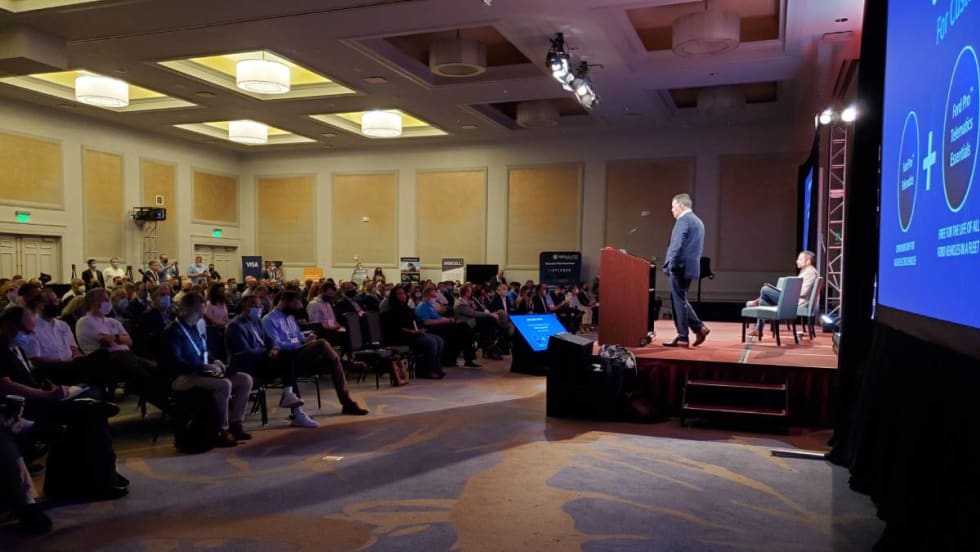
2021 Fleet Forward Conference Highlights
San Jose's Hayes Mansion was the site for the in-person Fleet Forward Conference, where hundreds came together to talk about fleet mobility, data, electrification, autonomous vehicles, and more.
Read More →
Fleet Forward Conference Announces Closing Keynote, Complete Agenda
Steve Hornyak, chief revenue officer of BrightDrop, will deliver the closing keynote, capping a schedule that includes 18 seminars, nine networking opportunities, and Innovation in Motion, a vehicle ride-and-drive and technology demo showcase.
Read More →
Ford Pro’s Tim Baughman to Keynote 2021 Fleet Forward Conference
Baughman will outline the steps fleets should take now in planning their electrification strategies and Ford’s role in this transition.
Read More →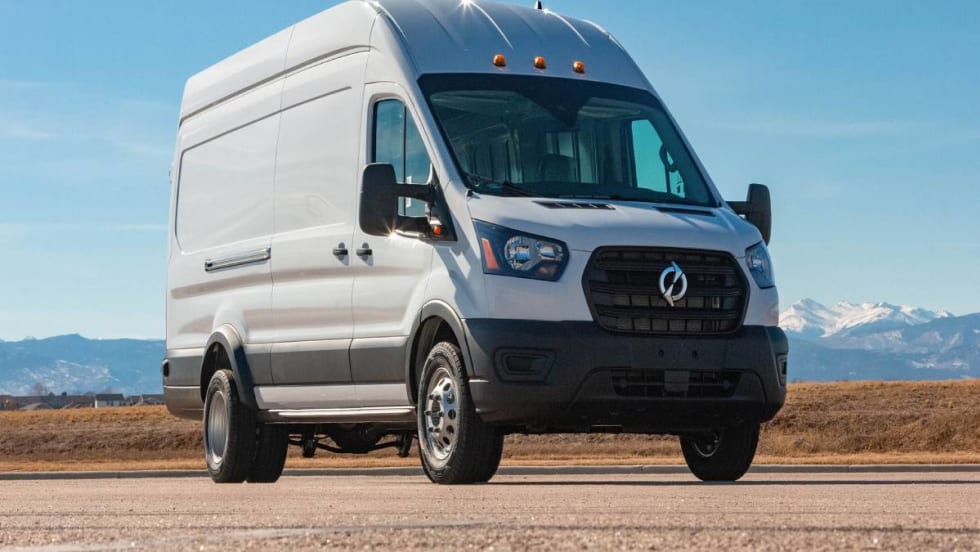
Drive Lightning eMotors Electric Transit Cargo Van at 2021 Fleet Forward Conference
The van is part of the conference’s Innovation in Motion, sponsored by Element — a new, interactive experience featuring EV ride and drives, technology displays, and autonomous vehicle demonstrations.
Read More →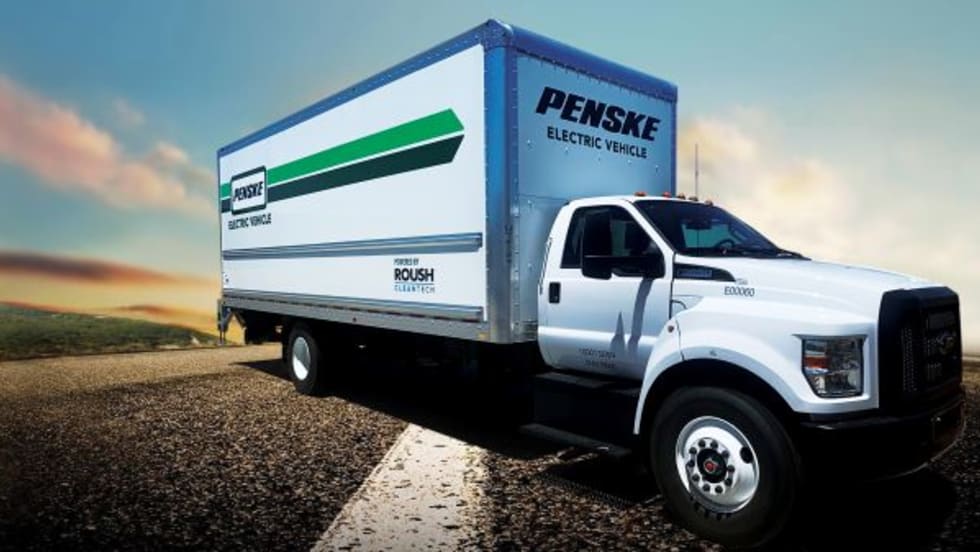
Drive Roush CleanTech’s Class 6 EV at 2021 Fleet Forward Conference
Roush CleanTech’s Zero-Emission Battery Electric Vehicle will be available during Innovation in Motion, where attendees can experience and drive the latest electric vehicles and technologies for fleet.
Read More →
FFC21 Panel to Address Supply Chain Crisis
Moderated by Jim Press, former COO of Toyota North America, experts from the commercial vehicle, fintech, and automotive investment sectors will discuss forward-thinking solutions at the 2021 Fleet Forward Conference.
Read More →
FFC21: EV Infrastructure Planning and Execution from the Trenches
At the 2021 Fleet Forward Conference, this seminar— by fleet managers, for fleet managers — will arm attendees with battle-tested answers from actual electric vehicle infrastructure implementations.
Read More →
NTEA Cancels 2021 Truck Product Conference
All registration fees for the Truck Product Conference will be refunded.
Read More →
Stellantis Fleet Preview Event to Cover MY-2022 Updates and More
The Stellantis Fleet Preview virtual event will be held July 20 - registration is open now.
Read More →