





Looking Ahead: The Top 7 Fleet Management Trends in 2024
First-Ever Maintenance Outsourcing Survey
Truck fleet managers representing all fleet sizes from around the U.S. discuss and share details about their truck maintenance outsourcing processes.
May 7, 2018
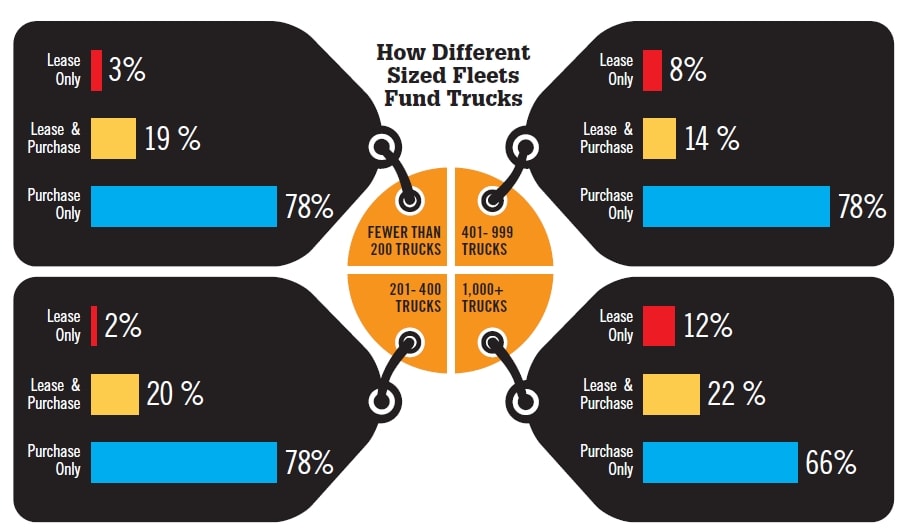
The majority of truck fleets, regardless of size, still look to purchase as their main way of funding trucks. Very few smaller fleets, with fewer than 400 trucks, use the lease-only option, with that percentage increasing slightly for fleets with more than 1,000 trucks.
Source: Work Truck
6 min to read
At the end of the day, truck fleet managers are tasked with ensuring a company’s truck fleet is able to accomplish the job it is required to do efficiently and cost-effectively. A truck that isn’t well maintained is a recipe for increased downtime, not to mention safety issues that could impact the driver and the motoring public.
We all know that a truck that isn’t on the road isn’t making the company money. With this in mind, fleet managers have a few options to ensure trucks are well maintained and stay on the road: they can perform all maintenance in-house, outsource all maintenance needs, or utilize a combination of in-house and outsourced services.
Work Truck magazine surveyed 147 truck fleets of all sizes to find out more about what they outsource, why, and some of the challenges they face.
Funding & Maintaining Trucks
On average, the majority of truck fleets mainly choose the purchase-only option when procuring their trucks. This percentage decreases slightly in fleets with more than 1,000 trucks, with the percentage choosing to lease and purchase increasing to 22% for the largest truck fleets.
In addition, the majority of fleets also either perform all maintenance in-house or use a combo of in-house maintenance technicians and outsourced services. Fleets with more than 1,000 trucks are more likely to outsource all of their truck maintenance needs.
When a truck fleet chooses to outsource its maintenance needs, the majority select local providers, followed by a specific chain of providers. Larger truck fleets depend more heavily on fleet management companies for outsourcing maintenance needs than their smaller counterparts.
There are benefits to keeping maintenance in-house, with fleet managers citing more control, increased quality, and reduced vehicle downtime.
“Inside maintenance helps ensure the continued integrity of replacement components and accessories. Fleets often spend time trying to standardize items such as lighting needs, but they are then replaced ‘on-the-road’ by a maintenance shop with an off-brand part,” said a quality assurance manager of a 1,000-plus truck fleet in Wisconsin.
But, others see that a balance is needed between in-house and outsourced maintenance programs.
“I believe maintenance is becoming a hybrid where we must use both internal and external means to maintain the fleet. No longer can we do it all in-house and no longer can the vendors handle the entire workload,” said a fleet manager of a mid-sized truck fleet in Virginia.
When looking at what maintenance needs truck fleets outsource, the majority outsource their bodywork and transmission repair needs. Most fleets, regardless of size, authorize most routine maintenance needs in-house and on average, about 37% of fleets outsource preventive maintenance and oil changes, with the majority keeping this job in-house.
In addition, 83% of fleet managers are happy with their current truck maintenance program with no plans or need to change any portion.
The job the fleet needs to accomplish can also impact maintenance outsourcing capability.
“Our fleet is designed for emergency response over 500-plus miles. This creates issues with consolidating facilities while still having the ability to meet customers,” said the maintenance manager of the Pennsylvania truck fleet.
When creating and implementing a maintenance process, fleet managers must consider many factors, with cost and overall efficiency at the top of the list. In addition, the type of equipment the fleet operates, state regulations, and control over costs and repairs also must be considered.
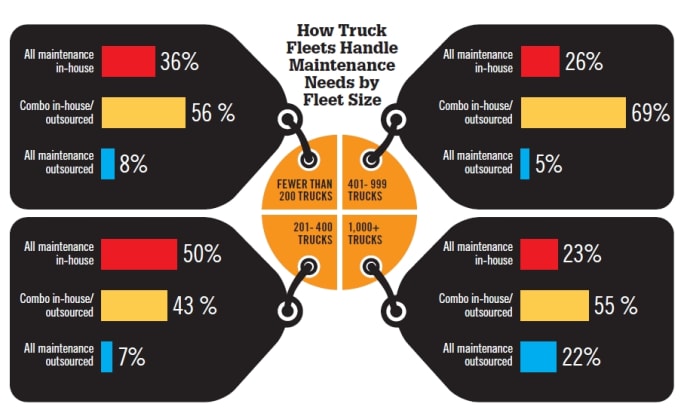
Most truck fleets find a combination of in-house and outsourced maintenance best fits their needs, with the second-most popular option keeping all maintenance in-house. The larger the fleet (more than 1,000 trucks), the more likely all maintenance needs are outsourced.
Source: Work Truck
Factors that Impact Maintenance
As noted previously, trucks must be on the road to do their job. Managing downtime is a big part of the maintenance process. While smaller truck fleets had longer downtime, on average, when looking purely at downtime by truck class it’s clear that the bigger the truck, the longer the potential downtime it will experience over its lifecycle.
While all fleets are different, the overall goal of the maintenance program remains steady: control downtime and costs and improve the health of the trucks and extend the lifecycle of the truck fleet.
“Our fleet maintenance program focuses on the lowest cost of ownership, minimizing repeat repairs, and analyzing downtime to proactively identify and address maintenance and repair issues related to vehicle type, make, model, or class,” said a fleet manager of a mid-size fleet.
The type of powertrain also impacts a truck’s maintenance costs, with fleet managers reporting that 70% of trucks with a gasoline powertrain see lower maintenance costs overall.
Several fleet managers reported that they inherited their current maintenance program and processes, with some programs in much better shape than others.
When asked what fleet managers wished would be done differently in the maintenance process, communication topped the list of items impeding progress. In addition, a lack of funds and staff, needed shop upgrades, and overall company politics make increasing maintenance efficiency a challenge.
Another challenge is ensuring trucks get into the shop when maintenance, scheduled or unscheduled, is needed.
“I wish we could get trucks in the shop when scheduled. It’s hard to schedule preventive maintenance around dispatch. We could use more spare equipment,” said the shop manager for a small fleet in Pennsylvania. In addition, overall tracking and reporting can be a challenge, from maintenance and repairs to budget and expenses. Several fleet managers also noted the need for additional technician training time and funds for associated training costs.
Budgeting for maintenance costs can also be a challenge. around half of the surveyed fleets reported they work in tandem with their finance departments to build their maintenance budget, with 41% of fleets reporting they build their maintenance budget on their own. Only a small percentage have the finance department in complete control of the maintenance budget.
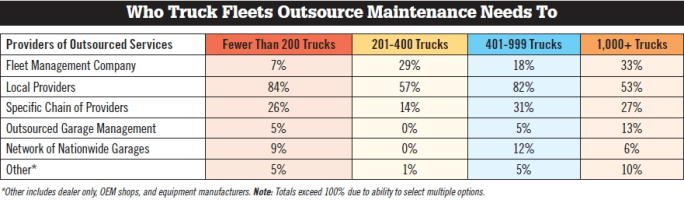
The majority of truck fleets, regardless of size, utilize local providers when they look to outsource maintenance needs. The second-most popular option was utilizing a specific chain of providers, followed by utilizing a fleet management company.
Source: Work Truck
Fleet Manager Satisfaction
When looking at overall satisfaction, 26% of responding fleet managers report that they were completely happy with their fleet’s current maintenance program with 60% agreeing somewhat with the statement. Very few fleets were completely unhappy with their fleet’s maintenance programs.
Regulations are also a big component of a truck fleet’s day-to-day concerns and often directly connect to maintenance requirements. The field was split on whether fleet managers felt confident with their understandings of current truck fleet regulations, with 40% feeling completely confident and 44% reporting that they don’t feel too confident in their regulation-related knowledge.
Truck fleet managers are not concerned that fleet will be eliminated in favor of a driver reimbursement plan, with 70% strongly disagreeing with the statement.
When looking at job security, 58% of responding fleet managers do not feel concerned that their work will be given to a fleet management company, with 5% of respondents feeling concerned and 10% somewhat concerned.
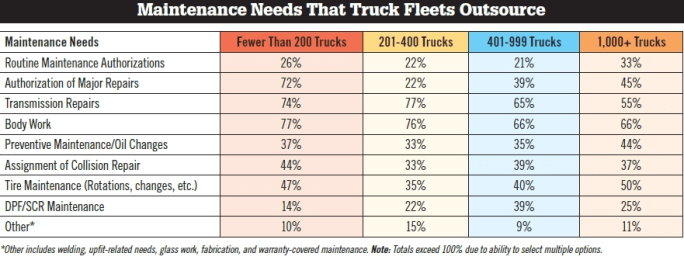
The most popular maintenance need that truck fleets outsource is body work, followed by transmission repair, then authorization of major repairs. Most fleets perform DPF/SCR maintenance in-house as well as routine maintenance authorizations.
Source: Work Truck
The Bottom Line
The final picture is that most fleet managers feel a hybrid approach to maintenance, utilizing some combination of in-house and outsourced services, is the key to success.
Working closely with your outsourced providers can help ensure that the process is smooth.
“If outsourcing, make sure your outsourced provider is on the same page with what you want to have done. On the other hand, only perform work you can handle in-house,” said an equipment fleet supervisor for a mid-sized fleet in California.
And remember, never rest on your laurels and always look for ways to improve.
“Always look for what the most cost-effective way is to complete maintenance. Some things are better outsourced and some are better done in-house,” recommended a fleet maintenance supervisor for a large truck fleet in Ohio.
Subscribe to Our Newsletter
More Maintenance & Uptime
LaFontaine Partners With UVeye to Expand AI Vehicle Inspections in Michigan
LaFontaine is expanding UVeye AI vehicle inspections across Michigan, while UVeye tells Work Truck how the technology can support fleet maintenance and heavy-duty vehicle inspections.
Read More →
Les Schwab Expands Commercial Tire Footprint Into Arizona
Les Schwab Tires has expanded into Arizona with two commercial tire locations in Phoenix and Tucson, strengthening its fleet service footprint in the Southwest.
Read More →
Volvo Trucks’ 'Lock and Leave' Software Updates Go Live Across North America
Unattended over-the-air software updates are now available in Volvo trucks across the U.S. and Canada. The new capability lets trucks stay current with the latest software without interrupting operations or requiring a dealership visit.
Read More →From Our Partners



Why Technician Appreciation Can’t Be a Once-a-Year Thought
For fleets trying to keep skilled technicians, recognition cannot begin and end with Technician Appreciation Week. Learn what year-round appreciation really looks like and why the everyday technician experience matters just as much as pay when fleets are trying to keep good people.
Read More →
How Faster Driver Reporting Can Keep Small Truck Problems Small
When minor damage, warning lights, or equipment issues are reported late, small problems can quickly become bigger maintenance headaches. Conversational AI can help shorten the path from what a driver notices in the field to the person who can act on it.
Read More →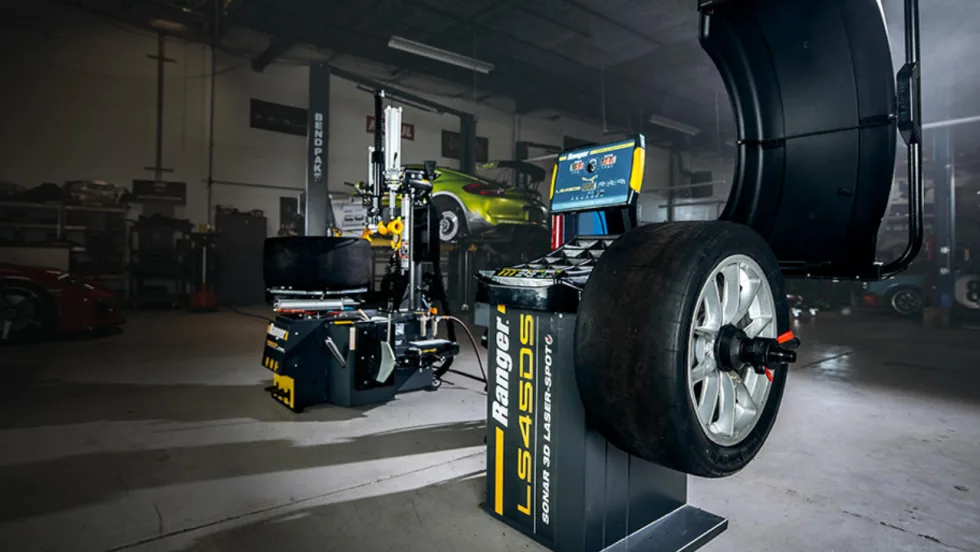
BendPak’s Ranger Wheel Service Equipment Achieves North American Safety Certification
BendPak’s full line of Ranger tire changers and wheel balancers has been ETL certified to UL and CSA standards to improve operator safety.
Read More →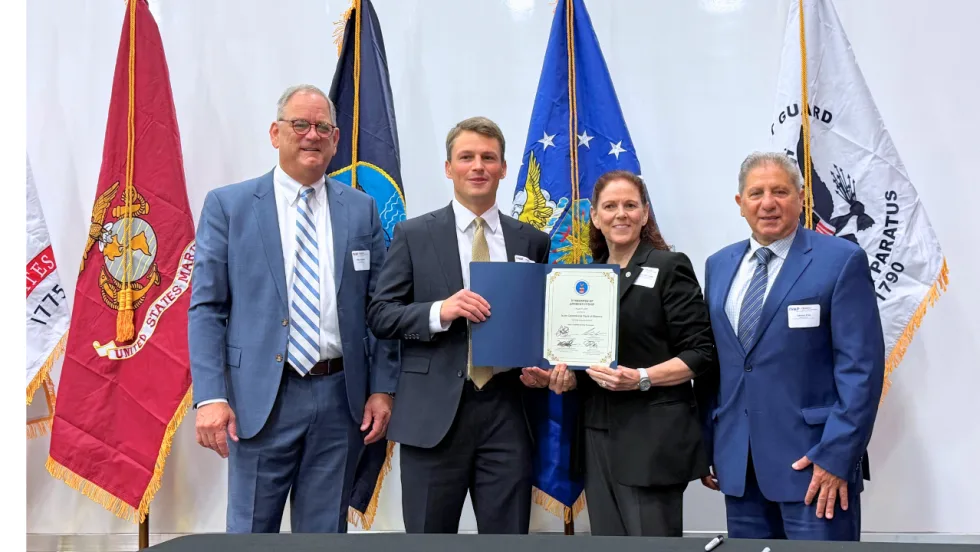
Isuzu & U.S. Department of Labor Celebrate Milestone for Veterans Apprenticeship Program
The Isuzu Veterans Apprenticeship Program (IVAP) signing ceremony highlighted Isuzu’s long-term commitment to veterans, Isuzu dealers, and the skilled workforce supporting its customers and the commercial transportation industry.
Read More →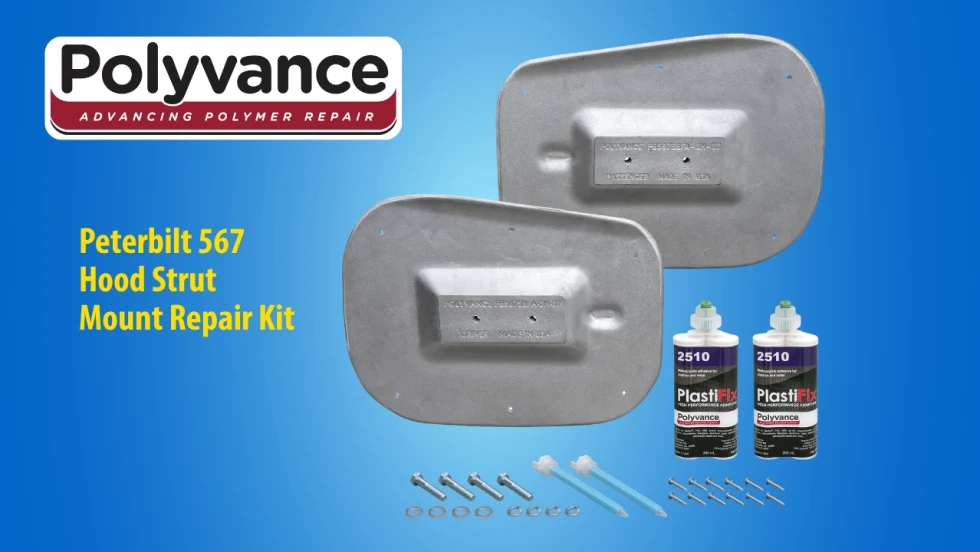
Polyvance Introduces New Peterbilt 567 Hood Strut Mount Repair Kit
Polyvance has launched a repair solution for Peterbilt 567 hood struts, helping truck owners and repair facilities avoid costly hood replacements.
Read More →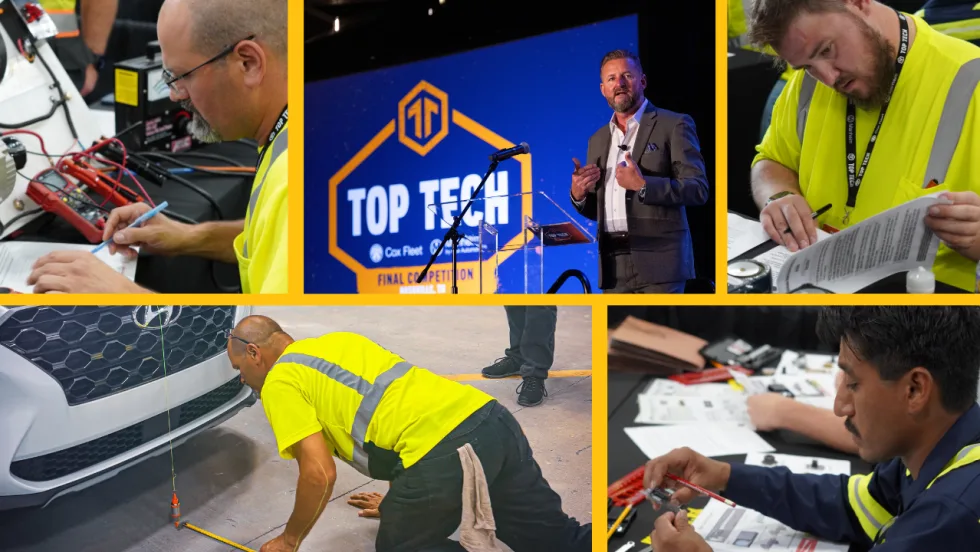
Cox Automotive Celebrates Technical Excellence at 2026 Top Tech Finals
The top technicians from Cox Fleet and Manheim tested their skills in Nashville, Tennessee, at Cox Automotive’s 2026 Top Tech Finals. The overall winners will advance to compete at the American Trucking Association’s TMC SuperTech competition.
Read More →
Grote Industries Appoints Vice President of North American Operations
Grote Industries has appointed Patrick Smith as vice president of North American operations as it celebrates 125 years of innovation and manufacturing excellence. He has more than 20 years of manufacturing leadership experience.
Read More →