




Don’t Confuse a Good Insurance Policy with Fleet Safety
The primary focus of fleet risk should not be to minimize liability exposure, though this is important. It should be to minimize crashes.

The primary focus of fleet risk should not be to minimize liability exposure, though this is important. It should be to reduce crashes.
Photo: Work Truck
"Of course, I want my drivers to be safe. I don’t want them to kill themselves or anyone else out on the road. But I’m extremely busy running my business, and finding the time and money for this safety stuff is tough. I’ve got a solid insurance policy—if I get sued, the insurance company takes care of the lawyers and will pay the big settlement if it happens."
Okay, this isn’t a direct quote from a reader. I don’t think anyone would admit to viewing fleet safety as a hassle. But this unspoken notion is not uncommon among small business owners. The potential for a lawsuit can seem like the roll of a million-sided dice. How much time, money, and resources do you spend preparing for a seemingly far-off possibility? That’s missing the point. The primary focus of fleet risk should not be to minimize liability exposure, though this is important. It should be to reduce crashes.
A good insurance policy will protect your company from financial devastation, yet it does nothing to reduce loss. Insurance kicks in because of, and only after, some very real destruction—after the accident, after the cost to repair or replace the damaged vehicle, after the medical care expense, after the time lost from work, after the blow to company morale, after administering the insurance claims, after the pain and suffering of the family and after the cost to retrain and refill that position.
Jim York from Zurich Risk Engineering supplied some relevant statistics from an insurer’s point of view. He said the average worker’s comp claim for a motor vehicle accident is three times the average of all injury claims. The indemnity component of a vehicle crash (the lost wages paid out) is three times greater than the average piece of the worker’s comp pie. This means that compared to other work-related injuries, car crashes cost a lot more money, and employees lose many more workdays than the average injury—three times more. Would you say your company expends three times more resources toward driver safety than other forms of work safety?
There is an issue with motor vehicle records. Obtaining, keeping, and assessing MVRs can be a hassle if you don’t have a streamlined system in place. As such, many small businesses rely on their insurance company to tell them whether an employee is unfit to drive a company vehicle. Yet a carrier can only tell you whether a driver fits its business auto policy’s criteria for acceptability. Specifics of the record, i.e., types and severity of violations and accidents, cannot be disclosed.
Remember those classes you could take “pass/fail” instead of getting a grade? “Passing” encompassed grades of D minus to A plus—a wide discrepancy of competence. Letting the insurance company tell you who passes or fails its minimum acceptability requirements leaves you in the dark as to where your drivers fall on that spectrum. You’ve given up the ability to deal with your fleet risk before your insurance company gets involved. You’ve handed over the blueprints of a safety program to someone else.
Though insurance companies must withhold specific information, they’re not in the business of having a combative relationship with their clients. Agents view the carrier/client relationship as a partnership. After all, keeping claims to a minimum is in their best interest. Many carriers offer workplace safety initiatives, some already built into your premium. They operate under the philosophy that a company’s most valuable assets, by far, are its employees.
That philosophy ties in with the most relevant statistic when it comes to fleet safety—roadway crashes are the leading cause of work-related fatalities. No amount of insurance will get those lives back.
More Small Fleet

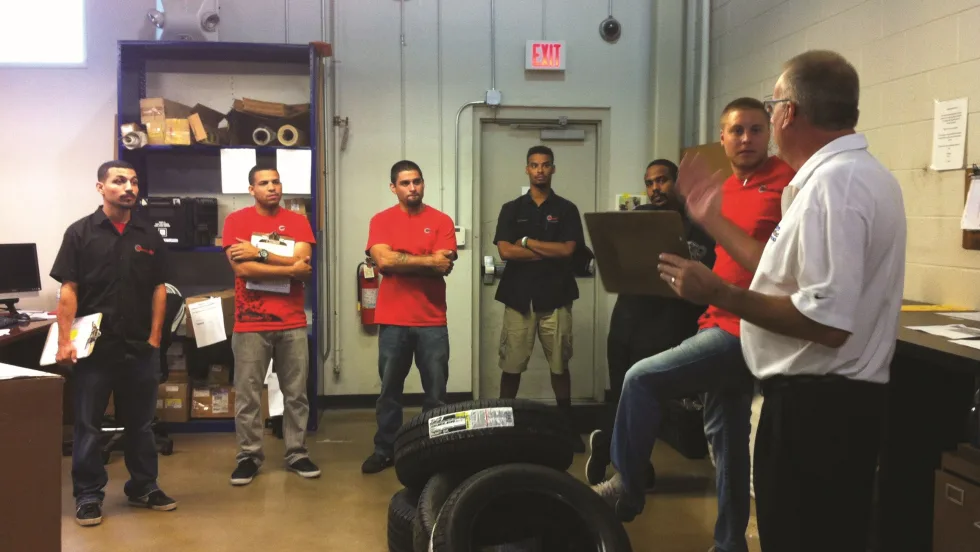
Developing Budget-Friendly Driver Safety Programs
From driver training and safety meetings to one-on-one coaching and incentive programs, several small fleets share how they have developed a safety culture with their drivers using low- to no-cost resources.
Read More →
Boosting Last-Mile Fleet Uptime, Safety, and Value with AI Vehicle Inspections
AI-powered inspections are transforming last-mile fleets by replacing manual checks with highly accurate automated scans that detect defects in seconds. By giving fleet operations visibility into the daily condition of their vehicles, you can identify trends over the vehicle’s lifecycle that enable improved procurement decisions, route management, driver training and accountability.
Read More →

Five Ways Seat Belts Help Prevent Injuries
There are five ways seat belts protect occupants from injuries, according to the Tennessee Department of Safety and Homeland Security.
Read More →
Basic Tracking vs Next Generation Fleet Technology
Fleet software is getting more sophisticated and effective than ever, tying big data models together to transform maintenance, safety, and the value of your existing tech stack. Fleet technology upgrades are undoubtedly an investment, but updated technology can offer a much higher return. Read how upgrading your fleet technology can increase the return on your investment.
Read More →
It’s here: The 2026 Fleet Technology Trends Report
What does AI mean for fleets? Get the answer — and learn other top tech trends.
Read More →
Small Fleets, Big Impact: How Independent Drivers Power Wreaths Across America
Check out how small fleets and independent drivers power Wreaths Across America each December and why their impact matters more than ever.
Read More →
VMS Survey Finds 65% of Small Fleet Managers Run Operations Alone
A new VMS survey shows small fleet managers are stretched thin, with most handling operations solo and eager to adopt digital tools for relief.
Read More →
Tips for Driving Safely on Halloween Night
This video features a reminder from the Connecticut Department of Transportation (DOT) and the Connecticut Police Chiefs Association, urging drivers to prioritize safety this Halloween.
Read More →
AI, Access, and Uptime: VMS’s Next Chapter with David Prusinski
VMS’s new Co-CEO, David Prusinski, shares how an AI-first approach will give small fleets and repair shops the tools to compete like big players.
Read More →