





Looking Ahead: 2025 Work Truck Safety Study: Basics Strong, Tech Adoption Still Unsteady
Confessions of a Road Warrior
The day-to-day challenges of fleet driving often clash with what the safety videos say. Is there a way to get business done and be safe at the same time?
September 1, 2007

Business drivers are on the road thousands more miles than the average citizen, contributing to motor vehicle crashes as the leading cause of occupational fatalities in the workplace.
Photo: Work Truck
9 min to read
Meet Jim Costello. He was previously a top salesman for a commercial truck leasing company, covering a large eastern territory from the inner city to rural areas. He drove 25,000 to 30,000 miles a year for business.
For all the miles Costello logged, he has never been in a serious accident. He was confident that his driving skills would keep him safe. But his safety record had lulled him into complacency, and he knew he had fallen into some bad driving habits.
Understanding that motor vehicle crashes are the leading cause of occupational fatalities in the workplace, Costello is ready to make his "driving confessions."
Meet Phil Moser, the national sales manager for Advanced Driver Training Services (ADTS), a provider of driver safety training services and products. Moser understands the real-world scenarios that affect Costello and other business drivers, such as distraction, scheduling demands, and driver emotions.
Moser addresses Costello's daily challenges with best practices for all business drivers.
“If I can't talk on the phone while I'm driving, I won't get anything done.”
Costello: I'm on the road Monday through Friday from 9 a.m. until 4 p.m. I have to make cold calls, set up appointments, get to appointments, attend lunches, and complete different tasks every day. How am I supposed to get all of this done if I can't talk on my cell phone while driving?
Moser: Let's face it—can you really concentrate on the business call when you're on the road? Studies have shown that if you're talking on a cell phone, you're as likely to crash as a person who has a 0.08 blood alcohol concentration—and that includes those using hands-free headsets. Do you know anyone who would say, "You're legally intoxicated, go ahead and drive?"
Costello: Is checking messages okay? I'm just listening, not talking.
Moser: Checking messages while driving can be even more hazardous because you're looking down to push buttons. At 60 mph you're traveling 88 feet per second—you'll easily travel the distance of a football field by the time you look up. And text messaging? Never, ever do it. If you want to get work done on the road, pull over and park safely first.
Costello: You're right; when I'm pulled over I'm able to better concentrate on the call. I can take my work out and take notes at the same time, and the call always ends up more productive.
Moser: One last point: Turn the cell phone off when you're in the car. You don't need the distraction.
“My client wants to meet over drinks.”
Costello: My clients will think I'm unsociable if I don't have at least one drink with them. It's just part of my job.
Moser: Don't assume that a client will think you're being unsociable because you're drinking a Coke. If you show them you don't drink and drive, don't you think they'd respect you more?
Costello: But talking business over a drink helps me close deals.
Moser: Just one drink will double the reaction time of the average healthy human. Think about that when you're on the road.
“Drive-thru restaurants let me take lunch on the road.”
Costello: It's so easy to just grab lunch quickly and eat while I'm driving to my next appointment.
Moser: How long does it take to eat a hamburger—a couple of minutes? Not only is that food in your hand a major distraction, you have to worry about spilling and dripping. Then you're reaching for the wad of napkins out of your glove box and wiping yourself off. How many seconds have you taken your eyes off the road?
Costello: The napkin never works anyway. I'll end up needing to find a bathroom to clean up and waste even more time. And yeah, I've even shown up at the appointment with a stain on my shirt.
“I have to be an aggressive driver if I want to get anywhere.”
Costello: If I leave a lot of space between other cars and mine on those crammed expressways, I'd never get anywhere. Everyone would be cutting in front of me.
Moser: The rear-end collision is the most common crash in the U.S., and it happens primarily because of tailgating.
Costello: I'm in a hurry, but I'm not a tailgater.
Moser: Okay, but do you leave a full two-second cushion between your car and the one in front? Normal reaction time for the average healthy human is three-quarters of a second. Add another three-quarters of a second to hit the brake and slow down, and you've already used up to a second and a half to react to an incident. And the people who are cutting in front of you are not getting there much faster.
Costello: You're right. The guy that passes me weaving in and out of traffic—I always seem to end up next to him on the exit ramp.
“I can back out of a parking space with no problem.”
Costello: I'm not going to waste my time trying to find a totally unobstructed parking spot that I can pull out easily from.
Moser: Reverse collisions are the second most common crash every year in this country. Out of those 30,000 miles you drive a year, you probably spend only two miles backing up. Combine this inexperience with backing out of a parking spot into an uncontrolled environment of cars and pedestrians and you've got a recipe for a crash.
Costello: You're not asking me to start practicing driving in reverse.
Moser: No. Why not put yourself in a position so you don't have to back up? Look for parking spots that allow you to pull forward when leaving.
Costello: That's not always possible, especially with my appointments downtown.
Moser: Then try backing into the controlled space when you arrive. When you leave, you won't be backing out into an uncontrolled environment.
Costello: Good point—it’s certainly safer to pull forward into traffic, not back up.
“The cop said the accident wasn't my fault, so why should I care?”
Costello: Some guy ran a red light at an intersection and dinged me. His insurance will cover it and my company won't count it against me.
Moser: The accident may not be your fault, but you still have a banged-up car. And what if you were injured? That certainly is your problem. Intersection crashes are the third most common type of crash. They are often side-impact crashes, in which occupants aren't protected by the crumple zones of the engine or trunk compartments.
Costello: I admit I become impatient at intersections. If I'm in a hurry, I start pushing red lights and cut in front of traffic when making a left turn.
Moser: The key word at intersections is patience. By pulling up too close to the intersecting road or too tight against the car in front, you don't leave an escape route. If someone pulls up too close to the back of your vehicle, where are you going to go? Give yourself some space. Use proper scanning techniques to anticipate whether the oncoming car is going to stop or blow through that red light.
“I'm running late for my next appointment!”
Costello: When I'm running late, I'll drive 80 mph the whole way. I've done it before.
Moser: When you're running late it seems that every light is red and you end up behind every school bus or cop. Instead of speeding, pull over and call your next appointment. They'll appreciate the heads up and you'll find that it really takes the pressure off your arrival. The worst-case scenario is they'll tell you to reschedule.
“That guy is tailgating me; I'm going to teach him a lesson.”
Costello: That guy is right up on my bumper. I'll let him pass and get up behind his car to show him how he likes it! Or maybe I'll just slam on my brakes a little bit and scare him.
Moser: Did your little maneuver really make you feel any better? Did it solve the problem? You can count on the fact that other drivers are going to make stupid moves out there. Don't let somebody else drive your car for you. Don't let their behavior force you into doing something equally as stupid.
“I'm tired: I'll turn on the air conditioning, turn up the music and drink some coffee.”
Costello: When I'm falling asleep at the wheel I have my routine to stay awake.
Moser: Those fixes only work for a short amount of time. The only thing that combats sleep-deprivation fatigue is sleep. Even if you've had a good night's sleep, you should stop to rest every couple of hours during a long drive. Get out of the car and get your circulation flowing again. If you haven't had enough rest, stop every hour. Power naps—even ones that last for 10 minutes—work for many people. Others need more time. It's important to know your own body.
Costello: Coffee just makes me go to the bathroom anyway.
Moser: Good—it'll force you to take that break.
“I've had a bad couple of days, but I still have to drive.”
Costello: I haven't been closing as many deals recently. I'm a little down in the dumps, but I still have a job to do.
Moser: A string of bad days can be tough, and it takes more to deal with it than just calming down after a bad meeting. The International Association of Chiefs of Police did a study of single-occupancy vehicle crash fatalities.
The study discovered that in 80% of those crashes, the driver had a major depressing event occur within 24 hours. There are different things you can do to deal with depression:
Call a friend (while parked)
Call a client you're doing good business with
Take a sick day to give yourself some time
Get physical activity
But just like dealing with anger, the first thing you have to do is realize you're in a state of mind that is not conducive to driving.
“I just got beat up by a client, and I have to get to the next appointment.”
Costello: They really worked me over in there and it wasn't fair. He'll know how mad I am when he hears my tires squealing out of the parking lot.
Moser: In this situation you've got to realize you're mad, and understand that you can't take your anger out on the driving. Before you get back into your car, do something that takes your mind off that meeting:
Sit in the car and listen to music for a few minutes
Count to ten
Meditate
Scream
Call someone while the vehicle is still parked
If you do get back on the road too quickly, you won't be focused on driving. You might miss your exit or forget directions and get lost. Or worse, you'll get in an accident.
Most Crashes Are Preventable
More than 42,000 people died on America's roads in 2006. That equates to 115 deaths each day or one every 12 minutes. Moreover, close to 2.6 million people were injured in auto crashes in 2006.
Crashes also create a financial burden on companies and employees. In addition to vehicle repair, costs include:
Lost productivity of the driver
Hospital bills
Increased insurance premiums
Exposure to third-party liability
Soft costs include lost productivity of employees dealing with the crash as well as decreased driver morale and retention.
Business drivers are on the road thousands more miles than the average citizen, contributing to motor vehicle crashes as the leading cause of occupational fatalities in the workplace.
Costello was lucky never to experience a serious accident, though he knows people in his former company who have. The good news is that most crashes are preventable. You can control your risk, Moser says, with the right safe-driving approach.
Costello is now sales manager for Advanced Driver Training Services. Costello and Moser presented a version of this discussion in June at Safety 2007, the national conference of the American Society of Safety Engineers (ASSE), in Orlando, Fla.
Subscribe to Our Newsletter
More Small Fleet

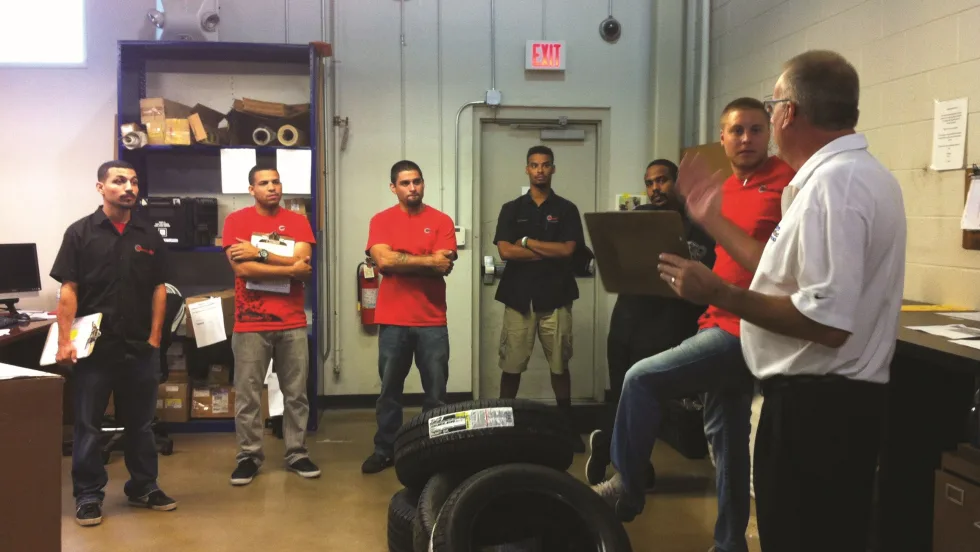
Developing Budget-Friendly Driver Safety Programs
From driver training and safety meetings to one-on-one coaching and incentive programs, several small fleets share how they have developed a safety culture with their drivers using low- to no-cost resources.
Read More →
Sponsored•March 9, 2026
Boosting Last-Mile Fleet Uptime, Safety, and Value with AI Vehicle Inspections
AI-powered inspections are transforming last-mile fleets by replacing manual checks with highly accurate automated scans that detect defects in seconds. By giving fleet operations visibility into the daily condition of their vehicles, you can identify trends over the vehicle’s lifecycle that enable improved procurement decisions, route management, driver training and accountability.
Read More →

Five Ways Seat Belts Help Prevent Injuries
There are five ways seat belts protect occupants from injuries, according to the Tennessee Department of Safety and Homeland Security.
Read More →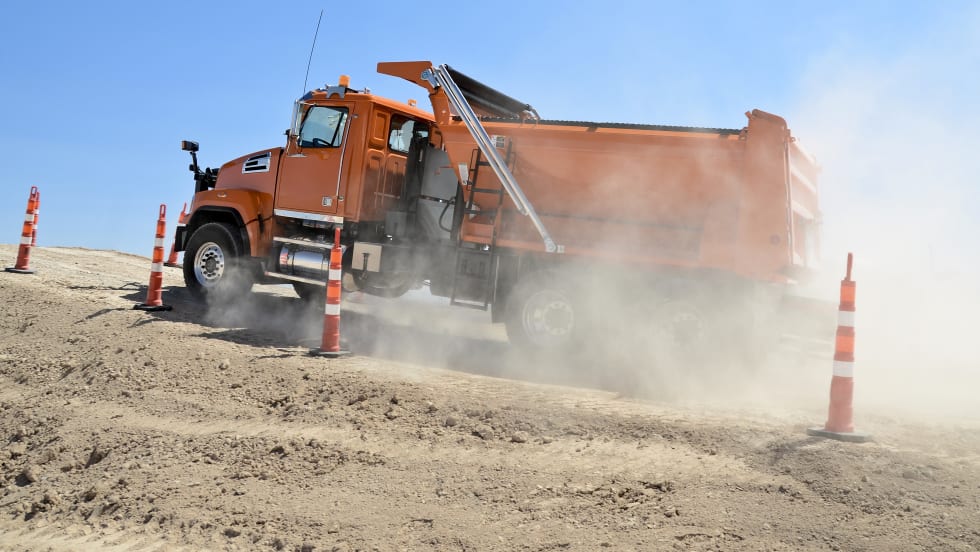
Sponsored•January 19, 2026
Basic Tracking vs Next Generation Fleet Technology
Fleet software is getting more sophisticated and effective than ever, tying big data models together to transform maintenance, safety, and the value of your existing tech stack. Fleet technology upgrades are undoubtedly an investment, but updated technology can offer a much higher return. Read how upgrading your fleet technology can increase the return on your investment.
Read More →
Sponsored•January 14, 2026
It’s here: The 2026 Fleet Technology Trends Report
What does AI mean for fleets? Get the answer — and learn other top tech trends.
Read More →
Small Fleets, Big Impact: How Independent Drivers Power Wreaths Across America
Check out how small fleets and independent drivers power Wreaths Across America each December and why their impact matters more than ever.
Read More →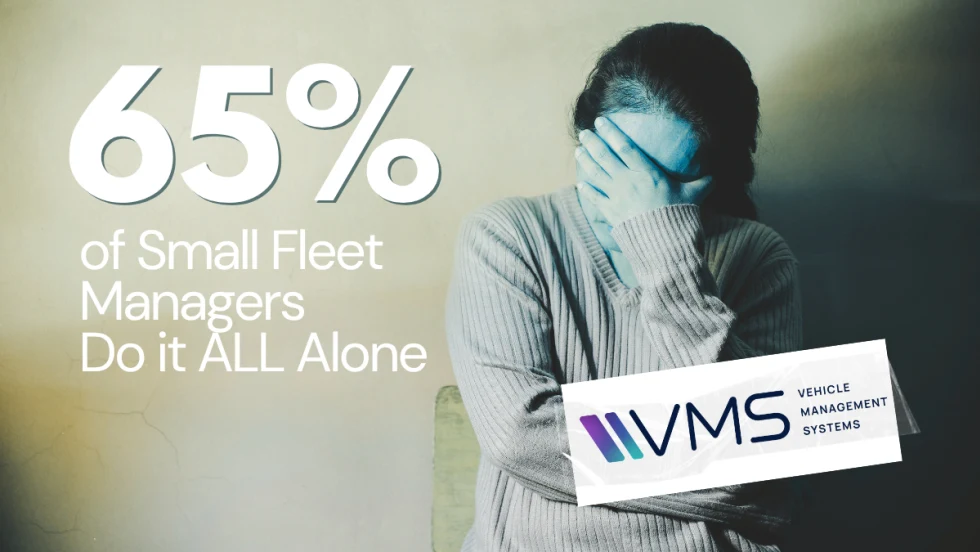
VMS Survey Finds 65% of Small Fleet Managers Run Operations Alone
A new VMS survey shows small fleet managers are stretched thin, with most handling operations solo and eager to adopt digital tools for relief.
Read More →
Tips for Driving Safely on Halloween Night
This video features a reminder from the Connecticut Department of Transportation (DOT) and the Connecticut Police Chiefs Association, urging drivers to prioritize safety this Halloween.
Read More →
AI, Access, and Uptime: VMS’s Next Chapter with David Prusinski
VMS’s new Co-CEO, David Prusinski, shares how an AI-first approach will give small fleets and repair shops the tools to compete like big players.
Read More →