




‘Breaking’ the Rules to Optimize Performance
Some call it thinking out of the box, pushing the envelope, or just plain breaking the rules. “Common wisdom” isn’t always the best way to keep a fleet running cost efficiently.

AT A GLANCE
Common adages fleet managers should reconsider include:
■ Vehicles must be replaced in three years/65,000 miles (or thereabouts) - otherwise, there is risk of major component failure.
■ Leased vehicles should be amortized at 2 percent per month to most closely proximate actual depreciation.
■ Fleet needs certified technicians to authorize vehicle repairs beyond preventive maintenance.
■ Large fleets need more than one supplier to keep them honest and compete for business.
There has never been a better time to break the rules than today. Resources are being slashed, staff eliminated, and fleet managers are scrambling like never before to meet the never-ending demands to reduce costs.
If you've tried everything - if you've data mined and scolded and cajoled until your keyboard catches fire - maybe it's time to forget traditional fleet management and take a step out of the box. The payoff can be substantial.
'The Way It's Always Been Done'
Let's first take a look at some of the more common adages that have guided fleet managers for decades.
■ You must replace your vehicles in three years/65,000 miles (or thereabouts) - otherwise, you run the risk of major component failure.
■ Amortize your lease vehicles at 2 percent per month; this will most closely proximate the actual depreciation.
■ You're not a mechanic; you need certified technicians to authorize vehicle repairs beyond preventive maintenance.
■ Your fleet is a big one; you need more than one supplier to keep them honest, and they can compete for your business.
There are more, but you get the picture. Try to buck that common wisdom and you'll be laughed out of the room - and possibly out of your job. Then again, perhaps not. Let's take a look at each of these adages, and how stepping out of that comfort zone can help fleet realize savings previously thought impossible.
Replacement Cycling 'Rules'
It is one of the oldest adages in the fleet industry. Fleet automobiles should be replaced on a cycle of time and mileage, 36 months or somewhere between 65,000-75,000 miles, whichever comes first (light trucks and vans, a bit longer). Why? For a number of reasons. Exceeding this mileage range will significantly reduce resale value. Replacing at that point will avoid the additional expense of the next round of tire and brake replacements. Keeping vehicles longer increases the possibility of major component failure. These and other reasons are given when the question of when to replace vehicles arises.
Like similar common wisdom, it has its origins decades ago when vehicles were not nearly as well built as they are today - warranties were nowhere near as long or comprehensive, and model years were clearly defined. Today, vehicles routinely last well over 100,000 miles, provide many years of cost-efficient, reliable service, and retain significant value on the used-vehicle market.
That said, before considering stepping out of the replacement cycle box, a fleet manager needs to ensure that it's done carefully. Ensure that:
■ A vigorously enforced preventive maintenance regimen is in place.
■ Vehicle condition reports are completed, endorsed by a supervisor, and submitted several times each year. Conditions requiring attention must be addressed.
■ The change is phased in slowly, stretching out the time and mileage on selected vehicles, and lifecycle costs are calculated and tracked.
Provided vehicles are cared for, there is little reason to believe that either performance or resale value will fall off a cliff if replacement is stretched out to four years, or 100,000 miles or more.
Amortization is Not 'One Size Fits All'
For fleet vehicles leased under an open-end TRAC lease (the most common lease transaction among mid-size and larger fleets), a key part of the lease rate factor is the rate at which the original cost of the vehicle is amortized. This rate will determine not only the size of the lease payment, but the "book" value of the vehicle at lease term, against which the resale proceeds are applied.
Again, decades ago, it was generally accepted that for a "typical" fleet auto, in service for the aforementioned 36 months or 65,000 miles and replaced with that mileage in approximately 2.5 years, the proper amortization rate was 50 months, or 2 percent per month. After 30 months in service, for example, this would result in an unamortized value equal to 40 percent of the original cost.
Few fleets, however, are so homogenous that a "one-size-fits-all" amortization rate properly fills the role the process requires. The purpose of amortization is to reduce the original cost to the point when, at anticipated replacement, the unamortized value will approximate the market value when the vehicle is sold.
For a national fleet, with vehicles in several different roles carried out in many different venues, amortizing at one rate is counterproductive. Urban vehicles generally run lower mileage than do rural vehicles. Jobsite trucks accumulate harder, tougher miles than do delivery trucks, etc. Smart fleet managers should use amortization rates appropriate to the usage: lower-mileage vehicles amortized over a longer period, and higher or harder mileage vehicles, a shorter period. This will more accurately reflect the actual depreciation, and smooth out cash flow. Remember, there is not real "gain" or "loss" from the sale of a vehicle lease under a TRAC lease. It is merely an adjustment required as a result of amortization that doesn't properly match the actual depreciation. It's not unlike a tax return; you aren't really getting money from the government when you get a refund. You're getting your own money back that was taken from you during the year. The ideal withholding, like the ideal amortization rate, will result in an adjustment as close to zero as possible.[PAGEBREAK]
Maintenance Management
More often than ever before, fleet managers' backgrounds include financial experience such as finance or treasury, corporate functions such as purchasing or general administrative, or operational functions such as corporate services. Fewer have backgrounds in the automotive business, particularly vehicle technology and mechanics. Thus, it is said, you need the expertise provided via a maintenance management program, where you have certified vehicle technicians at your service to discuss, negotiate, and manage maintenance and repairs. Makes sense, doesn't it?
To some extent, it does. But once again, the maintenance management programs available today, in essence, are little different than those of 30 years ago. And their purpose, back then, was a function of the vehicles of their time. The company pays a supplier a per-vehicle, per-month charge, and the supplier provides a number of resources and services:
■ A national network of maintenance and repair facilities.
■ The means by which drivers can purchase preventive maintenance, emergency road service, and repairs when needed.
■ The previously mentioned certified vehicle technicians who provide expertise and assistance in discussing repairs with the shop.
■ Reporting tools, which enable the fleet manager to mine data, track operating costs, and take action when needed.
■ "Extended warranty" services, where the supplier submits repairs performed beyond published warranty to the manufacturer for consideration.
The technology has certainly changed from 1981, but the essence of the programs has not. What have changed, and changed dramatically, are the vehicles themselves and the warranties covering them. While in '81, most warranties ran for 12 months or 12,000 miles, today they cover five years, 50,000 miles (bumper-to-bumper, save wear items such as tires, brakes, belts, and hoses), with some powertrains covered up to 100,000 miles. With the typical fleet vehicle running as much as 25,000-30,000 miles per year, a 12,000-mile warranty ran out after as little as six months or less, leaving the fleet manager to fend for him or herself if repairs were needed. However, a 36,000-mile warranty covers the first two or so years of fleet use, and thus, the large majority of trips to the shop are for simple preventive maintenance items. In 1981, a fleet of 1,000 vehicles could expect to replace several transmissions as well as some engines each year. Today, an engine or transmission failure is a rarity, and more often than not occurs under warranty and is thus covered.
That said, is paying $4-$6 per vehicle per month (as much as $48,000-$72,000 per year for a 1,000-vehicle fleet) worth the cost, when the large majority of maintenance activity is preventive maintenance, or covered under warranty?
Think about leaving the maintenance management cocoon and managing the function yourself. You may even be able to negotiate with your supplier for a fee-for-service type program, where you can avail yourself of the technical expertise only when needed and requested, for a per-occurrence fee. It may seem a bit frightening - what do I do if a shop calls and says a vehicle needs brakes? However, items such as tires and brakes are safety items, and it isn't likely that even a supplier will decline them and risk liability if either fails. Two tires or four? Give drivers a tread depth gauge, teach them to use it, and have the driver check the tread depth when the shop wants to replace them. You may be surprised to find that maintenance and repair costs don't skyrocket, vehicles don't break down in droves, and you end up saving money.
Multiple Suppliers
You manage a fleet of 500, 1,000, or 5,000 vehicles. It's smart not to put "all your eggs in one basket," right? You need to have two or three fleet suppliers to split the business, which creates the kind of competition that will provide the highest level of service, at the best prices, as these suppliers compete for your business.
Think again, and think outside the box. Say you manage the 500-vehicle fleet. If you think that the prospect of getting 250 of those vehicles and having to compete for more orders every year will get you the best rates and better service from a fleet supplier than competing for all 500 vehicles will, you're probably wrong.
Just like anything else, the more you buy, the lower the price, and just because you're buying more doesn't mean your service will be any better. Fleet suppliers compete relentlessly for any business, provide the best level of service they're able to, and price services according to the volume of business they get. The only thing splitting the business gets you is multiple billings, two account executives, two different systems to use to manage your fleet, and the possibility of confusion among your drivers.
This does not mean that the process known as "best practices" isn't of value. You can seek the best pricing on a lease, the best for maintenance assistance, the best for accident management, etc., since there are companies that specialize in each of these areas.
Be Bold
It is easy to follow the crowd, to rest comfortably in the practices the industry has held are the "proper" ones. It's also daunting to leave that crowd, break some rules, and try some creative management techniques. As long as you measure the risk, develop a plan, and implement change carefully, breaking the rules of fleet management can be a rewarding exercise, in more ways than one.
Originally posted on Automotive Fleet
More Vehicle Research
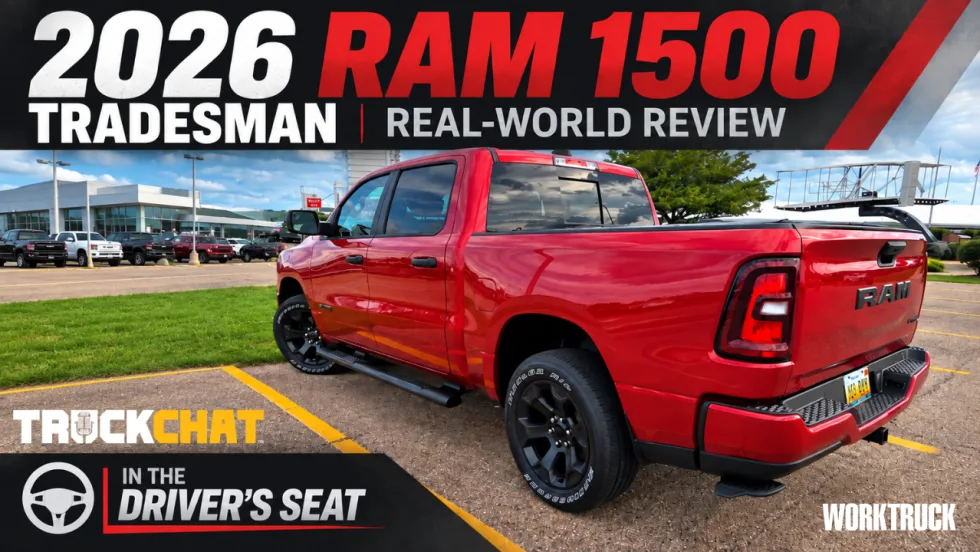
2026 Ram 1500 Tradesman Put to a Real-World Fleet Test
A few days behind the wheel of a 2026 Ram 1500 Tradesman turned into a test of visibility, parking, work-ready features, and even severe-weather driving.
Read More →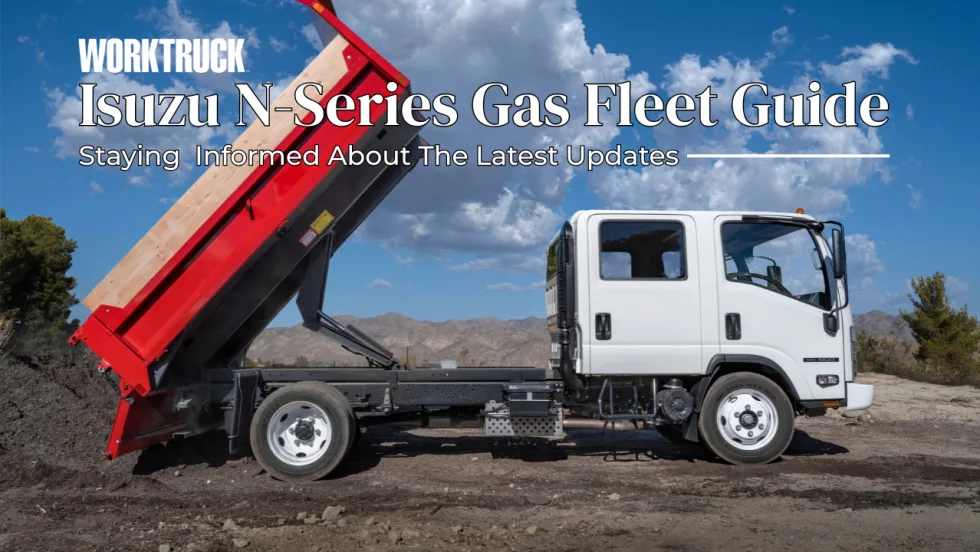
Isuzu N-Series Gas Fleet Guide: Specs, Capability and 2027 Model-Year Updates
Explore Isuzu Truck North America’s N-Series Gas fleet specs, engine performance, GVWR and payload capability, configurations, chassis dimensions, work-focused features, and 2027 model-year information.
Read More →
Chevrolet Silverado 1500 Fleet Guide Specs Capability and 2027 Model-Year Updates
The next-generation 2027 Chevrolet Silverado 1500 brings new V-8 engines, updated technology, expanded safety features, and a fleet-focused Work Truck. Here’s what commercial fleets need to know so far.
Read More →
Ram ProMaster City Fleet Guide Specs Cargo Capacity and 2027 Updates
Work Truck’s Ram ProMaster City Fleet Guide tracks the latest specifications, cargo capability, configurations, fleet technology, pricing, and model-year updates for Ram’s mid-size commercial van.
Read More →
Ford F-150 Fleet Guide Specs Capability and 2026 Model-Year Updates
Explore 2026 Ford F-150 fleet specs, engines, towing and payload capability, configurations, work features, technology, and model-year updates.
Read More →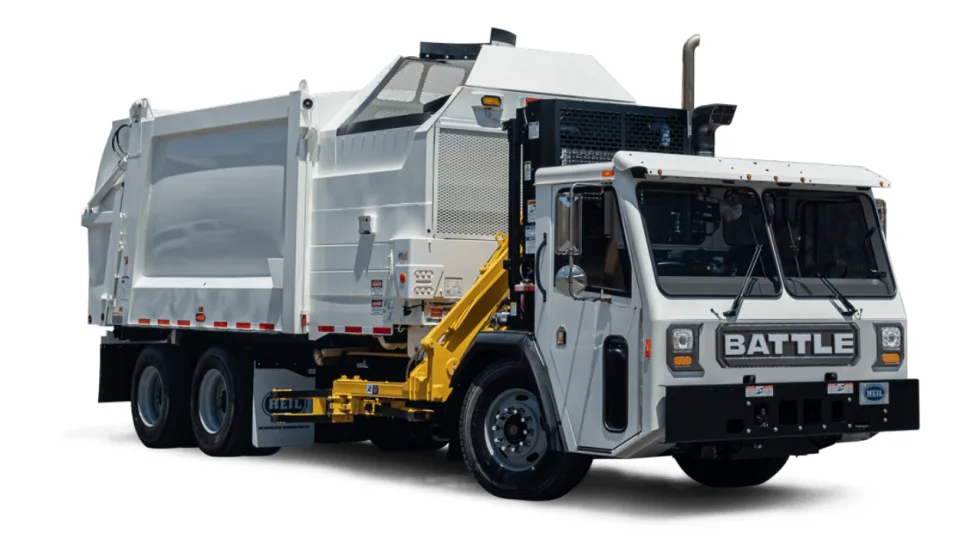
TCI Now Sells & Supports Battle Motors’ Vocational Trucks
Midwest truck dealer Truck Centers, Inc. (TCI) has expanded its transportation solutions with sales and service support for Battle Motors’ heavy-duty vocational trucks at locations in locations in Indiana, Illinois, and Missouri
Read More →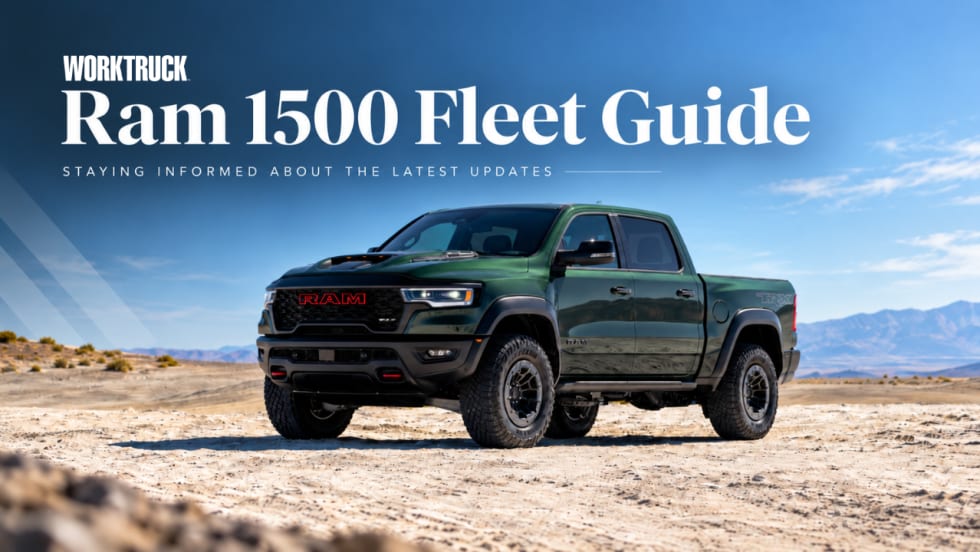
Ram 1500 Fleet Guide Specs, Capability and 2027 Model-Year Updates
Explore always up-to-date Ram 1500 fleet specs, engines, towing and payload capability, configurations, technology, pricing updates, and model-year changes.
Read More →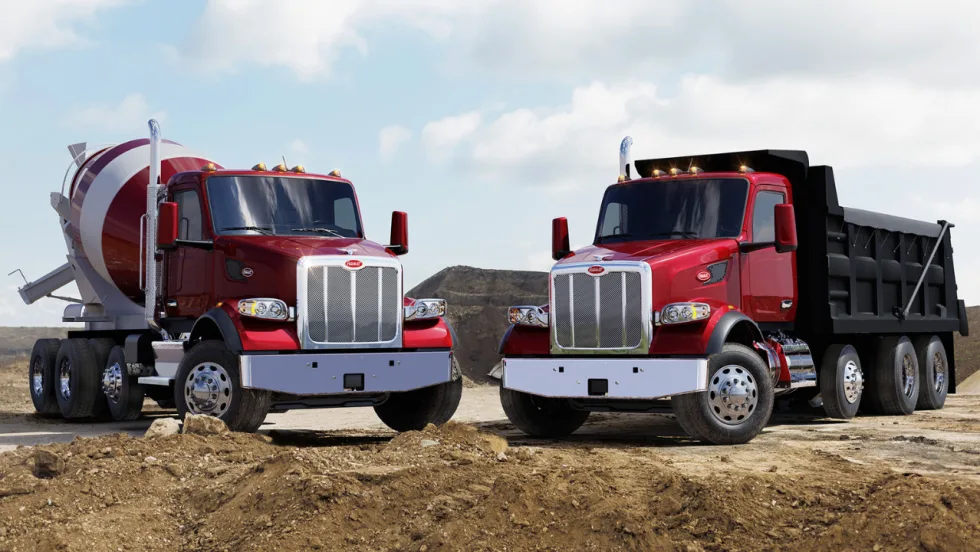
Peterbilt Trucks Equipped with Paccar TX-18 Pro Boost Efficiency for Maryland Fleet
Patuxent Companies is replacing aging trucks with the Peterbilt Model 567 and Model 589, specified with the Paccar TX-18 Pro 18-speed automated transmissions, and is reporting an 8% to 10% improvement in fuel economy.
Read More →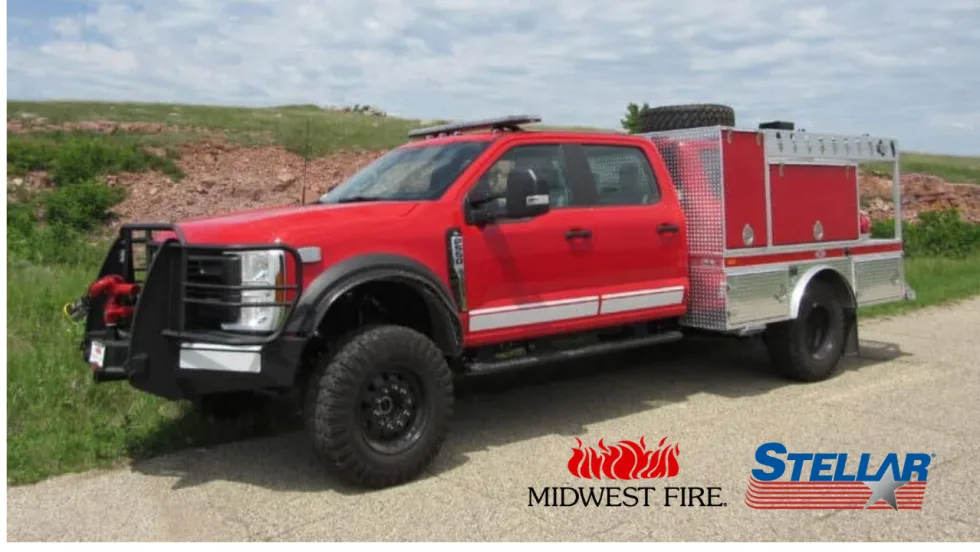
Stellar Expands into Fire Apparatus Market with Acquisition of Midwest Fire
Stellar Industries has acquired Midwest Fire, a custom fire apparatus manufacturer headquartered in Luverne, Minnesota, with nearly four decades of specialized apparatus experience.
Read More →
Recalls You Need to Know About in August 2026
If you have Altec, Chrysler, Ford, Heil, General Motors, International, Mack Trucks, Paccar, Rivian, Royal Truck, Toyota, US Truck Body, or Volvo Trucks vehicles in your fleet, you should check these important recalls issued by the National Highway Safety Administration.
Read More →