





The 2022 Bolt EUV Lowers TCO While Meeting Sustainability Goals
Bolt EUV: Level 2 Charging without the Charger
Bolt’s Dual Level Charge Cord allows for Level 2 charging on a 240v three-pronged dryer plug — a smart option for organizations with temporary employees or those in leased or rented complexes.
October 8, 2021
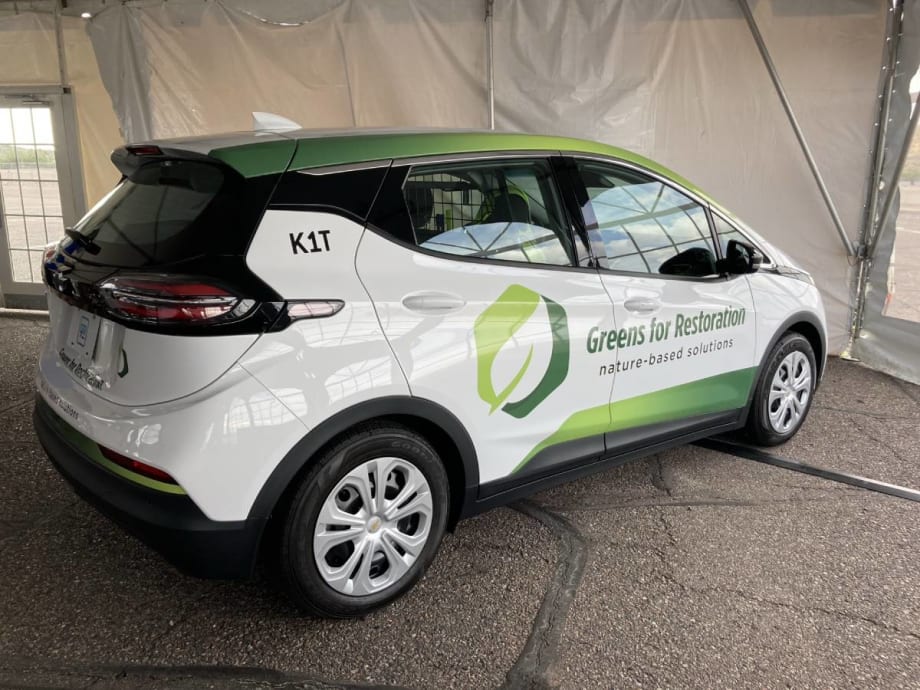
The Chevrolet Bolt EUV is new for the 2022 model year. The Bolt EUV has increased rear legroom and offers an EPA-rated range of 247 miles on a full charge.
Photo by Chris Brown
3 min to read
When it comes to fleet (and consumer) adoption of electric vehicles, range is still an issue — but charging infrastructure is the elephant in the room, particularly for organizations looking to set up home charging for their employees. That’s why General Motors has developed a suite of services around its next-gen Chevrolet Bolt EV and larger Bolt EUV, including a way to charge faster without the need to use or install charging equipment.
First, the charger: A Dual Level Charge Cord comes standard with 2022 Bolt EUV and it’s an option for Bolt EV. The Dual Level Charge Cord allows users to plug into a standard 120v three-prong outlet for Level 1 charging and a 240v outlet for Level 2 charging of up to 7.2 kilowatts.
The 240v outlet — think a kitchen range or clothes dryer plug — will give 25 miles of range for every hour of charging. Plugging into an actual Level 2 home charger will bump that range up to 37 miles an hour, according to Ali Jahed, electric vehicle consultant manager for General Motors Fleet.
Photo by Chris Brown
“This is a great option for organizations with temporary, contract, or probationary employees that aren’t ready for the expense or permanency of an installed charger, or those in leased or rented complexes,” Jahed said at a recent GM fleet event in Phoenix, Arizona.
Some residences may need to upgrade to a 240-volt circuit and have a new 50-amp panel installed. That’s where GM’s multiple third-party charging solution providers come in: One of those vendors, Qmerit, provides a concierge-type program for home charging.
Bolt customers start the process by answering questions on a website form and then uploading a picture of their panel. With this info, Qmerit would then contact multiple local independent electricians to handle the required installation. GM will subsidize some or all of the cost depending on the complexities of the job, Jahed said.
Fleets are faced with a litany of choices and unknowns when they start the electrification journey. In terms of the process of matching those first EVs to drivers, “Start with the low-hanging fruit — the long-term employees with less turnover — and the hand raisers,” he said. “Ideally, you'd want to charge overnight at the lowest rate with a car that can sit for 12 hours.”

Photo by Chris Brown
Infrastructure buildout won’t happen overnight, which is why GM instituted services to jumpstart the process. “We’re still in the infancy of all this,” Jahed said. “Look how long it took for gas infrastructure to be built out. When the first Model T was sold, there weren’t a lot of gas stations close by.”
Jahed is seeing movement to address these issues. “There’s a collective push on the part of developers to address these issues,” he said. “Eventually building codes will change.”
Originally posted on Automotive Fleet
Subscribe to Our Newsletter
More Small Fleet


Developing Budget-Friendly Driver Safety Programs
From driver training and safety meetings to one-on-one coaching and incentive programs, several small fleets share how they have developed a safety culture with their drivers using low- to no-cost resources.
Read More →
Sponsored•March 9, 2026
Boosting Last-Mile Fleet Uptime, Safety, and Value with AI Vehicle Inspections
AI-powered inspections are transforming last-mile fleets by replacing manual checks with highly accurate automated scans that detect defects in seconds. By giving fleet operations visibility into the daily condition of their vehicles, you can identify trends over the vehicle’s lifecycle that enable improved procurement decisions, route management, driver training and accountability.
Read More →
Five Ways Seat Belts Help Prevent Injuries
There are five ways seat belts protect occupants from injuries, according to the Tennessee Department of Safety and Homeland Security.
Read More →
Sponsored•January 14, 2026
It’s here: The 2026 Fleet Technology Trends Report
What does AI mean for fleets? Get the answer — and learn other top tech trends.
Read More →
Small Fleets, Big Impact: How Independent Drivers Power Wreaths Across America
Check out how small fleets and independent drivers power Wreaths Across America each December and why their impact matters more than ever.
Read More →
VMS Survey Finds 65% of Small Fleet Managers Run Operations Alone
A new VMS survey shows small fleet managers are stretched thin, with most handling operations solo and eager to adopt digital tools for relief.
Read More →
Tips for Driving Safely on Halloween Night
This video features a reminder from the Connecticut Department of Transportation (DOT) and the Connecticut Police Chiefs Association, urging drivers to prioritize safety this Halloween.
Read More →
AI, Access, and Uptime: VMS’s Next Chapter with David Prusinski
VMS’s new Co-CEO, David Prusinski, shares how an AI-first approach will give small fleets and repair shops the tools to compete like big players.
Read More →
Fleet Managers Share Winter Prep Tips: It's Never Too Early!
Three fleets share best practices to prep vehicles for winter and prevent downtime when the cold sets in.
Read More →