




Better Life Maids Sees the Value of Fleet
Providing company vehicles is helping this cleaning company grow its business, retain workers and market itself as an environmentally friendly brand.

Photos courtesy of Better Life Maids.
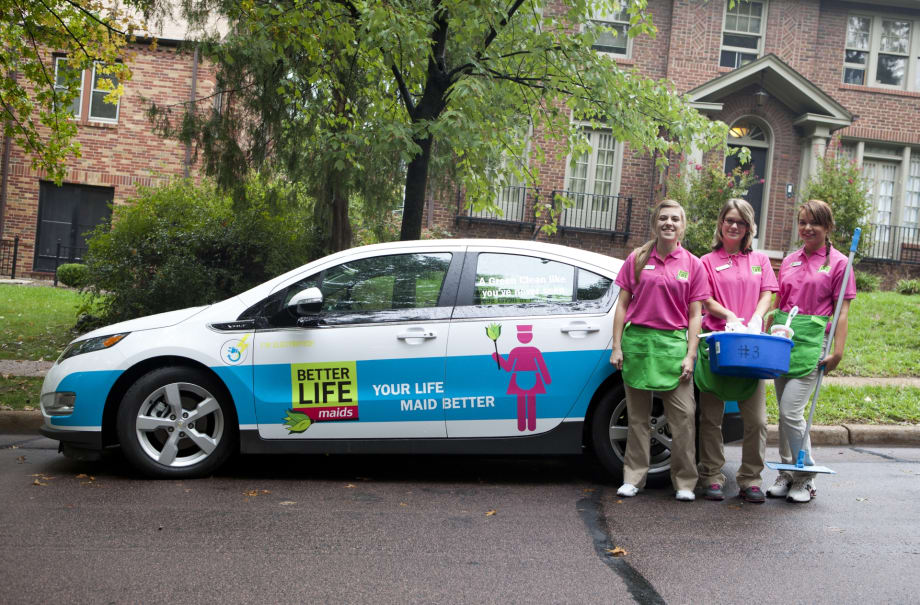
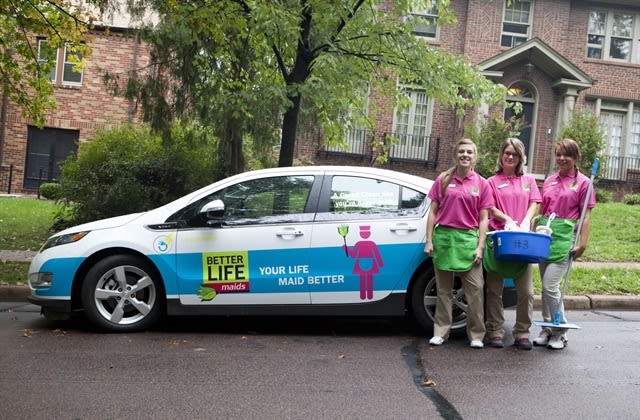
Better Life Maids recently added two Chevrolet Volts to its fleet.
Photos courtesy of Better Life Maids.
Better Life Maids recently added two Chevrolet Volts to its fleet.
In a field with typically high turnover rates, co-founder and president of Better Life Maids, Matt Ricketts, is using his fleet as a tool to keep employees at his cleaning company longer.

Having company vehicles has helped this cleaning company retain employees since they're no longer racking up miles on their personal vehicles.
Based in St. Louis, Better Life Maids is branching out by franchising its residential and all-green cleaning services. The company has so far sold one franchise in Jacksonville, Fla. and will be opening another in Birmingham, Ala. Adding company cars to the business plan, Ricketts says, has helped the company get to this stage by making it look and feel professional to both customers and employees.
Ricketts recently added two Chevrolet Volts to fleet on top of four Toyota Priuses and a Scion xB, in addition to a Prius that is used by the Jacksonville team. He plans to add three more vehicles in 2013.
‘It’s About Keeping People’
The company doesn’t use mileage reimbursement of a personal vehicle. “Most people in this industry pay the drivers’ mileage, but having company vehicles is not just about the economics of the business, it’s about keeping people,” Ricketts says. “By providing good, reliable company cars, we feel like that is a retention tool.”
Ricketts contends that when companies rely on reimbursement it can be easy for employees to blame the job when their personal vehicles break down. And as an eco-friendly company located in a main transportation hub of the city, all of Better Life Maids’ employees can avoid using their cars for work — not just the drivers.
“We feel like there’s an overall bigger piece to having company vehicles,” Ricketts says. “You have to figure in the marketing value and also the intrinsic value for the teams.”
Striving to keep employees was also why Ricketts embraced fuel cards, citing that prior to using them drivers didn’t have a uniform way of paying for expenses out in the field.
Better Life Maids also added GPS services from NexTraq. The move was less about keeping track of drivers and more to maintain customer service. He says that teams in the field are sometimes unreachable, so having GPS on the vehicles allows him to remotely monitor their locations and to instantly tell a customer if they are running behind schedule.
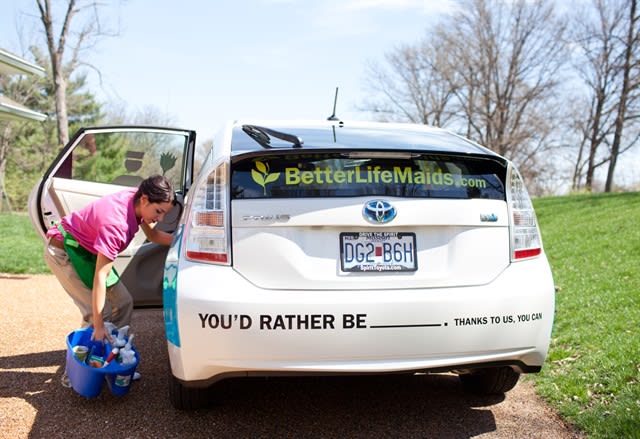
The company has four Toyota Priuses and a Scion xB, in addition to a Prius that is used by the Jacksonville team, where there is a new Better Life Maids franchise.
Charging Up
Deciding on the Volts after getting several incentives on 3-year lease plans, Ricketts says the company wanted vehicles that reflected its environmental consciousness.
Ricketts had looked at purchasing Nissan Leafs since the company’s typical mileage per day wasn’t likely to exceed the Leaf’s range, but he didn’t feel comfortable with the lack of flexibility of extra mileage.
Since the Volts see less than 15,000 miles a year, leases were “attractive” options, Ricketts says. In terms of fuel, the amount saved speaks for itself. He says the drivers are filling up the Volts about once every 60 days, which calculates to about $13.50 in fuel for each Volt monthly. Comparatively, he says he spends about $110 on each Prius and about $220 on the Scion xB, which was converted from his personal vehicle.
Each team leader is assigned a vehicle and route. The Volts are on routes that typically don’t exceed 40 miles.
Ricketts says he will continue to monitor the market for incentives and new electric, plug-in and even CNG vehicles large enough to hold cleaning equipment and at least three people. “As a small business owner, vehicles are one of our biggest expenses,” he says. “It is always a big decision, so we take a lot of time when we purchase a vehicle.”
To see more features from Business Fleet's 2013 January/February magazine issue click here.
You can also read more small fleet profiles at www.businessfleet.com/profiles.
More Small Fleet


Developing Budget-Friendly Driver Safety Programs
From driver training and safety meetings to one-on-one coaching and incentive programs, several small fleets share how they have developed a safety culture with their drivers using low- to no-cost resources.
Read More →
Boosting Last-Mile Fleet Uptime, Safety, and Value with AI Vehicle Inspections
AI-powered inspections are transforming last-mile fleets by replacing manual checks with highly accurate automated scans that detect defects in seconds. By giving fleet operations visibility into the daily condition of their vehicles, you can identify trends over the vehicle’s lifecycle that enable improved procurement decisions, route management, driver training and accountability.
Read More →
Five Ways Seat Belts Help Prevent Injuries
There are five ways seat belts protect occupants from injuries, according to the Tennessee Department of Safety and Homeland Security.
Read More →
It’s here: The 2026 Fleet Technology Trends Report
What does AI mean for fleets? Get the answer — and learn other top tech trends.
Read More →
Small Fleets, Big Impact: How Independent Drivers Power Wreaths Across America
Check out how small fleets and independent drivers power Wreaths Across America each December and why their impact matters more than ever.
Read More →
VMS Survey Finds 65% of Small Fleet Managers Run Operations Alone
A new VMS survey shows small fleet managers are stretched thin, with most handling operations solo and eager to adopt digital tools for relief.
Read More →
Tips for Driving Safely on Halloween Night
This video features a reminder from the Connecticut Department of Transportation (DOT) and the Connecticut Police Chiefs Association, urging drivers to prioritize safety this Halloween.
Read More →
AI, Access, and Uptime: VMS’s Next Chapter with David Prusinski
VMS’s new Co-CEO, David Prusinski, shares how an AI-first approach will give small fleets and repair shops the tools to compete like big players.
Read More →
Fleet Managers Share Winter Prep Tips: It's Never Too Early!
Three fleets share best practices to prep vehicles for winter and prevent downtime when the cold sets in.
Read More →