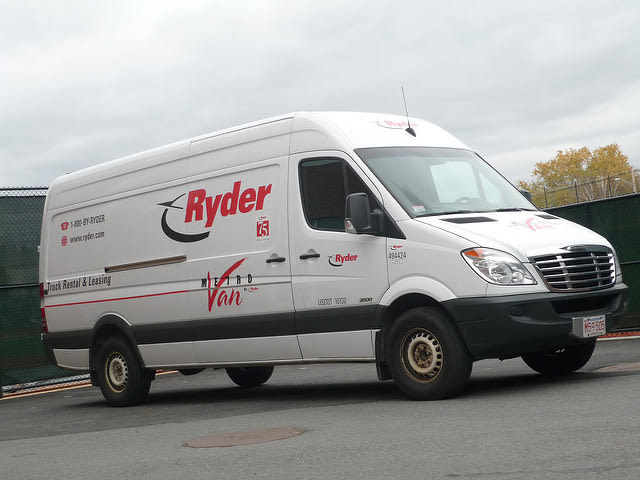
When it comes to safety training, small fleets with limited resources can turn to online training with dashboard metrics — and gain employee buy-in with a Captain of Ship policy.
Hiring and onboarding new drivers are no easy tasks. Both are costly processes not only in terms of financial resources, but also in terms of time and productivity loss.
Recently, the American Trucking Association (ATA) reported that the annual turnover rate at large trucking fleets reached 88% at the end of 2017, while the rate at small trucking fleets hit 80%.
Despite the turnover rate for small fleets being lower than large truck fleets, the cost for small fleets is more substantial. Small fleets have to work twice as hard, with minimal resources, to ensure drivers receive adequate training, are compliant with the fleet’s core safety values, and actually remain with the company.
Brandon Folck, director of training standards for Ryder System Inc., encourages small fleets to approach the hiring and onboarding processes in two ways: create a company safety culture that promotes positive driver practices and utilize a training mechanism that is specific to the company’s needs.
“I think that if you ensure that, one, you have a compliant driver and, two, you’re picking out the mechanism that ensures you’re able to convey the pride, passion, and emotion that your company has for safety, you’ll have somebody who will do well for you,” Folck said during a Ryder webinar on training and onboarding.
Creating a Strong Safety Culture
For years, Ryder has simplified fleet management with structured programs geared toward safety and driver training, most notably with its Certified Driver Trainer (CDT) program.
Ryder CDTs — drivers certified and trained by the company’s safety group — not only ensure that all newly hired drivers are trained online, but that they also are offer two to five days of hands-on training.
“It gives them an opportunity to know somebody, a fellow driver… to talk to and discuss issues and questions that they may not feel comfortable asking their location manager,” Folck said. “It does create a relationship, and we have seen continued relationships after the onboarding process is completed.”
While the onboarding process is different for every new driver, Folck advises small fleets to make certain that even before drivers hit the road, they have everything they need to drive efficiently — from obtaining their certified driver’s license (CDL) to making sure they have the proper service vehicle.
“Your first step is to have a compliant employee because it helps you in no form or fashion to have a safe employee if that safe employee is not compliant, not even on the road,” Folck said.
Utilizing Online Tech
Small fleet managers should employ a training mechanism that can track, verify, and ensure driver compliance all in one — without the hassle of additional paperwork or administrative tasks.
Laura McMillan, vice president of training development and professional services at Instructional Technologies Inc. (ITI) — the company that Ryder partners with for its Pro-TREAD online training platform — suggested that fleets who have limited resources and CDTs look to online training tools and dashboard metrics for guidance.
Based on the data acquired from online training, McMillan said small fleets can group drivers together in categories of high- and low-risk drivers, where high-risk drivers receive priority for additional online or behind-the-wheel training, while low-risk drivers receive training at a later date, depending on priority.
Even though there is less face-to-face interaction, the online process ultimately builds more transparency, as managers are able to track the level and amount of training a driver has received, and later, how compliant the driver is based on his or her safety scorecard.
“It can begin to explain [to drivers] what a company's understanding is around policies, procedures… what the air of safety is at that company, to ensure that they truly understand what's required of them,” Folck said.
Getting Drivers On Board
Who says all employees can’t monitor a fleet’s safety operations? At Ryder, that’s exactly the case with their captain of ship policy. The policy gives all employees the right to report on the fleet’s safety operations without fear of retribution and without fear of a write-up, or worse, termination.
“They have the responsibility… to bring forward unsafe conditions as they see it,” Folck said. “If you don’t call captain of the ship, and you proceed in an unsafe situation, you’re taking ownership of everything that happens thereafter.”
Folck added the policy also helps in maintaining the fleet’s relationships with veteran drivers, to ensure that they are still aware of the company’s safety standards and that no one gets too comfortable.
“You’ve got to continue to provide some type of understanding of what needs to be done and should be done,” he said. “We ensure that we work in providing the information necessary for those individuals, whether they [are] tenured drivers, old timers, as they say, or even our new drivers.”
Empowering drivers to practice safe driver behavior not only enhances your fleet’s overall safety culture, but it also helps to avoid additional training costs —which could potentially make your job as a small fleet manager much easier.