




8 Fleet Forward Conference Takeaways
Data management and protection, electrification, telematics, video technology, mobile servicing, shared mobility, and advanced safety tech took center stage in San Jose.


Photo by Tabrizi Productions.
The 2019 Fleet Forward Conference convened Nov. 9-11 in San Jose, Calif. These are only a few takeaways from the two days of TEK talks and campfire discussions.
The conference’s mandate is to deliver actionable insights for fleets on the transportation revolution happening now and in the near future.
Spec’ing vehicles based on individual vehicle MPG data is so 2018.
Sure, you can pull real-world fuel economy from your fleet vehicles individually, and you can use traditional means of grouping and benchmarking them. But that’s almost like filling out and updating an NCAA tournament bracket by hand — an impossible amount of work. Results of a joint study conducted by Enterprise Fleet Management and Geotab were presented to demonstrate how telematics data can be combined with machine learning and AI to definitively predict future fuel economy of light-duty vehicles. The study collated vehicle specs, driving behaviors, environmental and road data, vocational use, region, utilization, and trip lengths — over 100 factors — into a predictive model. In one use case, the model scored a fleet of 106 vehicles and produced a spec’ing recommendation that would save $11,000 a month in fuel costs.
Time savings equals dollar savings — and Fleet Management as a Service is taking off.
Consumer on-demand models driven by Uber, Instacart, and Amazon Prime are permeating business-to-business transactions, including fleet services. Uptime is everything; valeting vehicles one at a time to brick-and-mortar car washes or quick lubes doesn’t cut it anymore. Fleets of all types and geographies are increasingly leveraging tech-enabled mobile services that include fueling, vehicle washing, preventive maintenance, repairs, tire replacement and more. This fits into the larger concept of Fleet Management as a Service, which will grow in importance as we continue down the path of increased asset utilization toward autonomy.
Government fleets are ready to expand shared mobility.
Government fleets have been first adopters when it comes to fleet sharing, as motor pools are notoriously underutilized. While many government fleets are still updating from key box to various forms of tech-enabled sharing, some are ready to take the next step. According to David Mesa from the City of San Jose, the city is working through the logistics of interdepartmental sharing. “In the future, we're definitely going to be sharing resources with other local municipalities. That way we can have utilization rates that are more aligned with our replacement cycles.” Taking the concept one step further, employees of Santa Barbara County are allowed to take home pool vehicles as long as they use them for rideshare with other employees to and from work. They pay for the use of the vehicle, though the cost is split between the driver and passengers, and they get a preferred parking spot at work. The next frontier is fleet sharing to the public. This used to be a third rail because of liability, however technology is able to define who, when, and where.
Commercial fleets are only beginning to embrace new mobility.

Photo by Tabrizi Productions.
Sara Sweeney of Wheels presented some of the findings of its mobility study done in conjunction with Bobit Business Media. The survey queried commercial fleets. Some 28% said they were actively using a variety of mobility solutions already. Of those, about 6% of respondents are using a form of shared mobility; 7% have implemented a mobility budget, and 9% have implemented ride hailing. Of all respondents, 20% were in some phase of development (from early stages to close to execution) on a new initiative. However, close to 40% have not yet started discussions or planning of any new mobility solution.
You can share an excavator (and other heavy equipment).
What’s super costly and underutilized? Heavy equipment. Take excavators, which can cost close to $200,000 each. San Joaquin County has three of them that aren’t utilized nine months out of the year. Kevin Myose, who manages the county’s fleet, is looking to include them in his shared motor pool. Sure, there are issues above and beyond sharing a passenger car: “Handing over the keys to an excavator is a whole different deal,” said Myose during the government fleet manager’s forum. But with equipment costing $200,000 and severely underutilized, the cost savings in sharing them with other cities and counties can be tremendous.
Electric trucks aren’t market ready, but we’re making progress.
All North American truck manufacturers, the traditional crowd as well as a handful of startups, are working feverishly to electrify their Class 7 and 8 offerings. It will happen, but commercialization is still at least a couple years down the road. Heavy trucks need lots of batteries to cover the distances they need to travel. Until technology can bring the size and weight of the battery packs down to something reasonable, most truck fleets won't tolerate a cut in payload. In the meantime, truck makers are focusing on short-haul tractors and city delivery trucks that require smaller battery loads with less impact on payload.
Range anxiety is no longer the primary barrier to electric vehicle adoption.
On the passenger car side, the term “range anxiety” is almost cliched, with a benchmark range of over 200 miles for new electric models. But we’re playing chicken and egg with charging infrastructure struggling to keep up with the slew of new EV models on the horizon. Uncertainty on battery longevity, lack of auction sales, and uncertain residual values make total cost of ownership a moving target, though this is evolving. As new car prices reach record highs, the gap between internal combustion engine (ICE) vehicles and EVs is shrinking, and operating costs for EVs are 58% of ICE vehicles. Battery longevity is playing out favorably. Assessing an EV’s battery efficacy is a new science, and marketing positive results will increase buyer confidence in the secondary market. OEM battery warranty programs are helping too.
Data collection systems and policies are still forming, leaving data managers exposed.
The auto industry hasn’t yet figured out an easy, standardized way to erase data from vehicles. It’s left to the driver, and each vehicle model has a different method. Further, fleet management companies are aware that their clients’ drivers are not always removing telematics devices from de-fleeted vehicles. When telematics providers and FMCs are not made aware of a vehicle changing hands, they end up tracking and collecting data on a vehicle that is outside of their purview. This risk speaks to the need to define opt-out systems and policies, equally as important — or more so — than the original opt-in to allow collection data.
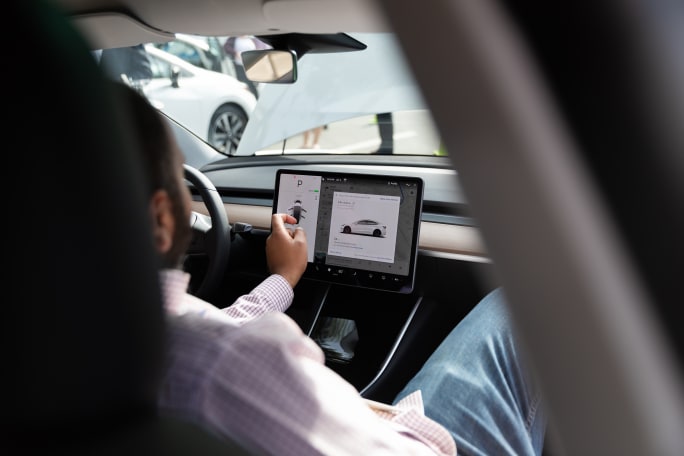
Photo by Tabrizi Productions.
Here are the best two quotes to sum up the conference:
“Our customers tell us that they have almost no demand for more data, but they have almost unlimited demand for actionable insights from the data that they currently have.”
“I traveled the 60 miles to the conference in an all-electric Hyundai Kona with intelligent lane-keeping, active cruise control, and forward collision avoidance. I actually got work done on the freeway. Maybe this wasn’t advisable — but this is the future and it’s coming fast.”
Originally posted on Automotive Fleet
More Technology & AI
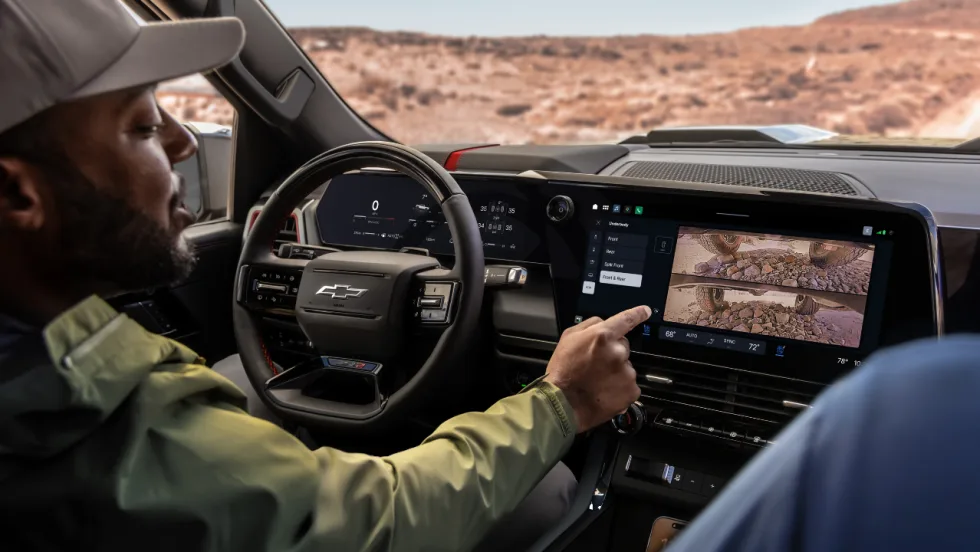
GM Brings New Truck Focused Interface to 2027 Silverado and Sierra
GM's new pickup interface puts trailering data, camera views, vehicle controls, and smartphone integration closer to the driver in the 2027 Silverado and Sierra.
Read More →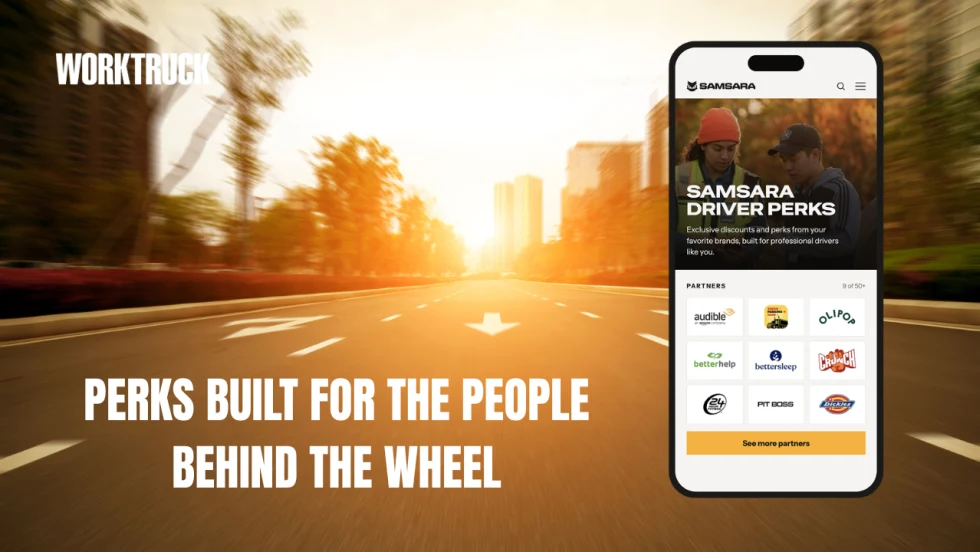
Samsara Driver Perks Expands Rewards Beyond the Long Haul Driver
Samsara’s new driver rewards program was built with a broader professional driver in mind, including employees who split their day between driving, job sites, service calls, and other work.
Read More →
AI Service Advisor Aims to Cut Fleet Repair Downtime
Fleetio said its AI Service Advisor can help fleets cut repair downtime by an average of 2.5 hours per repair while reducing manual maintenance work.
Read More →From Our Partners


Verra Mobility Launches AI-Driven Title & Registration Solution
Verra Mobility has launched a new AI-driven Title & Registration platform to help fleets move vehicles from acquisition to the road the same day while reducing compliance risk.
Read More →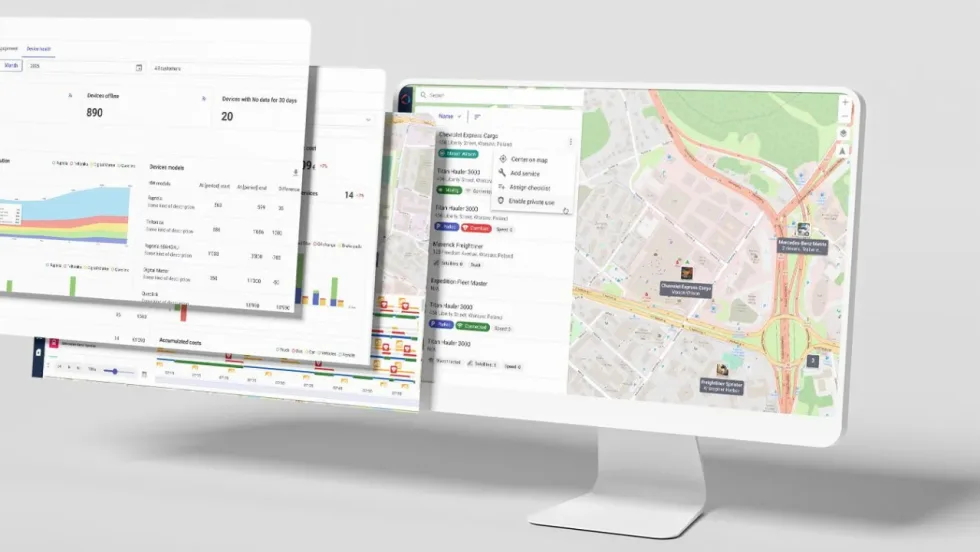
Wialon Unlocks OEM Data to Give Fleet Owners Data Ownership & Operational Clarity
Wialon has introduced hardware-free OEM integration as the EU Data Act accelerates the shift in vehicle data access across the fleet industry in many countries.
Read More →
Teletrac Navman Promotes New CEO from Within
Teletrac Navman’s next CEO, Ricardo Buranello, has served as the company’s chief financial and operating officer. He brings deep financial and operational expertise, a strong strategic orientation, and an intimate knowledge of the business to his new role.
Read More →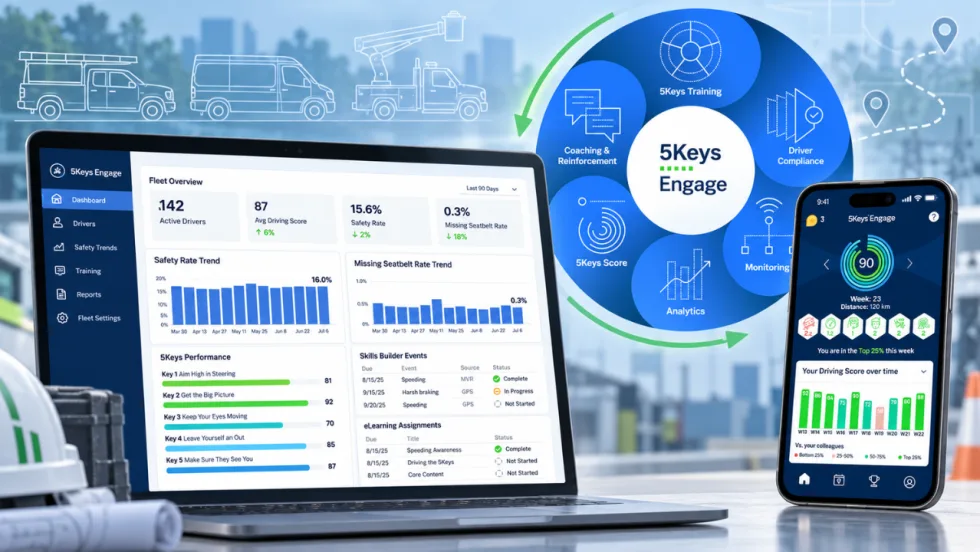
Smith System Wants Work Truck Fleets to Look Beyond the Driver Alert
Smith System’s new Driver Risk Management program is built to help mixed work truck fleets turn telematics alerts and observations into specific behaviors, coaching actions, and measurable follow-up.
Read More →
Ford Pro Software Updates: August 26
Check out the latest Ford Pro software updates, including Google Maps integration, Remote Vehicle Alarm integration, Motor Pool for easier management of shared pool vehicles, and more.
Read More →
How Faster Driver Reporting Can Keep Small Truck Problems Small
When minor damage, warning lights, or equipment issues are reported late, small problems can quickly become bigger maintenance headaches. Conversational AI can help shorten the path from what a driver notices in the field to the person who can act on it.
Read More →
Where AI Is Actually Saving Fleet Managers Time
AI is moving past the buzzword stage and into the daily fleet workflow. Fleetio’s Brianna Perry Lang breaks down where fleets are seeing real time savings, from maintenance and data entry to repair decisions, safety, and compliance
Read More →