




10 Ways to Maximize Fuel Efficiency in Older Trucks
An aftermarket upgrade expert recommends modifications that make your trucks more fuel-efficient to keep them on the road longer.

Anthony Jarantilla regularly optimizes trucks for performance and fuel efficiency. His recommendations include considering a high-flow exhaust system and air filter, adding helper springs, upgrading the truck’s electrical grounds and firming up the shifts and gear ratio.

Anthony Jarantilla regularly optimizes trucks for performance and fuel efficiency. His recommendations include considering a high-flow exhaust system and air filter, adding helper springs, upgrading the truck’s electrical grounds and firming up the shifts and gear ratio.
Fleet managers are always looking for ways to cut costs, and one way is to keep fleet trucks in service — and running efficiently — for as long as possible. While maintenance remains a big factor in increasing fuel efficiency, certain modifications to fleet trucks can help them burn less fuel, run smoother and last longer.
Business Fleet spoke with Anthony Jarantilla, an aftermarket install shop manager and head of vehicle upgrades for XMT Construction of Surrey, British Columbia, who shared his ideas for optimizing trucks for fuel efficiency and durability.
For a visual representation of his fuel-saving suggestions as well as other how-to tutorials, visit Jarantilla’s YouTube channel under AnthonyJ350.
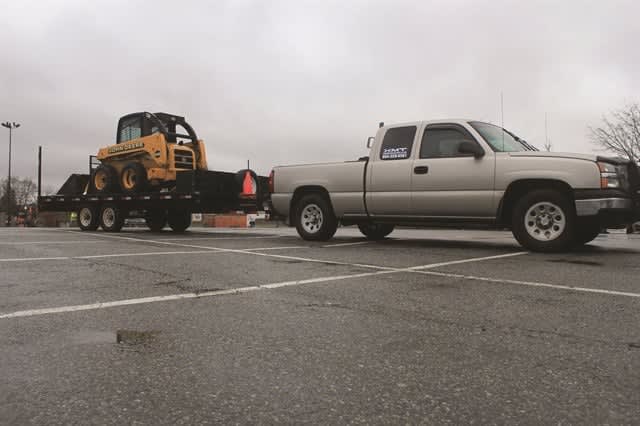
Paying attention to oil changes and filters is the first thing that Jarantilla addresses.
1. Overcompensate on oil changes.
It’s no surprise that Jarantilla addresses maintenance first. He recommends using synthetic oil and high-capacity filters. “I like to overcompensate when it comes to maintenance items,” Jarantilla says. “I’m pretty religious when it comes to things like oil changes.”
Jarantilla recommends synthetic motor oil because it maintains its lubricating properties longer, allowing the engine to do its work with less friction and less wear, especially in temperature extremes. “If I miss [an oil change] by a month or two, I’m not really hurting the vehicle,” he says. “The same thing goes with my oil filters and my air filters.”
Though this method may cost a bit of extra money, he says it will pay for itself in the long run.
2. Upgrade to a high-flow exhaust system and high-flow air filter.
After years in operation, exhaust systems in fleet vehicles may be rusty and ready for replacement, especially where roads are salted. If parts of the exhaust system need replacing, Jarantilla recommends purchasing a high-flow aftermarket exhaust system for about the same price as a regular one. “If the motor can’t breathe, it won’t be efficient,” he says.
Turndown kits cost less than $200 and mufflers run under $100. If the pipes are in good shape and are already low restriction, Jarantilla recommends just changing the muffler. He doesn’t suggest changing the exhaust manifold or the catalytic converter unless it’s absolutely necessary since labor and parts are expensive.
If a truck is not running efficiently, a visual inspection for damage or wear of the exhaust system can help determine why. If performance is sluggish, even after a tune-up, check the exhaust system for weak pipes and rust.
Some high-flow replacement filters come with a 1-million-mile warranty and maintain air flow even when dirty. “It’s the last air filter you’ll ever buy,” Jarantilla says.
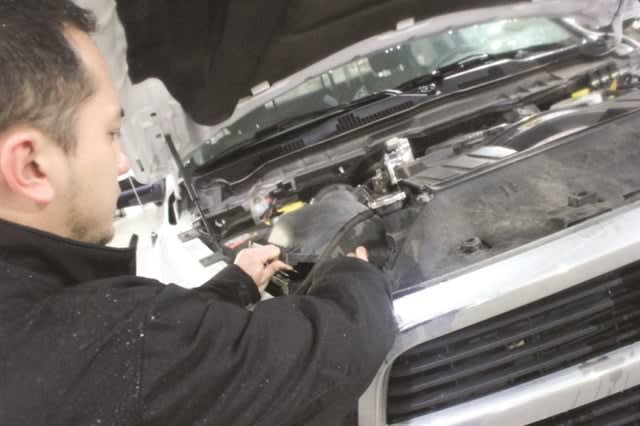
Jarantilla recommends changing the O2 sensors about every 80,000 miles.
3. Monitor your spark plugs.
Change spark plugs at 60,000 miles if you have iridium or platinum plugs, and every year or 7,000 miles for copper plugs. Regardless, check them yearly.
“Spark plugs tell a lot about what’s going on in an internal combustion engine,” Jarantilla says, adding that although you may not need to change them, it’s a good idea to visually inspect them once a year.
Discolored spark plugs can indicate that the motor is running rich or lean. If it’s running rich, the truck is probably using too much fuel, and if lean, there isn’t enough fuel. In this case the O2 sensor might need to be checked. Jarantilla recommends changing the O2 sensors about every 80,000 miles.
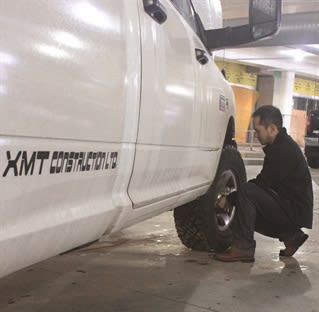
Not only are tires important but springs., which Jarantilla says is one of the most commonly overlooked items. A maxed out suspension will put undue pressure on tires, especially over bumps.
4. Buy the right tires and check tire pressure often.
Is it best to use one set of all-weather tires or two sets — one for highway driving and one for snow? Jarantilla recommends buying a good all-weather light truck tire for those not in severe winter climates.
While it costs more money upfront, having two sets reduces wear and increases safety on the road. In some places, snow tires are required by law.
Jarantilla estimates that tires can affect gas mileage by up to 10%, so it’s important to maintain proper tire pressure and to check it often. Proper tire pressure optimizes fuel efficiency and tire wear, and monitoring pressure helps operators catch air leaks while they’re small. “In a perfect world, someone would be checking tire pressure every other day,” he says.
Avoid the temptation to buy bigger tires, which look great but reduce fuel economy, Jarantilla says.
5. Add helper springs.
It’s important to pay attention to suspension, “one of most overlooked things,” Jarantilla says. “I see guys overload their trucks all the time.”
A maxed out suspension will put undue pressure on tires, especially over bumps. Bulging tires wear out faster and create more friction, making the truck work harder and burn more fuel. Installing auxiliary metal springs or air springs ($300 for a basic kit) gives the operator more leeway in terms of payload capacity, and air springs can be adjusted to accommodate the truck’s load.
6. Firm up the shifts and check the gear ratio.
Transmission repairs and replacements are a fact of life in older trucks. If a repair shop is going to open up the transmission anyway, Jarantilla suggests asking the shop to firm up the shifts and check the axle gear ratio. “Don’t go for a mushy, sloppy soft shift,” he says.
The less time spent shifting means more time the fuel is used to move the truck instead of shifting gears. For a firmer shift and to increase transmission durability, Jarantilla recommends installing a shift kit, which usually starts around $100 plus labor.
If necessary, the transmission shop can also change the truck’s rear axle gear ratio to one more appropriate for the weight loaded onto the truck and how it’s driven (city or highway). Transmission experts can use driver feedback on how and where a truck is driven to ensure it is operated primarily within in its power band (the range of operating speeds that the vehicle operates most efficiently).
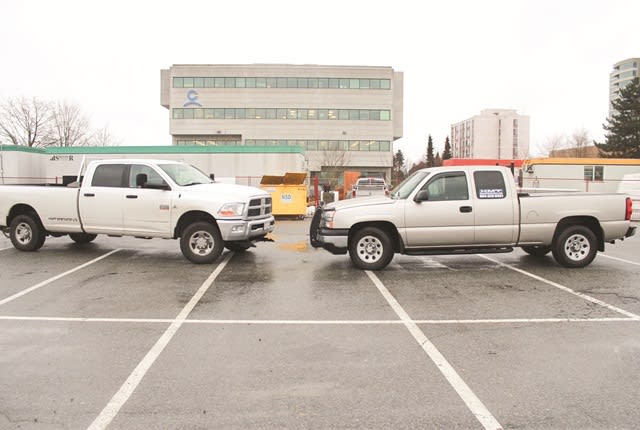
For a visual representation of his fuel-saving suggestions as well as other how-to tutorials, visit Jarantilla’s YouTube channel under AnthonyJ350.
7. Eliminate unneeded aftermarket accessories.
Assess whether any large accessories are necessary, as the added weight does make a difference in fuel economy. Bully bars and headache racks look good, but if that’s all they do, take them off. As well, assess if you really need your ladder racks.
Front air dams should be left on, as they improve aerodynamics.
Also, keep aerodynamics in mind when loading a truck, especially when driving on the highway. Keep loads to the center of the vehicle and behind the cab so items don’t catch the wind.
8. Add an oil catch can.
An oil catch can will help keep the upper intake manifold clean by collecting oil mist generated from the rotating components of the engine and protecting it from gunk.
Jarantilla says an oil catch can requires added maintenance but promotes a cleaner burn because the oil is not mixing with gasoline. “If you take more oil out of the combustion, it’s a much more efficient explosion at that point, just gasoline and air,” he adds.
Ask your mechanic or installer if it would help your truck.
9. Upgrade the electrical grounds.
A quick and easy preventive maintenance modification for older vehicles is to upgrade the grounds, which helps ensure all the electrical sensors such as 02 sensors and mass air flow sensors communicate accurately with the truck’s computer system.
A local aftermarket install shop can upgrade the grounds by adding thicker wires to increase the contact points.
10. Consider a fuel injection cleaner.
Jarantilla uses high-quality gasoline and for years has used a fuel injection cleaner, designed to help keep intake valves clean and lubricate the upper cylinders to aid in maintaining efficiency. “A good one from Lucas or Chevron Techron seems to do the job,” he says.
View more features from Business Fleet's March/April issue here.
More Small Fleet


Developing Budget-Friendly Driver Safety Programs
From driver training and safety meetings to one-on-one coaching and incentive programs, several small fleets share how they have developed a safety culture with their drivers using low- to no-cost resources.
Read More →
Boosting Last-Mile Fleet Uptime, Safety, and Value with AI Vehicle Inspections
AI-powered inspections are transforming last-mile fleets by replacing manual checks with highly accurate automated scans that detect defects in seconds. By giving fleet operations visibility into the daily condition of their vehicles, you can identify trends over the vehicle’s lifecycle that enable improved procurement decisions, route management, driver training and accountability.
Read More →
Five Ways Seat Belts Help Prevent Injuries
There are five ways seat belts protect occupants from injuries, according to the Tennessee Department of Safety and Homeland Security.
Read More →
It’s here: The 2026 Fleet Technology Trends Report
What does AI mean for fleets? Get the answer — and learn other top tech trends.
Read More →
Small Fleets, Big Impact: How Independent Drivers Power Wreaths Across America
Check out how small fleets and independent drivers power Wreaths Across America each December and why their impact matters more than ever.
Read More →
VMS Survey Finds 65% of Small Fleet Managers Run Operations Alone
A new VMS survey shows small fleet managers are stretched thin, with most handling operations solo and eager to adopt digital tools for relief.
Read More →
Tips for Driving Safely on Halloween Night
This video features a reminder from the Connecticut Department of Transportation (DOT) and the Connecticut Police Chiefs Association, urging drivers to prioritize safety this Halloween.
Read More →
AI, Access, and Uptime: VMS’s Next Chapter with David Prusinski
VMS’s new Co-CEO, David Prusinski, shares how an AI-first approach will give small fleets and repair shops the tools to compete like big players.
Read More →
Fleet Managers Share Winter Prep Tips: It's Never Too Early!
Three fleets share best practices to prep vehicles for winter and prevent downtime when the cold sets in.
Read More →