




Predictive Maintenance: Tell Me Something I Don’t Know
Preventive maintenance programs are yesterday’s news. Tomorrow’s fleet manager is working on predicting issues before they even occur.


Maintaining assets proactively, not reactively, can reduce maintenance costs and asset downtime.
Photo courtesy of Verizon Connect
The term preventive maintenance is well understood by fleet managers today: it’s the idea of performing maintenance on your trucks before a problem arises with the aim of preventing big, unscheduled problems from occurring.
But, what is predictive maintenance? Are there benefits of a predictive maintenance program compared with simply focusing on preventive? Predictive maintenance depends on data.
Predictive Maintenance 101
Probably the clearest definition of predictive maintenance lies in this statement: “Tell me something about my vehicle I don’t know.”
“Predictive maintenance, in my mind, is being able to identify an issue before it actually causes the vehicle to fail,” said Scott Sutarik, associate VP of commercial vehicle solutions for Geotab. “There’s a number of different ways to do this. The simplest way is utilizing telematics to watch for diagnostic messages and fault codes.”
A slightly more complicated definition is that predictive maintenance uses extended data-sets available from remote assets and employs machine learning and advanced analytics to foresee potential maintenance issues before there is either a trouble code or scheduled periodic maintenance.
“For example, detecting that certain asset conditions, such as tire pressure levels combined with other factors such as distance traveled lead to specific maintenance issues, an intelligent prescriptive maintenance plan can be tailored to optimizing the maintenance cost and performance of individual assets,” said Tony Summerville, founder & CEO of Fleetio.
With machine learning, Summerville explained predictive maintenance technology gathers a tremendous amount of real-time asset data.
“With so many of an asset’s components interconnected, there are distinct possibilities one issue can be the causation of another, more profound one and predictive maintenance can help spot them beforehand,” Summerville said.
There is a lot of data mining and science to come up with predictive models. “Some models are hard to do since there is no single answer for what kind of repair may result in a diagnostic trouble code, and more so when ignored for a while. Azuga invested early in data science and has built predictive models around the correlation between driving behavior and tire wear as an example,” said Ananth Rani, co-founder and CEO of Azuga, Inc.
Another way of looking at it is thinking of preventive maintenance as planned maintenance — for example, planning every six months to change the oil in every fleet vehicle.
“Predictive maintenance takes this to the next level using technology. Internet-of-Things (IoT)-enabled condition-based monitoring (CBM) helps fleets dramatically reduce service costs by becoming more predictive and proactive. By constantly monitoring a vehicle via CBM, a fix can be initiated even before a driver might be aware of an issue. Preventive and predictive maintenance strategies work best when used together to create a holistic maintenance approach,” said Chris Ransom, director of solutions engineering at Verizon Connect.
Predictive maintenance is based on use and data, where preventive is based on schedules and assumptions. “The difference would be that of taking a piece of equipment out of rotation every 3,000 miles or 10,000 hours for routine maintenance versus routinely measuring the oil or tire wear to schedule the equipment for service when the condition of what is being monitored has reached the desired threshold of usage,” said Marco Encinas, product manager global platforms for Teletrac Navman.
Traditionally, commercial fleets have aimed for “preventive” maintenance in the form of routine periodic inspections and repairs.
“This approach often increases the cost to address the problem and leads to extended downtime and lost revenue. This form of ‘preventive maintenance’ is typically based on distance traveled, time elapsed, or engine hours. With the advent of solutions that monitor vehicle/asset components through CAN BUS diagnostics or sensor data, preventive maintenance has evolved in the past few years to take advantage of this data for making decisions on maintenance needs. For example, if the fleet manager finds that a vehicle has thrown a diagnostic trouble code, it can be brought in to get addressed immediately rather than waiting for the periodic scheduled maintenance, or worse, for the asset to break down,” said Reza Hemmati, VP of product management for Spireon.
At the end of the day, all maintenance is preventive, but the question Frank Schneider, director of product management for software as a service (saas) at CalAmp, asked is if you respond reactively, resulting in the greatest maintenance expense, or predictively, which can reduce maintenance expense.
“By using telematics, you move from reactive to predictive maintenance planning to address small problems before they become big problems. Rather than scheduling regular maintenance based on random dates or mileage, fleet managers can reduce the number of maintenance stops based on detailed diagnostic and utilization information about the vehicle. Vehicles with lower usage may not require as many maintenance stops as those with higher usage,” Schneider said.
The next step in the evolution from preventive to predictive, according to Sutarik, is being able to take that data above and beyond.
“Fleet managers need to take the data above just fault codes and be able to analyze additional data points coming from the engine, transmission, and brake modules, etc. Taking a deeper dive into the data and using machine learning techniques, fleet managers can identify early warning signs of failure,” he added.
Key Benefits of Predictive Maintenance
And while obviously fleets will experience cost savings through the implementation of an effective predictive maintenance program, there are added benefits from vehicle utilization to driver morale.
“One of the key benefits of a predictive maintenance program is going to be vehicle availability and overall utilization. Availability is improved because of fewer unplanned breakdowns. This also results in increased driver satisfaction because they will experience fewer failures, and they are able to be on the road doing their jobs,” said Sutarik of Geotab. “There are additional costs related to unscheduled maintenance, such as the need to put a driver up in a hotel while work is being done, not to mention you’re losing revenue every day that vehicle isn’t on the road.”
Predictive maintenance programs allow a fleet to get the max usage from a piece of equipment or vehicle without spending money or time on unnecessary repairs that are not quite needed yet based on usage.
“While a fleet is still maintaining equipment properly and getting ahead of major breakdowns, use of a predictive maintenance program means wasting fewer resources by getting the asset maintained when it may not need it yet,” said Encinas of Teletrac Navman.
Reactive maintenance is extremely expensive, with increased costs and decreased driver morale.
“In a reactive situation, technician and crew availability is impacted and maintenance schedules have to be reshuffled significantly driving up costs. Predictive maintenance allows the fleet manager to improve operational efficiency by proactively managing potential maintenance issues based on actual diagnostic information to maintain vehicle and crew productivity,” said Schneider of CalAmp.
By maintaining assets more proactively, based on set schedules or certain health alerts and not reactively, maintenance cost and asset downtime can be significantly lowered, as cost, time, and performance are optimized in making the maintenance decisions, noted Hemmati of Spireon.
“Predictive maintenance keeps fleets highly available and running, providing service, and generating revenue. It helps fleets keep vehicles utilized for longer without buying a new truck,” said Rani of Azuga.
Vehicle diagnostics benefit both managers and drivers.
“Staying ahead of the curve is difficult for managers in every industry. There are always new fires to put out, whether someone calls in sick, a vehicle won’t start, or an urgent customer request comes in. These disruptions can make a work day difficult, but vehicle diagnostics minimize the impact of part of that equation. Vehicles are less likely to break down and managers are able to set up drivers for success with a well-planned field service schedule that keeps them ‘in the know’ and will help them feel more directly invested in the success of the business,” said Ransom of Verizon Connect.
Implementing a predictive maintenance program enables fleet managers to leverage technology and machine learning to gain insight into the health of an asset, dictating when maintenance or repairs need to occur.
“Such a program also allows fleet managers to automate some of the tedious tasks of fleet maintenance management that can be a bottleneck to other responsibilities for both supervisors and operators,” said Summerville of Fleetio. “Fleets can save time on maintenance tracking, eliminate the risk of human error, and eliminate the risk of servicing assets before they need it since service is based on actual utilization instead of a time-based interval.”
5 Steps to Start a Predictive Maintenance Program
The benefits are clear, but how does a fleet move from reactive to preventive to predictive? Follow these five steps:
1. Change the Culture
“First you need to change fleet’s internal mindset, which can be difficult,” said Sutarik of Geotab. “We’ve been doing the same thing since the early 1900s when the diesel engine was installed in the first truck: the truck breaks, we tow it in, fix it, and get it back on the road. We’re trying to change that mindset to one of the truck’s going to fail, let’s proactively get it into a shop on our timeline and in a way that’s controlled by the fleet as best as possible and then fix it.”
2. Invest in the Right Tools
“Invest in fleet tracking solutions that can have engine-connected hardware and have software that not just delivers the usual preventive maintenance needs, but also has teams that can take the complexity of data science and boil it down to simple headlines that can be practically implemented,” said Rani of Azuga.
Think of ways to simplify operations. Invest in technology that sets up a predictive maintenance program that makes everyone’s jobs simpler and benefits the bottom line of the business.
“When looking for the right technology, managers should look for a program that has a comprehensive view of maintenance with around-the-clock fleet tracking and early warning systems to prevent breakdowns,” said Ransom of Verizon Connect.
3. Gather ALL the Data
“A comprehensive approach isn’t just about diagnostics but also about things like roadside assistance and vehicle inspection reporting, and other things that play into lifecycle maintenance. When data is monitored at every stage of a driver’s journey, fleet software can help businesses uncover hidden costs while revealing the potential for greater productivity and efficiency,” added Ransom of Verizon Connect.
When moving from a reactive to predictive maintenance program, fleets must improve the tracking of vehicle status and utilization.
“Having a system of record on the maintenance you’ve performed is very important. Recording the type and cost of maintenance allows you to see specific maintenance requirements and different cost profiles for each asset over time. This information helps fleet managers better understand the fleet life of the vehicle and make more informed decisions about replacement and new purchases,” said Schneider of CalAmp.
4. Monitor & Measure
“Fleet managers should start monitoring their asset usage, establish the desired thresholds to trigger scheduled maintenance tasks, and routinely measure and monitor those components to stay on top of the required maintenance needs of the asset. Train the staff on how to correctly perform condition monitoring and how to use the appropriate, required tools,” said Encinas of Teletrac Navman.
5. Lean on Technology
“Fleet managers should track all asset inspection data electronically, centralize data in a fleet management software, and set up preventive maintenance schedules. Get the fleet used to that automation and build a database. Before investing in predictive maintenance technology, try using preventive maintenance solutions first,” said Summerville of Fleetio.
But, to enable such solution, fleets must make sure all assets are equipped with the right analytical tools.
“Assets need tools to extract relevant engine and maintenance data and ingest them into a system that’s capable of analyzing the information, searching and detecting patterns, and reporting actionable insights to the manager. This information can then be easily understood and acted upon by the manager. Moreover, in a more optimal implementation this information would directly flow to the maintenance shop or maintenance manager who can make sure assets are brought in for repair as quickly as needed,” said Hemmati of Spireon.
More Maintenance
Les Schwab Expands Commercial Tire Footprint Into Arizona
Les Schwab Tires has expanded into Arizona with two commercial tire locations in Phoenix and Tucson, strengthening its fleet service footprint in the Southwest.
Read More →
Volvo Trucks’ 'Lock and Leave' Software Updates Go Live Across North America
Unattended over-the-air software updates are now available in Volvo trucks across the U.S. and Canada. The new capability lets trucks stay current with the latest software without interrupting operations or requiring a dealership visit.
Read More →
Why Technician Appreciation Can’t Be a Once-a-Year Thought
For fleets trying to keep skilled technicians, recognition cannot begin and end with Technician Appreciation Week. Learn what year-round appreciation really looks like and why the everyday technician experience matters just as much as pay when fleets are trying to keep good people.
Read More →
How Faster Driver Reporting Can Keep Small Truck Problems Small
When minor damage, warning lights, or equipment issues are reported late, small problems can quickly become bigger maintenance headaches. Conversational AI can help shorten the path from what a driver notices in the field to the person who can act on it.
Read More →
BendPak’s Ranger Wheel Service Equipment Achieves North American Safety Certification
BendPak’s full line of Ranger tire changers and wheel balancers has been ETL certified to UL and CSA standards to improve operator safety.
Read More →
Isuzu & U.S. Department of Labor Celebrate Milestone for Veterans Apprenticeship Program
The Isuzu Veterans Apprenticeship Program (IVAP) signing ceremony highlighted Isuzu’s long-term commitment to veterans, Isuzu dealers, and the skilled workforce supporting its customers and the commercial transportation industry.
Read More →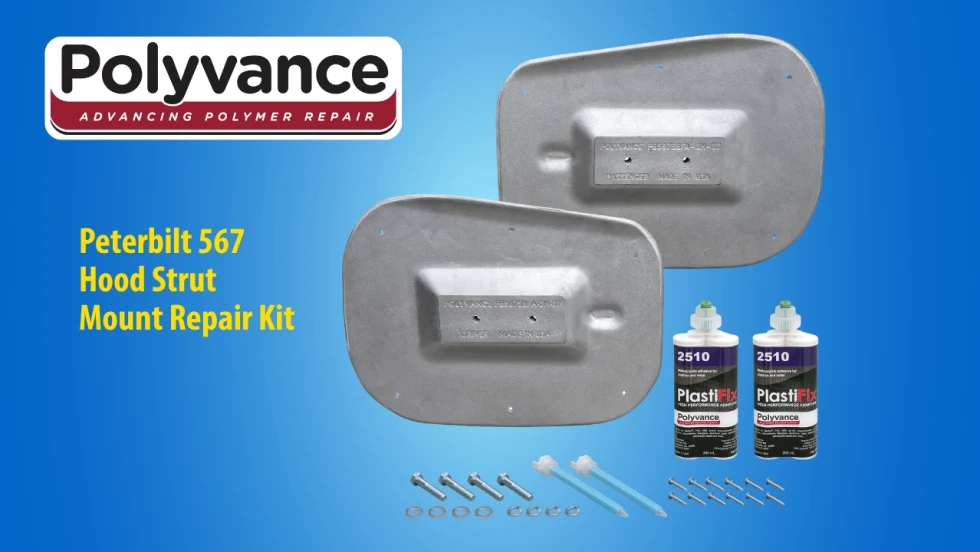
Polyvance Introduces New Peterbilt 567 Hood Strut Mount Repair Kit
Polyvance has launched a repair solution for Peterbilt 567 hood struts, helping truck owners and repair facilities avoid costly hood replacements.
Read More →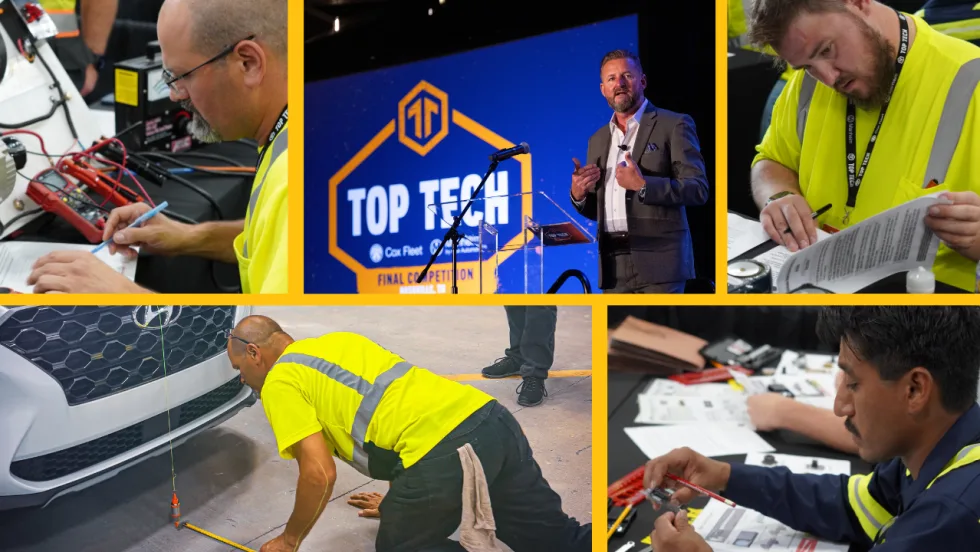
Cox Automotive Celebrates Technical Excellence at 2026 Top Tech Finals
The top technicians from Cox Fleet and Manheim tested their skills in Nashville, Tennessee, at Cox Automotive’s 2026 Top Tech Finals. The overall winners will advance to compete at the American Trucking Association’s TMC SuperTech competition.
Read More →
Grote Industries Appoints Vice President of North American Operations
Grote Industries has appointed Patrick Smith as vice president of North American operations as it celebrates 125 years of innovation and manufacturing excellence. He has more than 20 years of manufacturing leadership experience.
Read More →
Winter Fleet Prep: Expert Tips to Keep Vehicles Running Smoothly
Cold weather can expose weak batteries, tires, fuel systems, and maintenance gaps fast. Use this winter fleet checklist to prepare trucks and drivers before temperatures drop.
Read More →