




Mobile Delivery App Connects Packages with Drivers
A cross between Uber and UPS, Kanga's mobile app platform could be a great delivery alternative for small businesses.

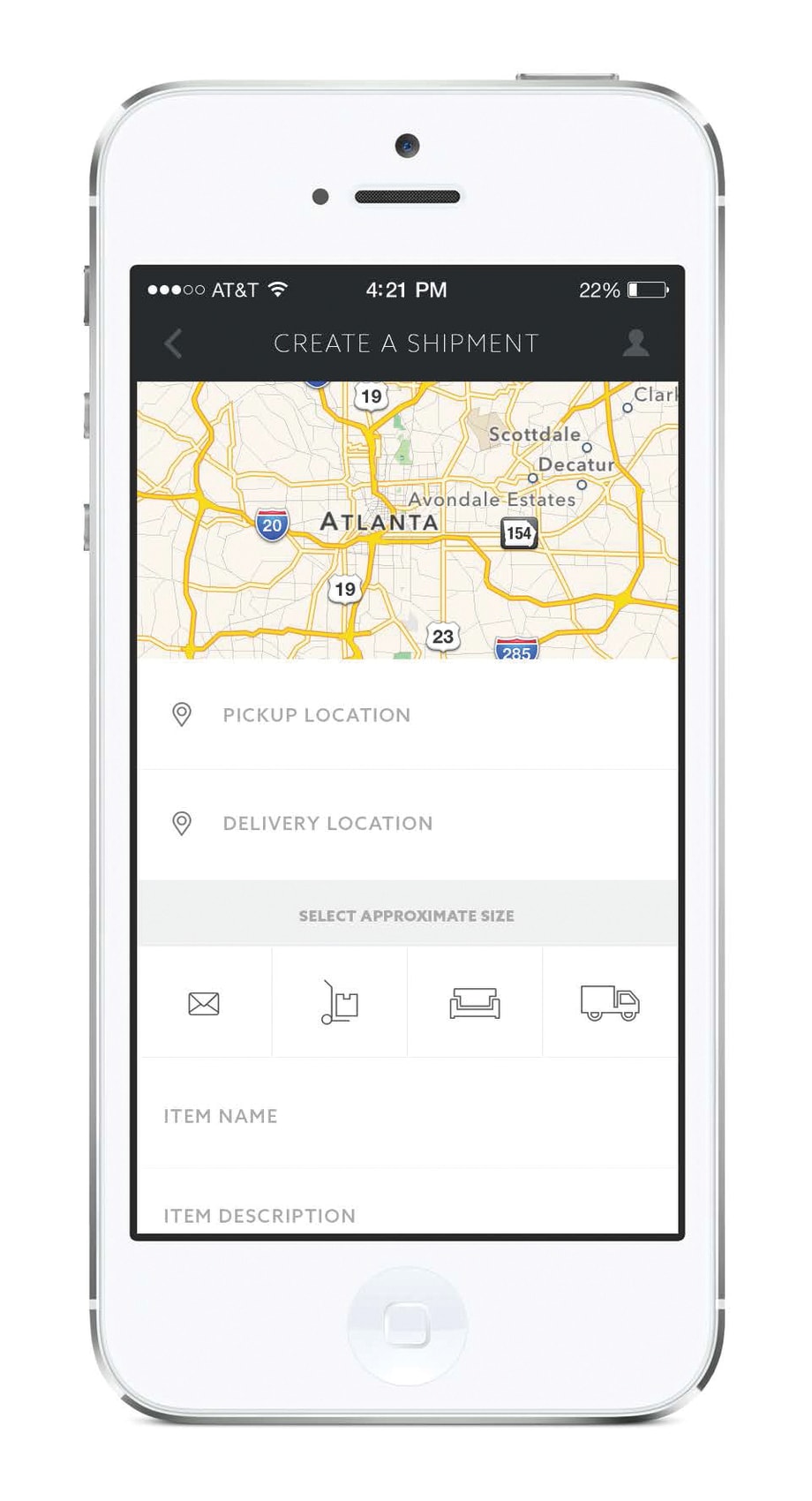
Kanga's mobile app.

Kanga's mobile app.
Described as the Uber for delivery, Kanga is a crowd-sourced mobile platform specifically designed for shipments. Launched in March, this mobile app is now available to businesses in the Atlanta area.
Co-founders Scott Miller and Everett Steele wanted to provide another source for deliveries at a lower price than a moving or shipping service. The concept first came about during a visit to IKEA.
After purchasing a bunk bed for his sons, Miller soon realized that it wouldn’t fit in his car. What if he could pay a local driver to deliver the bunk bed for him?
“For small businesses, Kanga can provide a solution for same-day delivery of products,” said Steele. “If your delivery fleet is tied up and unavailable, Kanga could help you complete deliveries outside of your existing fleet vehicles.”
Additionally, the Kanga app easily integrates with a company’s point-of-sales and e-commerce systems. And through those channels, businesses can create custom routing and additional delivery features, says Steele.
How the App Works
Kanga’s platform features two segments: peer-to-peer and retail. The peer-to-peer side resembles Craigslist where anyone can request a delivery.
Before arranging a pickup, users can set their own price and select from multiple local drivers who make bids. Drivers are put into the system once Kanga receives a driver’s license and insurance policy, says Steele.
Hiring drivers for the retail side involves a more extensive process. It includes an orientation, copies of all relevant documents (driver’s license, insurance) and training on how to use the app, the protocol for picking up and dropping off packages, etc., according to Steele.
When it comes to finding a driver, retailers don’t need to spend time choosing between bidders. Kanga makes it easier by selecting a driver in the right perimeters, according to Steele.
Based on the size of a company’s delivery, Kanga finds an appropriate vehicle. Drivers have everything from Smart cars to pickups to SUVs to cargo vans.
To help select the delivery size, the app features four pictograms of possible sizes — an envelope, a small packing box, a couch and a big box truck.
The app also allows companies to indicate the delivery time, whether it needs to be picked up today or on a specific future date. Kanga guarantees coverage for retailers every day of the week (9 a.m. to 8 p.m. six days a week and fewer hours on Sunday).
Retailers are charged a flat rate per shipment. According to Steele, it is a base price plus a fee for any distance over 6 miles.
For insuring goods, Steele says Kanga insures up to the price of the object. With that in mind, Kanga is not designed to transport specialty items. For instance, you should call a professional piano mover to ship your antique piano.
To get started as a retailer, companies can manually enter shipping orders into Kanga’s Android, iOS or Web app. Or a Kanga team member can connect your e-commerce or point-of-sales platform into the app.
Expanding its Service
After a month in operation, Kanga has dozens of retail partners in Atlanta.
With the retail and peer-to-peer side up and running, Kanga will soon launch a new B2B component, KangaXL, which is designed to connect existing commercial fleets with businesses needing reliable, affordable ways to ship large items locally.
With 60 drivers and counting, Kanga currently serves the Atlanta metro area but will be expanding nationwide throughout 2014.
For more information about these services, visit www.getkanga.com.
More Small Fleet
Why Fleet Managers Are Replacing Departmental Vehicles with Shared Motor Pools
Departmentally assigned vehicles often create hidden costs through underutilization, poor visibility, and increased administrative burden. This white paper explores how shared motor pool strategies help fleets reduce costs, improve accountability, and optimize vehicle utilization.
Read More →
Boosting Last-Mile Fleet Uptime, Safety, and Value with AI Vehicle Inspections
AI-powered inspections are transforming last-mile fleets by replacing manual checks with highly accurate automated scans that detect defects in seconds. By giving fleet operations visibility into the daily condition of their vehicles, you can identify trends over the vehicle’s lifecycle that enable improved procurement decisions, route management, driver training and accountability.
Read More →
Five Ways Seat Belts Help Prevent Injuries
There are five ways seat belts protect occupants from injuries, according to the Tennessee Department of Safety and Homeland Security.
Read More →
It’s here: The 2026 Fleet Technology Trends Report
What does AI mean for fleets? Get the answer — and learn other top tech trends.
Read More →
Small Fleets, Big Impact: How Independent Drivers Power Wreaths Across America
Check out how small fleets and independent drivers power Wreaths Across America each December and why their impact matters more than ever.
Read More →
VMS Survey Finds 65% of Small Fleet Managers Run Operations Alone
A new VMS survey shows small fleet managers are stretched thin, with most handling operations solo and eager to adopt digital tools for relief.
Read More →
Tips for Driving Safely on Halloween Night
This video features a reminder from the Connecticut Department of Transportation (DOT) and the Connecticut Police Chiefs Association, urging drivers to prioritize safety this Halloween.
Read More →
AI, Access, and Uptime: VMS’s Next Chapter with David Prusinski
VMS’s new Co-CEO, David Prusinski, shares how an AI-first approach will give small fleets and repair shops the tools to compete like big players.
Read More →
Fleet Managers Share Winter Prep Tips: It's Never Too Early!
Three fleets share best practices to prep vehicles for winter and prevent downtime when the cold sets in.
Read More →
Hot Weather Driving Tips for Fleet Drivers
As we head into another potentially extreme summer season, the risks for fleet drivers remain high, from engine strain and tire blowouts to unpredictable traffic patterns. An expert shares advice on how fleet drivers can boost their safety during the steamy summer months.
Read More →