




Talking on Mobile Phone While Driving is More Dangerous than Being Drunk Behind the Wheel: British Study
A British study published March 22 indicates that talking on a mobile phone while driving is more dangerous than being drunk behind the wheel. Tests carried out by scientists at the Transport Research Laboratory (TRL) established that driving behaviour is impaired more by using a mobile phone than by being over the legal alcohol limit. In 2000, more than 520 people lost their lives as a result of accidents involving drunk drivers. Now leading British insurer Direct Line, who commissioned the study, is hoping its findings will lend support to calls for a total ban on the use of hand-held mobile phones while driving. A bill introduced by Janet Anderson, MP for Rossendale and Darwen, receives its second reading in early April. The Direct Line study, carried out over three months by the TRL, involved testing the reaction times and driving performance of a panel of volunteers using a sophisticated driving simulator. Researchers tested how driving impairment was affected by talking on a hand-held mobile phone, a hands-free phone, and when drivers had consumed enough alcohol to be above the legal drink-drive limit. The results demonstrate that drivers' reaction times were, on average, 30 percent slower when talking on a hand-held mobile phone compared to being drunk and nearly 50 percent slower than under normal driving conditions. According to the tests, drivers were less able to maintain a constant speed and found it more difficult to keep a safe distance from the car in front. Using a hand-held mobile phone had the greatest impact on driving performance. On average it took hand-held mobile phone users half a second longer to react than normal, and a third of a second longer to react compared to when they were drunk. At 70 mph, this half-second difference is equivalent to traveling an additional 46 feet before reacting to a hazard on the road. Using a hands-free mobile phone also proved to be a considerable distraction for drivers. In fact, participants in the study stated that they found it easier to drive drunk than when using any mobile phone -- hand-held OR hands-free. In addition, drivers using either a hands-free or hand-held mobile phone missed significantly more road warning signs than when drunk. Direct Line commissioned the TRL research following a recent survey it conducted that found that four out of 10 drivers in the United Kingdom - equivalent to around 10 million U.K. motorists - admit to using a mobile phone behind the wheel. "Most people accept that talking on a mobile phone while driving is distracting; however, many drivers don't appreciate how dangerous it is," said Dominic Burch, Direct Line's road safety campaign manager. "That is why we chose to quantify the risk involved by comparing driving performance while using a mobile phone to driving while over the legal alcohol limit. Drink driving is clearly an established danger in the eyes of drivers. "We were surprised to discover that talking on a mobile phone is actually more dangerous than being drunk behind the wheel. In effect, this means that 10 million drivers are partaking in a driving activity that is potentially more dangerous than being drunk. "Based on these findings, we are supporting Janet Anderson MP in her attempt to introduce new legislation calling for a total ban on the use of hand-held mobiles while driving. In addition we are calling on the government to conduct further research into the dangers of using hands-free mobile phones. "We believe there needs to be a high profile public awareness campaign informing drivers of the dangers they face by using mobile phones. Eventually we would like to see the use of mobile phones when driving, both hands-held and hands-free, become as socially unacceptable as drunk driving," Burch said.
More Small Fleet


Developing Budget-Friendly Driver Safety Programs
From driver training and safety meetings to one-on-one coaching and incentive programs, several small fleets share how they have developed a safety culture with their drivers using low- to no-cost resources.
Read More →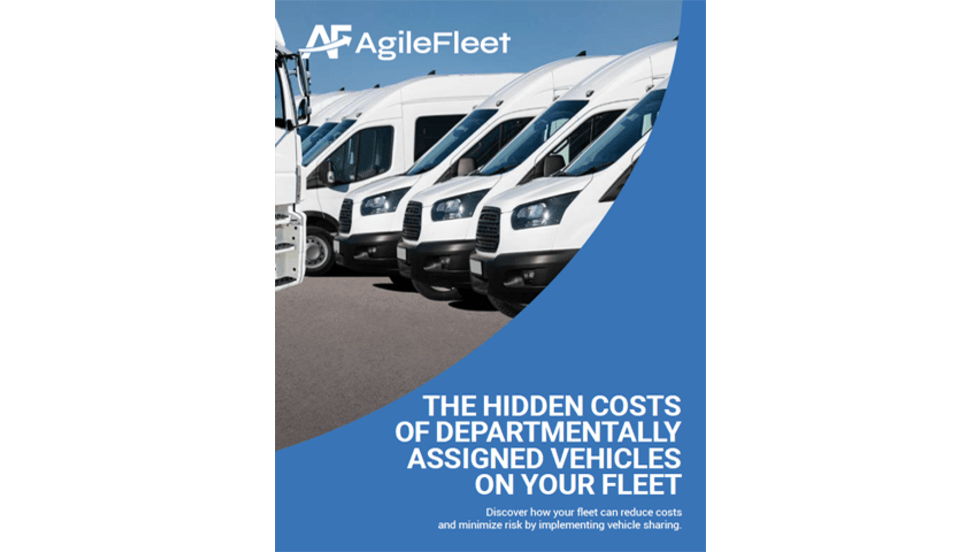
Why Fleet Managers Are Replacing Departmental Vehicles with Shared Motor Pools
Departmentally assigned vehicles often create hidden costs through underutilization, poor visibility, and increased administrative burden. This white paper explores how shared motor pool strategies help fleets reduce costs, improve accountability, and optimize vehicle utilization.
Read More →
Boosting Last-Mile Fleet Uptime, Safety, and Value with AI Vehicle Inspections
AI-powered inspections are transforming last-mile fleets by replacing manual checks with highly accurate automated scans that detect defects in seconds. By giving fleet operations visibility into the daily condition of their vehicles, you can identify trends over the vehicle’s lifecycle that enable improved procurement decisions, route management, driver training and accountability.
Read More →
Five Ways Seat Belts Help Prevent Injuries
There are five ways seat belts protect occupants from injuries, according to the Tennessee Department of Safety and Homeland Security.
Read More →
It’s here: The 2026 Fleet Technology Trends Report
What does AI mean for fleets? Get the answer — and learn other top tech trends.
Read More →
Small Fleets, Big Impact: How Independent Drivers Power Wreaths Across America
Check out how small fleets and independent drivers power Wreaths Across America each December and why their impact matters more than ever.
Read More →
VMS Survey Finds 65% of Small Fleet Managers Run Operations Alone
A new VMS survey shows small fleet managers are stretched thin, with most handling operations solo and eager to adopt digital tools for relief.
Read More →
Tips for Driving Safely on Halloween Night
This video features a reminder from the Connecticut Department of Transportation (DOT) and the Connecticut Police Chiefs Association, urging drivers to prioritize safety this Halloween.
Read More →
AI, Access, and Uptime: VMS’s Next Chapter with David Prusinski
VMS’s new Co-CEO, David Prusinski, shares how an AI-first approach will give small fleets and repair shops the tools to compete like big players.
Read More →